5 Top Buy-and-Hold Investments to Manage Market Volatility
When seeking out the best buy-and-hold investments, look for assets that will last beyond short-term market noise.


Market volatility is the norm in 2026, with political uncertainty and inflationary pressures defining price moves in the first half of the year. History shows that long-term wealth is not built by reacting to these short-term headlines; rather, it's built by maintaining disciplined exposure to high-quality assets that can grow your nest egg over time.
Instead of choosing assets based on your prediction of where the price action might go next, the wiser approach for long-term investors is to seek out those with a history of durable growth and stability regardless of the market environment.
The following investments include a mix of stocks and exchange-traded funds (ETFs) that stand out as compelling options for investors wanting to navigate the current market turbulence and build a portfolio that's positioned for long-term success.
From just $107.88 $24.99 for Kiplinger Personal Finance
Become a smarter, better informed investor. Subscribe from just $107.88 $24.99, plus get up to 4 Special Issues

Sign up for Kiplinger’s Free Newsletters
Profit and prosper with the best of expert advice on investing, taxes, retirement, personal finance and more - straight to your e-mail.
Profit and prosper with the best of expert advice - straight to your e-mail.
Vanguard S&P 500 ETF

- Type: Domestic index fund
- Assets under management: $1.60 trillion
- 10-year average annual total return: 15.6%
The Vanguard S&P 500 ETF (VOO) is a simple but incredibly effective buy-and-hold investment. Like other S&P 500 ETFs, the VOO tracks the performance of the broad-market index, giving investors low-cost exposure to 500 of the largest publicly traded U.S. companies.
This broad diversification allows investors to participate in the long-term growth of the U.S. economy without having to buy individual stocks. The large-cap nature of the S&P 500 also ensures there are no risky start-ups included in VOO's holdings, and all are established companies with sizeable operations.
With an ultra-low expense ratio of just 0.03%, or $3 on every $10,000 invested, investors don't have to worry about sacrificing gains to management fees. Since the stock market always trends up when you measure in years and decades instead of weeks or months, there's a strong likelihood that this fund will ride out the noise and deliver gains no matter what happens in the second half of 2026 and beyond.
Vanguard Total International Stock ETF

- Type: International Index fund
- Assets under management: $606.0 billion
- 10-year average annual total return: 9.8%
While many U.S. investors maintain an outsize allocation to domestic assets, international exposure remains an important component of a well-balanced long-term portfolio.
That's particularly true now when it seems that America's global leadership is shifting as a result of weakening relationships with traditional allies and the rise of China as a world economic superpower.
The Vanguard Total International Stock ETF (VXUS) provides exposure to roughly 8,800 companies across developed and emerging markets — and no holdings within the U.S. This makes VXUS a valuable buy-and-hold investment for investors looking for an alternative to domestic stocks, as well as for those who want to layer on some geographical diversification via a single holding.
VXUS is a member of the Kiplinger ETF 20, our favorite exchange-traded funds.
Japan is the current country leader in VXUS with about 15% of assets, followed by the U.K. and Canada at around 8% of assets apiece. Asia is also well represented, with top holdings that include Taiwan's Taiwan Semiconductor Manufacturing (TSM) and South Korea's Samsung Electronics (SSNLF).
This broad exposure provides peace of mind for investors who don't want to place bets on which local economy is in favor, with VXUS providing access to the entire world of global stocks.
Health Care Select Sector SPDR Fund

- Type: Healthcare sector fund
- Assets under management: $606.0 billion
- 10-year average annual total return: 9.8%
Healthcare has long been regarded as one of the market's most defensive and dependable sectors, particularly during periods of economic uncertainty. People will keep buying medication or visiting the hospital regardless of broader spending trends or inflationary pressures.
Demographic trends also strengthen the long-term investment case for healthcare. Aging populations will create increased demand for medical services for decades, and leading companies are chasing a wide range of innovations such as cancer therapies and heart disease treatments to meet the growth opportunities within the sector.
The Health Care Select Sector SPDR Fund (XLV), another Kip ETF 20 member, is the largest exchange-traded fund tied to this critical sector of the U.S. economy. XLV offers investors targeted exposure to the largest and most financially stable companies in the pharmaceuticals, medical devices and healthcare services industries.
About 60 healthcare stocks make up the XLV portfolio, led by Big Pharma giant Eli Lilly (LLY) and Dow Jones stock Johnson & Johnson (JNJ).
Apple
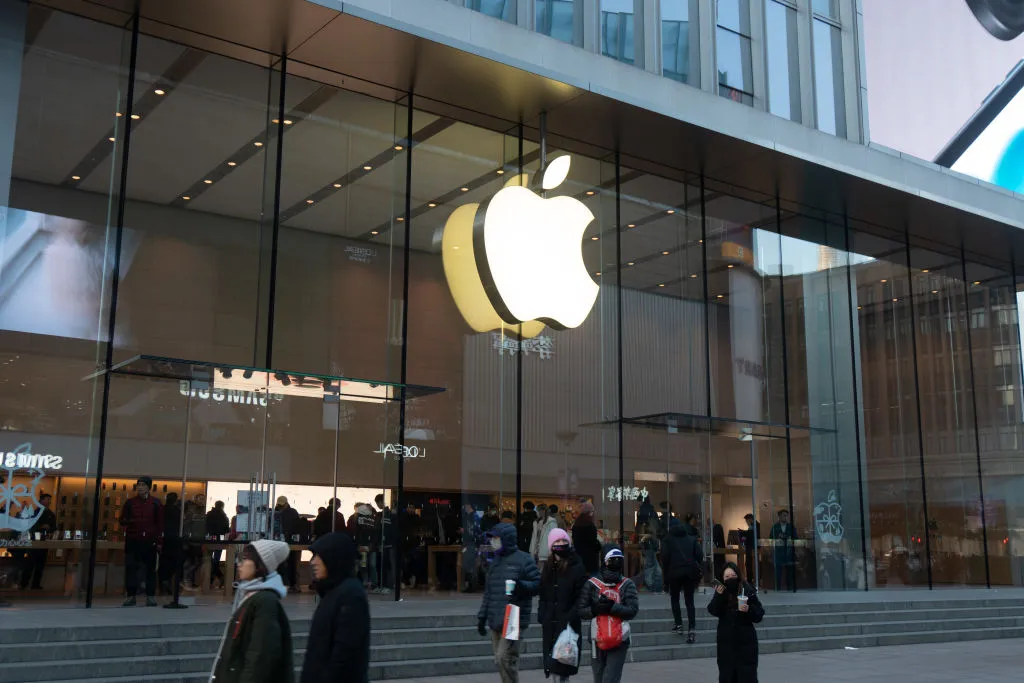
- Type: Large-cap technology stock
- Market cap: $4.57 trillion
- 10-year average annual total return: 29.9%
It's hard to predict what the future looks like and which companies will be thriving in 10 or 20 years. But Apple (AAPL) remains one of the strongest buy-and-hold investments in global markets, and its odds of long-term success are strong regardless of any short-term volatility.
Just a few things that create stability for Apple are its massive scale, including its distinction as the first U.S. company to surpass a $1 trillion market capitalization in 2018.
It also has about $45 billion in cash on its balance sheet — which surges to about $132 billion total when you include marketable securities that can be converted to cash relatively easily. That's enough to buy a company the size of Starbucks (SBUX) outright.
This financial stability is built on unmatched brand loyalty, which generates significant cash even without selling new devices. Apple has successfully grown its high-margin Services division to a business that rakes in more than $100 billion in annual revenue through the App Store, Apple Pay, iCloud, Apple TV and other offerings.
There's no such thing as a sure thing on Wall Street. But with deep pockets, a history of success and a tremendous future revenue stream, AAPL seems to be one of the best stocks to buy for the long run.
iShares Gold Trust

- Type: U.S. commodities-focused fund
- Assets under management: $68.5 billion
- 10-year average annual total return: 13.7%
Commodities don't have any fundamentals — a pile of metal can't develop a new product or improve profit margins. But what physical commodities, including gold, do have is a real-world value that cannot be disputed. Unlike popular trends such as AI or blockchain, there's no debate as to what gold will become in the years ahead.
Because of its tangible and unchangeable nature, gold has re-emerged as an important portfolio diversifier amid heightened economic uncertainty, inflation concerns and ongoing market volatility.
The iShares Gold Trust (IAU) provides investors with direct exposure to the price of gold without the hassle of buying physical gold, storing it in a safe, then trying to sell it. IAU is one of the largest and most cost-effective gold ETFs available, and is tied directly to the movements of gold bullion. The trust owns gold bars stored in vaults, primarily in London, and each share in this fund represents fractional ownership of the trust's total holdings.
If you're looking for a buy-and-hold investment with peace of mind, the commodity-backed IAU is one of the most solid investments out there — in more ways than one.
Related content
- 7 Reasons Your Portfolio Needs More Than Just an S&P 500 ETF in 2026
- 5 ETFs to Hedge Your Inflation Risk
- Why Invest In Mutual Funds When ETFs Exist?
