6 Money Moves to Make Before 2026 Ends
Take these simple steps now to secure a strong financial finish.


Amid all the holiday flurry, the final weeks of the year pass by quickly.
But as you wrap the presents and prepare the pumpkin pie, don't forget to carve out time to make moves that can lower your tax bill, plump your nest egg, and otherwise improve your financial life by the key deadline of New Year's Eve.
Here are six items to put on your financial checklist in 2026.
Retirement Savings

1. Maximize savings in your workplace retirement plan
Give your retirement savings a boost by topping off your 401(k), 403(b), or other employer plan before December 31.
- For most plans, the 2026 workplace contribution cap is $24,500.
- But for plans that permit catch-up contributions, those who are 50 and older can add an extra $8,000 ($32,500 total).
- Under SECURE 2.0, workers aged 60 to 63 may get a "super catch-up" contribution of $11,250, raising their maximum to $35,750.
And don't overlook a new rule that went into effect this year: If you earned $150,000 or more in FICA wages the previous year (in 2025, for 2026 contributions), you must make catch-up contributions on a Roth basis. In other words, your catch-ups must be made with after-tax dollars — but future withdrawals in retirement will be free of federal income tax.
While 401(k) salary deferrals have a year-end cutoff, you have more breathing room —until the April 2027 tax-filing deadline — to make 2026 contributions to a traditional or Roth IRA. The 2026 limit is $7,500, plus $1,100 in catch-up contributions for those 50 and older.
From just $107.88 $24.99 for Kiplinger Personal Finance
Become a smarter, better informed investor. Subscribe from just $107.88 $24.99, plus get up to 4 Special Issues

Sign up for Kiplinger’s Free Newsletters
Profit and prosper with the best of expert advice on investing, taxes, retirement, personal finance and more - straight to your e-mail.
Profit and prosper with the best of expert advice - straight to your e-mail.
Healthcare Accounts

2. FSA money: Use it or lose it
Your employer may impose a December 31 deadline to spend remaining funds in your healthcare flexible spending account (FSA).
Yet before you rush to stock up on items that may qualify for reimbursement, like prescription eyeglasses or over-the-counter medical supplies, check your plan documents.
Employers can offer one of two relief options (not both):
- A 2.5-month grace period to spend down your funds (typically until March 15, 2027), OR
- Permission to carry over up to $680 of unused 2026 funds into 2027.
What about health savings accounts (HSAs)? Unlike FSAs, HSAs have no use-it-or-lose-it rule. That means unspent balances can roll over indefinitely and grow free of federal income tax.
The 2026 HSA contribution limit is $4,400 for self-only coverage or $8,750 for family coverage (plus an extra $1,000 for those 55 or older), and you have until April 15, 2027, to make your 2026 contributions.
Related: 11 Travel Must-Haves That Are Totally HSA Eligible
RMDs

3. Review your RMDs
Long-time retirees already know the drill: Once you reach a certain age, you must make annual required minimum distributions (RMDs) from traditional IRAs, 401(k)s, and 403(b)s. In 2026, the starting age remains 73.
Missing the December 31 deadline has consequences.
- It triggers a 25% penalty on the undistributed amount, OR
- 10% if you correct it within two years.
If you turn 73 this year, you can defer your first RMD until April 1, 2027. But be aware that deferring will force two distributions in 2027, which could push you into a higher federal tax bracket and trigger future surcharges on your Medicare premium.
To satisfy your RMD without inflating your taxable income, consider making a qualified charitable distribution (QCD). With a QCD, which also has a December 31 deadline, taxpayers 70½ or older can transfer money directly from a traditional IRA to a qualified charity tax-free. For 2026, you can donate up to $111,000 per person ($222,000 for married couples filing jointly with separate IRAs).
Note: The first dollars drawn from your IRA in a calendar year count toward your RMD. To maximize the portion of your charitable distribution that offsets your RMD, complete your QCD before taking any cash payouts.
Investing
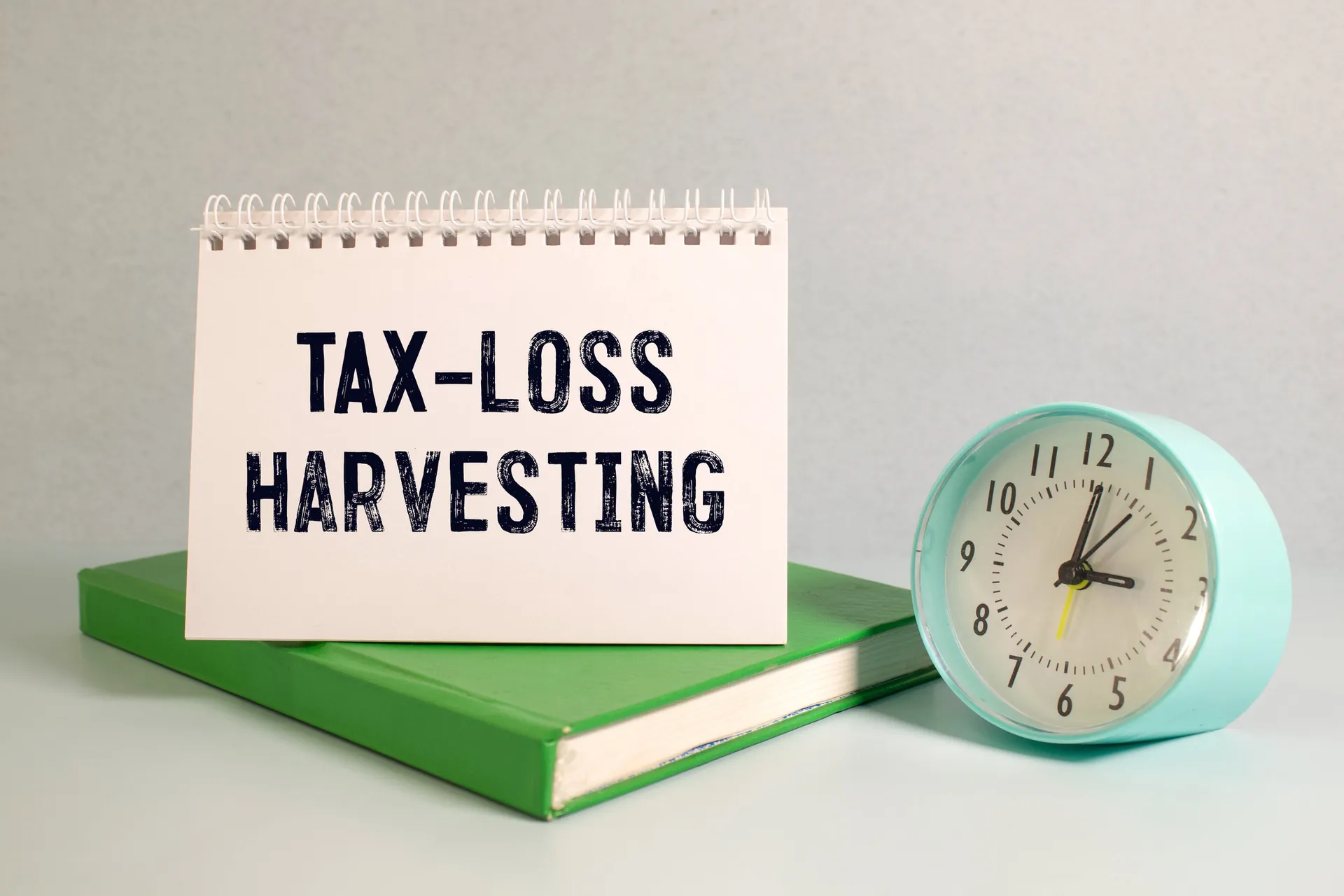
4. Rebalance your portfolio and harvest tax losses
If your portfolio's mix of stocks and bonds has shifted from its target allocation, year-end is a good time to get it back on track. You can sell some of your investments that have become overrepresented and shift money into those that have become too small.
If selling your winners creates a capital gain in a taxable brokerage account, you can offset it on your federal return by harvesting losses from your underperforming assets, thus potentially lowering your tax bill.
Should these capital losses exceed capital gains, you can deduct up to $3,000 of excess losses to offset ordinary income ($1,500 if married filing separately). Any losses higher than that amount can be carried forward indefinitely into future years.
Watch out for the IRS wash-sale rule, though. You can't claim a loss if you buy the same or a "substantially identical" security within 30 days before or after the sale (a total window of 61 days).
See also: Cut Your Taxes With Tax-Loss Harvesting in 2026
Employer Withholding
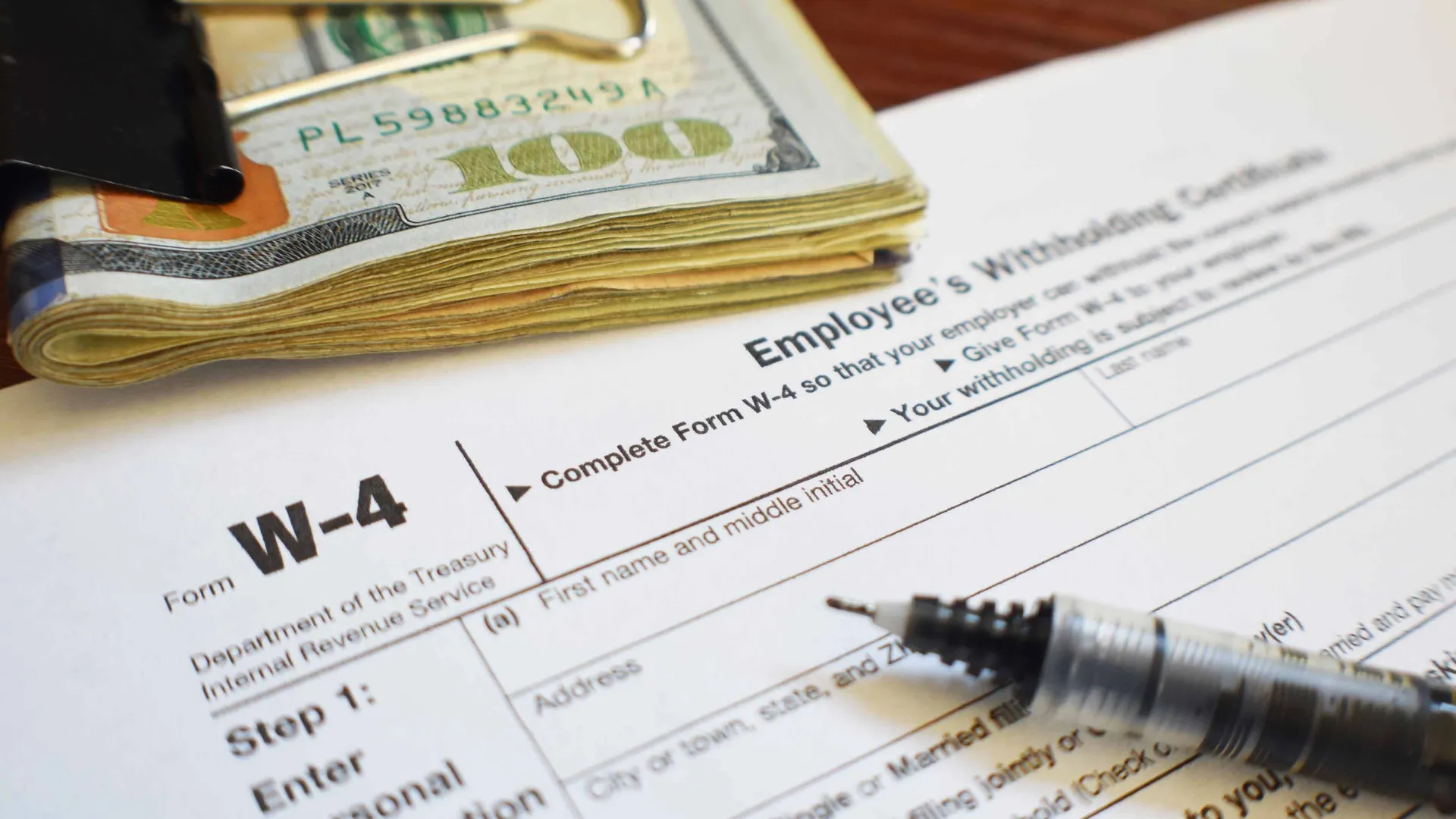
5. Check your tax withholding
Adjusting your tax withholding before December 31 can prevent a surprisingly high tax bill — and a potential underpayment penalty from the IRS — when you file your return in the spring. This is especially true if you experienced an income spike from, say, bonuses, capital gains, or taxable retirement distributions.
You can use the IRS Tax Withholding Estimator to determine whether you need to adjust the amount of federal income tax your employer withholds from your pay. Your federal tax payments for the year should be equal to at least 90% of your 2026 tax liability or 100% of your 2025 tax bill (110% if last year's adjusted gross income (AGI) exceeded $150,000, or $75,000 if married filing separately).
If you find that too little has been withheld this year, don't panic. You can ask your employer to boost W-2 withholding on your final December paycheck or instruct your IRA custodian to withhold tax from a year-end distribution.
Tax Breaks
6. Trim your income to unlock tax breaks
The 2025 Trump tax bill introduced federal tax breaks, including the "senior bonus" deduction (up to $6,000 for eligible filers 65 and older) and a deduction on car loan interest (up to $10,000 for qualifying vehicles).
The catch? These breaks carry strict income caps. For example, the senior bonus deduction begins phasing out at $75,000 in modified adjusted gross income (MAGI) for single filers, or $150,000 for joint filers. Taking action before year-end to lower your 2026 taxable income, like boosting pre-tax contributions to your 401(k) or harvesting capital losses, can keep your MAGI below these phase-out thresholds, unlocking potentially thousands in tax savings.
Your end-of-year tax planning also depends on whether you claim the standard deduction or itemize on your tax return. If you take the standard deduction, for example, you're eligible for a new charitable deduction for non-itemizers of up to $1,000 in direct cash gifts to qualified public charities, or $2,000 for married couples filing jointly.
Meanwhile, itemizers can use a "bunching" strategy, making multiple years' worth of charitable gifts to a donor-advised fund before December 31 to help reach the deduction threshold to itemize. (For more information, check out Kiplinger's report, 3 Major Changes to the 2026 Charitable Deduction.)
Note: This item first appeared in Kiplinger Personal Finance Magazine, a monthly, trustworthy source of advice and guidance. Subscribe to help you make more money and keep more of the money you make here.
Explore More