What to Do With a $100,000 Inheritance to Set Up Your Future
You don't need a million dollars to transform your finances and set yourself up for retirement.


Receiving a financial windfall through an inheritance can trigger feelings of guilt and sadness that come as a result of losing a loved one. After all, what you've been left with is so much more than a number. It's a lasting legacy, and the kind of generosity that can feel overwhelming. You want to remember what the person meant to you — and not waste what they worked so hard to leave behind.
Used well, a large windfall can wipe out high-interest debt, build an emergency fund, or boost your retirement savings contributions. Used frivolously, it can disappear as fast as it arrived. The recent U.S. Health and Retirement Study shows that 42% of heirs spent their entire inheritance within one year.
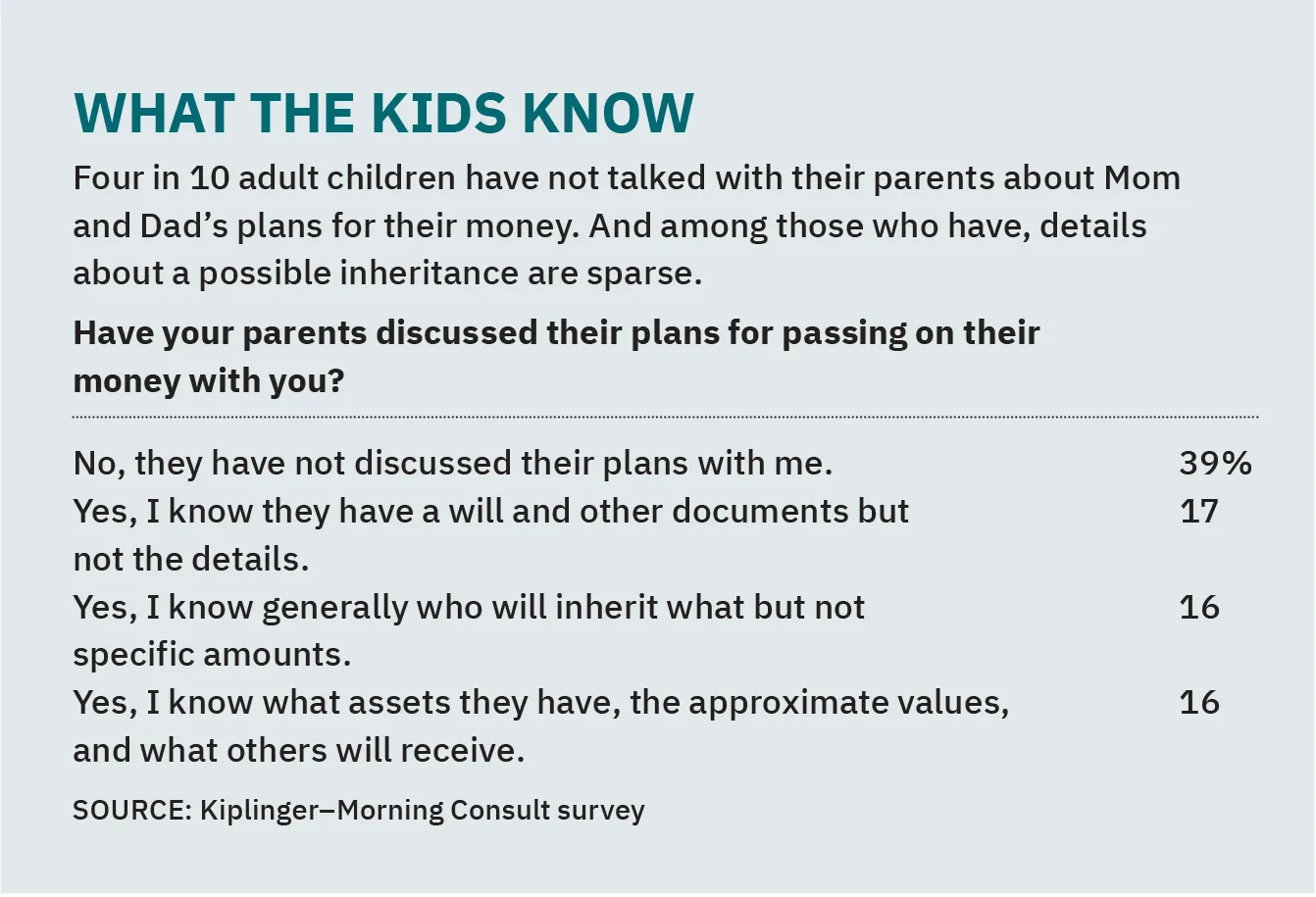
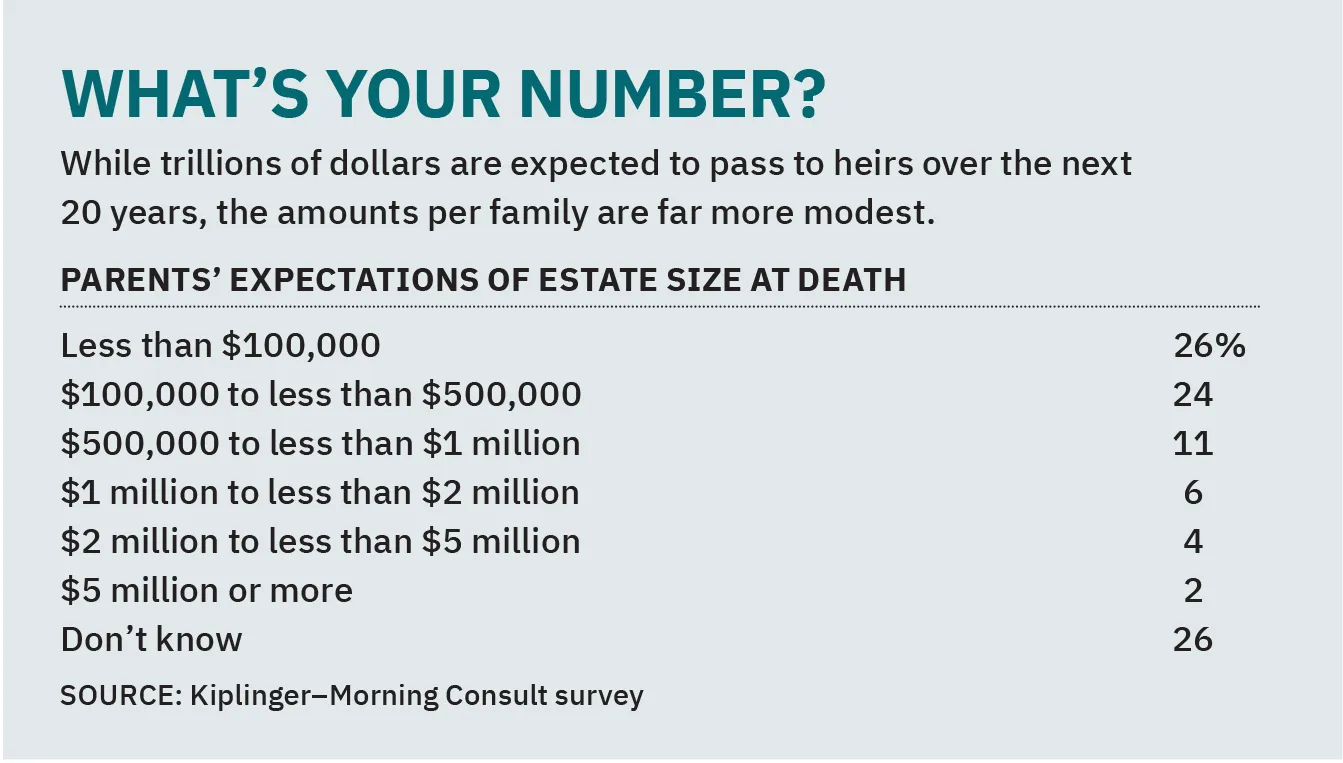
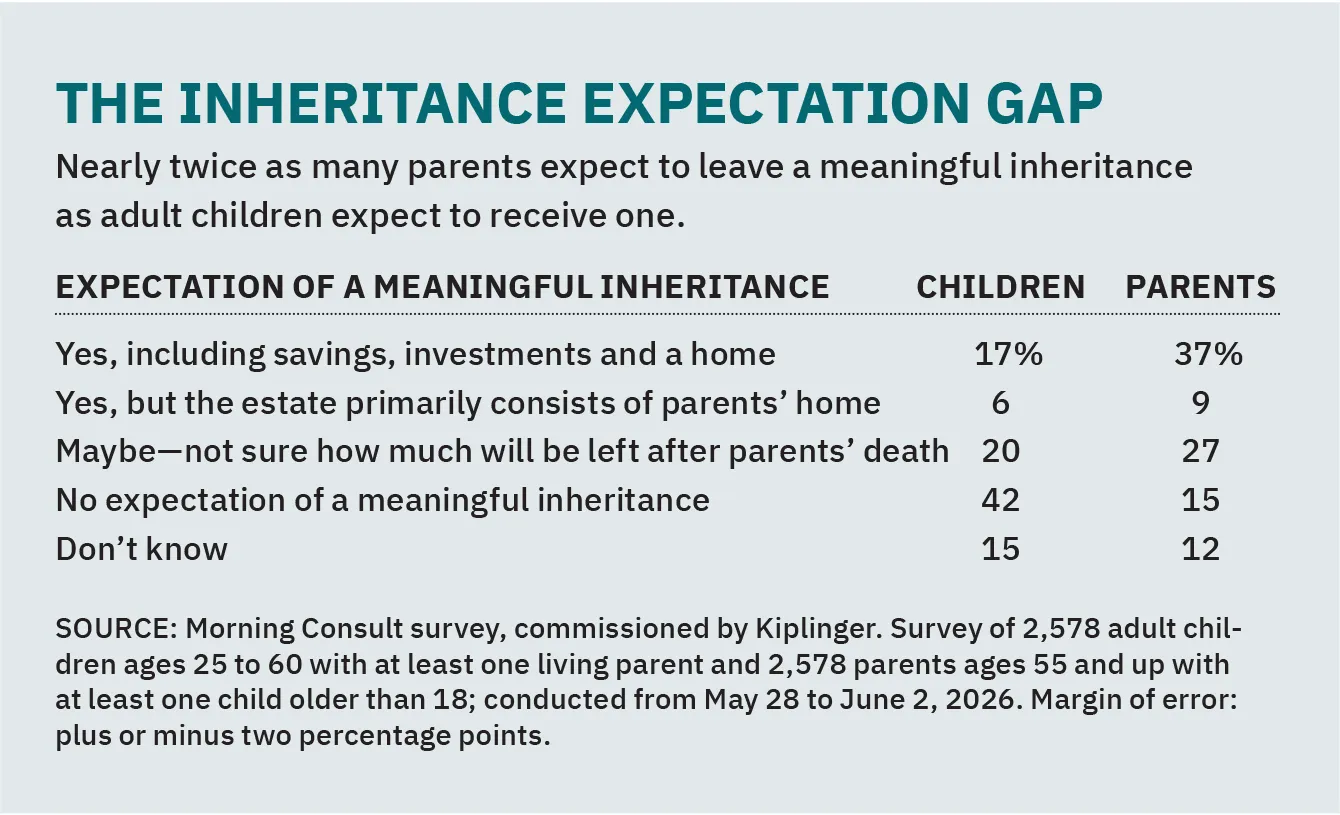
New Morning Consult-Kiplinger research shows that adult children are far less likely to think they'll be getting an inheritance than parents who expect to leave one. In fact, 42% of younger respondents say they don't expect to receive a sizable amount. However, about twice as many parents do plan on leaving a meaningful inheritance.
From just $107.88 $24.99 for Kiplinger Personal Finance
Become a smarter, better informed investor. Subscribe from just $107.88 $24.99, plus get up to 4 Special Issues

Sign up for Kiplinger’s Free Newsletters
Profit and prosper with the best of expert advice on investing, taxes, retirement, personal finance and more - straight to your e-mail.
Profit and prosper with the best of expert advice - straight to your e-mail.
That’s encouraging, given that 60% to 65% of Americans live paycheck to paycheck, according to a Wealthvieu survey, and another 56% can’t cover a $1,000 emergency. So if $100,000 showed up in your bank account, it would probably feel like a lot of money.
If you’re expecting a windfall or you’ve already received a large inheritance, here’s a guide to set up your financial future so the money lasts, instead of disappearing in the first year.
Take time to breathe
According to Capital Group, two-thirds (65%) of Gen Xers and Millennials say they regret how they used their inheritance money, with nearly two in five wishing they had invested more. While only 18% of millennials turned to financial advisers for investment advice, 27% were more likely to turn to social media and ‘finfluencers’ for advice when they inherit.
Srbuhi Avetisyan, a research and analytics specialist at Owner. One, offers this advice. "Don't rush to make the money productive. Give yourself permission to do nothing with it for a while. An inheritance is unusual money because it arrives together with emotion." She says that depending on the circumstances, there can be grief, relief, guilt and a strange sense that you need to "do something sensible" immediately. "That's not a great state in which to make a $100,000 decision."
If you receive the $100,000 in cash, consider putting it in an FDIC-insured high-yield savings account or money-market fund and leaving it there while you figure out what you want to do with it longer term. Then give yourself time to breathe. You don’t have to rush into any decisions. Coping with grief isn't easy, and adding $100,000 to the mix can only complicate matters.
Don’t treat a promise like a payday
Planning ahead is a sound strategy in many situations. But when it comes to an inheritance, making plans for how you'll spend the money before it lands in your bank account can be reckless. Wait until you know what you have and then incorporate the funds into your retirement plans.
While you may be anticipating a certain amount, remember that circumstances for the person leaving you the money can change, and so can the inheritance. Your friend or relative may need to go into a nursing home or an expensive long-term care facility, or they may decide to give all of their money away to their favorite charity instead and leave you with a future you cannot guarantee.
Even Thomas Jefferson said, “Never spend your money before you have it.” Talk with an inheritance planning advisor who can help you decide the best way to handle the money in the short term, as well as help devise a long-term financial plan that takes all of your assets and obligations into consideration.
There is nothing wrong with enjoying part of an inheritance. The mistake is letting a meaningful financial opportunity disappear without ever deciding what the money is intended to accomplish.
Focus on debt reduction first
Paying down debt with an inheritance isn’t the most exciting first move, but it is one of the most valuable. Credit cards can carry an interest rate of 20% or more, which can eat away at even the largest inheritance. So, paying off high balances is a guaranteed return on your money. It also frees up cash flow and makes it easier to save or invest the rest of the inheritance. Paying off student loans or your home mortgage may also help, especially if your goal is to be debt-free.
Consider investing the money
With the help of a financial planner, you might want to invest the money from your inheritance. Diversify your investments across different options with varying risk levels, depending on how knowledgeable (and risk-tolerant) you are. Rather than investing it all at once, consider investing over time, using a strategy like value or dollar-cost averaging.
Boost your contributions
An inheritance can also provide an opportunity to boost your contributions to a 529 college savings plan account or retirement accounts, such as a 401(k) or IRA. You can’t put inherited money in a retirement account because it isn't earned income or other taxable compensation. However, knowing you have it can give you the comfort needed to boost your contributions.
Take more out of each paycheck for your 401(k). Your take-home pay will be less, but now you can use the inheritance money in your bank account to cover your expenses, like rent, groceries, and bills that your paycheck used to cover. You’ll have the same lifestyle, but you’ll also have more money in your 401(k) for retirement. You can put $24,500 in a 401(k), and even more if you’re 50 or older.
You can also put $7,500 in an IRA. If you have a qualifying high-deductible health plan, you can put $4,400 in an HSA for yourself or $8,750 for your family. Those accounts do accept a check or a transfer, so inheritance cash can go in directly, as long as you stay under the yearly limits. Or, choose a Roth IRA if you think your tax rate will be higher in the future.
Understand the tax implications
Unless you inherit a great deal of money, you probably won't have to worry about federal estate taxes ($15 million per individual or $30 million for a married couple in 2026).
However, certain assets do have tax implications. For example, if you inherit securities, jot down what they were worth on the day that the person you inherited them from died. You’ll need to know your cost basis if you decide to sell them.
The tax rules for individual retirement accounts (IRAs) vary depending on whether you inherited them from your spouse or someone else. The type of IRA, traditional or Roth, also matters. You won't owe tax on the amount you inherit, but you will be taxed when you take distributions from a traditional IRA. With Roth IRAs, withdrawals are typically tax-free, but you're generally required to drain the account within five years.
Enjoy your inheritance
If you want to spend some of your $100,000 inheritance on yourself or your loved ones, go ahead. After all, the money is yours now. Just remember, when it's gone, it's gone.
Jason Stephens, Founder and Managing Partner of Evertern Wealth, recently worked with a client who inherited about $150,000 from a grandparent. “They used part of it to take their first trip to Europe, paid off their student loans, and invested the rest," he said. "That was a thoughtful use of the money. They enjoyed a meaningful experience, eliminated debt, and still directed a substantial portion toward long-term financial security.”
Stephens says there is nothing wrong with enjoying part of an inheritance. The mistake is letting a meaningful financial opportunity disappear through a series of purchases without ever deciding what the money is intended to accomplish.
If you're reasonably secure financially and have been putting off repairs on your leaky roof, or have a medical emergency, that inheritance will come in handy. However, if you're up to your knees in debt, it might be better to focus on setting yourself up for a future no one can predict.
What a $100,000 inheritance can mean
If you receive a $100,000 inheritance, first, be grateful; it can make a positive difference in your life. Stephens recommends taking a few months to understand what you received, the tax implications, and what you want the money to accomplish. “That’s often more valuable than rushing to invest or spend it.”
"An inheritance can honor both sides of what the person who built the wealth likely wanted," he said. "They wanted you to enjoy some of what they worked so hard to create, and they wanted your life to be more financially secure. Good planning accomplishes both.”
Related content
- Why Leaving an Equal Inheritance to Your Children Could Backfire
- Who Actually Wins the Great Wealth Transfer?
- The Expert Guide to a Tax-Free Inheritance