5 Sleeper Blue-Chip Stock Picks for Steady Long-Term Gains
Forget the red-hot headline grabbers for a minute. We're dedicating space to high-quality sleeper stocks that have already delivered and could keep climbing.


"Nvidia, Nvidia, Nvidia. SpaceX, SpaceX, SpaceX. But of course, Nvidia. Micron, sure, and let's Apple too. But when it comes right down to it, Nvidia, SpaceX, Meta, Alphabet, SpaceX, Nvidia, Alphabet and Nvidia."
If that's what it feels like to turn on CNBC, check out your favorite investing website or scroll through your financial social feeds … I agree.
I've spent more than a decade in financial media, and I'll be the first to admit that we don't just talk about the stocks that people follow — we drown them in related content, and at the cost of ignoring some duller but still plenty productive stocks.
From just $107.88 $24.99 for Kiplinger Personal Finance
Become a smarter, better informed investor. Subscribe from just $107.88 $24.99, plus get up to 4 Special Issues

Sign up for Kiplinger’s Free Newsletters
Profit and prosper with the best of expert advice on investing, taxes, retirement, personal finance and more - straight to your e-mail.
Profit and prosper with the best of expert advice - straight to your e-mail.
Today, I'm setting aside a little bandwidth for the sleepers, the yawners, the ho-hum companies that have largely trudged along, printing profits and padding portfolio gains.
How we found our five 'sleeper' blue-chip stock picks
You won't read about high-flying semiconductor stocks or the hottest upcoming initial public offerings (IPOs) here.
Instead, I'm going to run down a group of relatively mundane blue chip stocks that don't generate many headlines, but that have two qualities we shouldn't ignore:
- They've managed to outperform the S&P 500 in the past five years on a total-return basis.
- They're highly rated by Wall Street's analyst community.
I put together a simple quality screen — S&P 500 components that are worth at least $50 billion by market capitalization, have outdone the index in the past half-decade, have at least 10 covering analysts and have an average broker recommendation of 2.5 or lower within the ratings scale established by S&P Global Market Intelligence, implying they're a consensus Buy.
At that point, selection was largely subjective. I opted for higher-conviction Buy ratings. I ignored attention-grabbing sectors such as technology and communication services. I favored companies that, while occasionally well-known by consumers, rarely get financial media coverage outside their quarterly earnings reports.
Data is as of July 20. Dividend yields represent the trailing 12-month yield, a standard measure for equity funds.
Motorola Solutions

- Sector: Information technology
- Market value: $68.2 billion
- Dividend yield: 1.2%
- Consensus rating: 1.64 (Buy)
The first sleeper pick is a tech stock. I'm not a reliable narrator. I've never claimed to be.
But all jokes aside, I'm making a point by highlighting Motorola Solutions (MSI), which is pretty humdrum compared with the chip and app names that largely define the modern-day technology sector.
When most people think of Motorola, they think of smartphones — Edge, Moto G, Razr and more. But that's Motorola Mobility, which has been a wholly owned subsidiary of Lenovo for more than a decade. Motorola Solutions was created three years earlier in a corporate split.
MSI's primary businesses are critical-communications land mobile radio (LMR) devices and networks (think emergency-personnel handheld radios); command-center technologies; and video security. Impressive technology? Sure. Does the media talk about it the same way it does large language models (LLMs) and quantum computing names? Nope.
Still, this is a $70 billion outfit with roots that go back nearly a century. It might not be an explosive grower, but it has outreturned the S&P 500 by several percentage points in the past 10 years and offers a modest dividend, as well.
The pros love the stock, too. MSI is currently covered by 14 analysts, a dozen of whom deem it a Buy. The remaining two calls are Holds; no one thinks it's a Sell. They all believe Motorola will continue delivering decent bottom-line improvement, with long-term annual earnings-growth estimates sitting around 10% annually.
"Record demand for public-safety communications, video security and command center software should drive long-term [earnings per share] growth in the low double digits when taking into account organic growth, acquisitions and stock buybacks," says William Blair analysts, who rate the stock at Outperform (equivalent of Buy). "The EPS (earnings per share) [compound annual growth rate] from 2017 through 2025 was 14%. We believe the annual stock return will at least match EPS growth."
Speaking of acquisitions, the company announced in early June a $1.5 billion acquisition of Israel-based counter-drone provider D-Fend Solutions, which complements its 2025 Silvus acquisition and gives it additional ammunition to pursue Department of War (formerly the Department of Defense) contracts.
Eaton

- Sector: Industrials
- Market value: $158.4 billion
- Dividend yield: 1.1%
- Consensus rating: 1.63 (Buy)
Many names attached to the artificial intelligence (AI) trend have blown up in popularity (and stock price) in the past few years, so it's difficult to find AI-connected names that are flying relatively under the radar.
But Eaton (ETN), despite its success, still is far from a household name.
Eaton is a global intelligent power management company. On the AI front, ETN has partnered with companies such as Siemens Energy (SMERY) and — you guessed it — Nvidia (NVDA) to improve data center infrastructure. In 2025, Eaton bought Resilient Power Systems, which makes solid-state transformer technology that may simplify the building of AI data centers.
But ETN's offerings go well beyond AI. The company offers power distribution, energy storage, backup power, electronic components, data and video cables, lighting and controls, utility and grid solutions, server racks and more to a variety of industries.
"This blue-chip industrial company is benefiting from megatrends, such as energy transition, electrification, digitalization and infrastructure spending, that are driving growth in its end markets," says Argus Research analyst Kristina Ruggeri, who rates the industrial stock at Buy. "The company has been experiencing strong orders and record backlogs that should position it well to deliver EPS growth over the long term, driven by margin improvement and top-line growth."
It's also worth noting that the company's June announcement that its Mobility Group would combine with automotive industrial firm Dana (DAN) in a Reverse Morris Trust, following which Eaton shareholders would own 50.1% of the combined entity.
"We view this ... announcement as a clear positive for ETN shareholders as it accelerates the company's plan to focus on its core higher growth/higher margin Electrical and Aerospace businesses," say BNP Paribas Equity Research senior analysts James Picariello and Andrew Buscaglia. The firm rates ETN at Outperform. "As we've discussed, exiting Mobility would help ETN create a more concentrated portfolio aligned with key megatrends in electrification, data centers and aerospace & defense."
All told, ETN enjoys 22 Buys against four Holds and just one Sell, according to S&P Global Market Intelligence. The consensus view is for annual average earnings growth of 10% over the long term.
AutoZone

- Sector: Consumer discretionary
- Market value: $49.0billion
- Dividend yield: N/A
- Consensus rating: 1.48 (Strong Buy)
AutoZone (AZO) is a retailer and distributor of automotive replacement parts and accessories, boasting nearly 7,900 stores across all 50 U.S. states, the District of Columbia, Puerto Rico, Mexico and Brazil.
It's a name most everyone knows, but few people have on the tips of their tongues, at least as stocks are concerned. It's a brick-and-mortar retailer that dishes out motor oil, brakes, batteries and car-washing goods — as mature a business as they come.
But while AZO might not enjoy much run time on CNBC, it's well respected among the research community. Currently, 23 analysts consider AutoZone shares to be a Buy, while the remaining four covering analysts call it a Hold. While it's a mature business, the pros still see the retailer delivering 13% average annual long-term earnings growth.
That bullishness comes amid a rough spell for AutoZone. While the company has outperformed the S&P 500 in the trailing five-year period, the past year has seen AZO lose almost 20% of its value while the index has advanced by roughly as much. The latest setback stemmed from a weak fiscal third-quarter report announced in May.
"While AZO's Q3 results fell short of expectations following several quarters of underperformance, we believe today's selloff was overdone," says Morgan Stanley analyst Simeon Gutman (Overweight, equivalent of Buy). "We understand investors are increasingly questioning the credibility of the AZO story given uneven execution over the last three to four quarters; however, Q3 represented a step in the right direction from an earnings standpoint, with [earnings before interest and taxes] inflecting positively and the setup for further acceleration improving into Q4 and FY27."
Analysts believe near-term growth from new "megahubs" — larger locations that act as regional supply centers for retail stores and repair shops — and longer-term opportunity from international expansion.
"Expect U.S. megahub expansion and U.S. store growth to help offset transitory international softness," says Jefferies analyst Bret Jordan (Buy). "We continue to view [Mexico and Brazil] as attractive long-term total addressable market growers with significant market share opportunities for AZO. In the interim, we expect megahub to drive healthy domestic [do-it-for-me] share expansion while new stores entering the comp base likely add ~150 basis points to same-store growth."
Cardinal Health

- Sector: Healthcare
- Market value: $53.1 billion
- Dividend yield: 0.9%
- Consensus rating: 1.47 (Strong Buy)
Most water-cooler-worthy healthcare stories come from pharmaceuticals or biotech companies developing the latest breakthrough drugs, or medical device firms wizarding their way to technologies that change the way we recover and live.
Cardinal Health (CAH) isn't that.
This blue-chip healthcare stock is as behind-the-scenes as it gets, distributing pharmaceuticals, medical supplies, consumer products and data solutions to the vast majority of the nation's hospitals, pharmacies, clinical labs and ambulatory surgery centers.
These businesses don't exactly generate headlines, but they provide robust revenue diversification with plenty of opportunity for growth — CAH shares have delivered a total return of 360% in the past five years, crushing the healthcare sector and the broader market.
That performance has been driven by a long string of consecutive quarterly earnings beats, which stands at 15 following its fiscal Q3 reported in late April.
"Pharmaceutical and Specialty Solutions revenue grew 11% year-over-year to $56.1 billion, supported by branded and specialty pharmaceutical sales growth," notes Daniel Rich, an analyst for independent research firm CFRA, which rates the stock at Buy. "We also think free cash flow generation remains robust, as CAH raised FY26 guidance to a $3.5 billion midpoint from $3.25 billion previously."
That cash flow is especially important given Cardinal's status as a Dividend Aristocrat. CAH currently boasts 30 consecutive years of uninterrupted payout growth, most recently announcing a 1% uptick to 51.58 cents per share in early May.
Cardinal Health also sports a healthy bull camp of 15 Buys against three Holds and no Sells. As a group, they see CAH delivering 17% average annual earnings growth over the long term.
The TJX Companies
- Sector: Consumer discretionary
- Market value: $167.2 billion
- Dividend yield: 1.3%
- Consensus rating: 1.38 (Strong Buy)
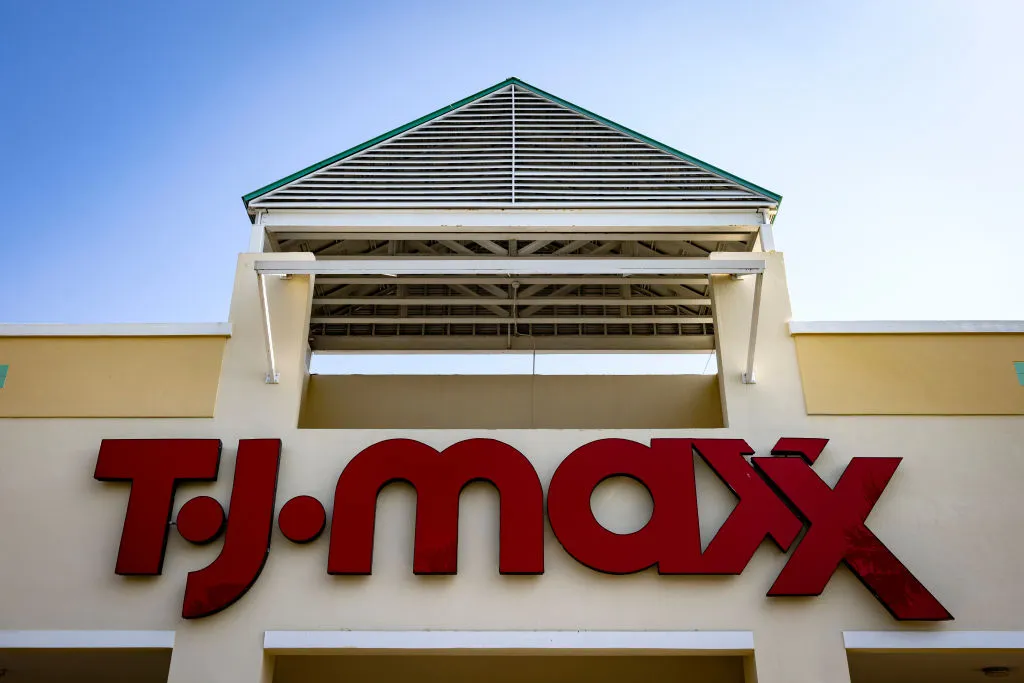
The highest-rated of these "sleeper" blue chip stock picks is The TJX Companies (TJX).
Most people know this consumer discretionary stock for its TJ Maxx fashion retail locations, but it's also responsible for a host of other low-cost chains, including Marshalls department stores, furnishing and décor retailer HomeGoods, outdoors gear seller Sierra and Canadian brands HomeSense and Winners. It also operates as TK Maxx in Europe and Australia.
Physical retail has generally been in a state of decline for years, and COVID finished off a number of brick-and-mortar retailers. But TJX continues to find demand for its steals and deals, which has driven shares to a market-beating 140% total return in the past five years and kept analysts optimistic about its ability to continue climbing.
"The off-price channel offers a very attractive value (proposition) to: (1) brands (efficient inventory management assistance); (2) landlords (stable & attractive foot traffic); and (3) shoppers (20%-60% off hot products in a differentiated treasure hunt experience)," says Truist Vice President Joseph Civello (Buy). "With its leading scale position, we believe TJX has access to the best product and convenient locations, which attracts the highest value traffic (creating a flywheel that further enhances their competitive edge).
"We believe this will continue to fuel its consistent algo with highly visible top/bottom-line growth in a vertical that we view as one of the most attractive in retail."
Civello is hardly alone. The Street has 19 Buy calls on TJX shares, vs a lone Hold and a single Sell. Long-term growth expectations aren't exactly electric, but at a 9% average annual clip, that's still respectable for a mature budget-store empire.
Related content