Berkshire Hathaway's Stock Holdings: Kiplinger's Full Portfolio Analysis
Berkshire Hathaway's holdings are a diverse set of blue chips and lesser-known growth bets. Here, we look at the stocks included in the equity portfolio.

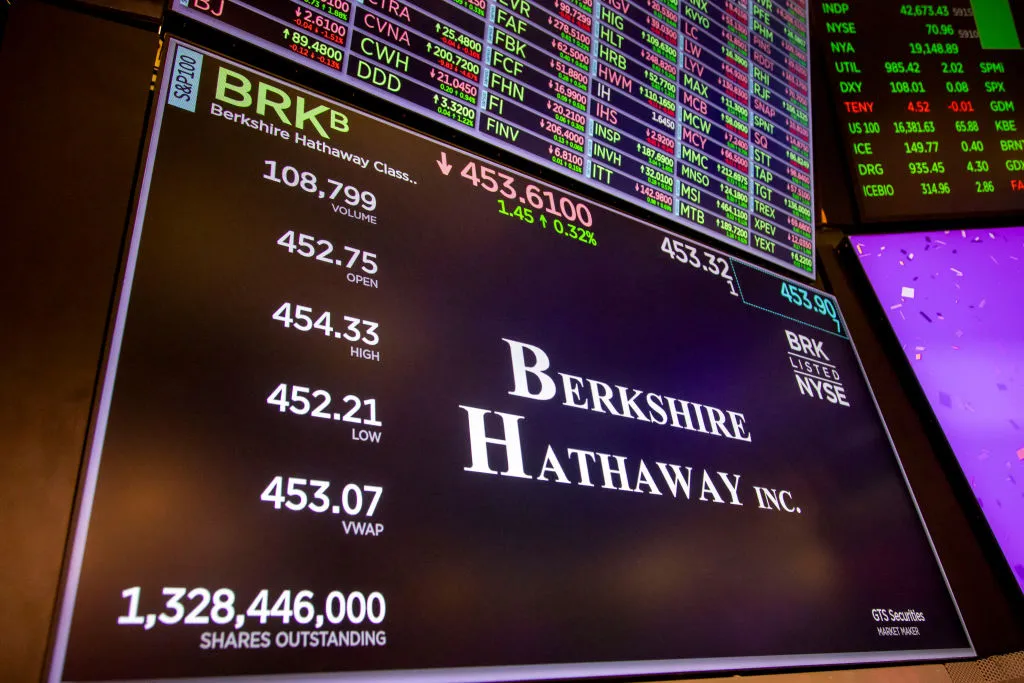
Warren Buffett stepped down as CEO of Berkshire Hathaway (BRK.B) at the end of 2025, and although he remains chairman, the holding company's stock portfolio is under new management.
Buffett always handled the largest positions in the Berkshire Hathaway portfolio, but those days are no more. The greatest long-term investor of all time still keeps his hand in and plays a key advisory role. Investment manager Ted Weschler also continues to manage perhaps 5% of Berkshire's stock investments.
But there's no question that CEO Greg Abel is now calling the shots.
From just $107.88 $24.99 for Kiplinger Personal Finance
Become a smarter, better informed investor. Subscribe from just $107.88 $24.99, plus get up to 4 Special Issues

Sign up for Kiplinger’s Free Newsletters
Profit and prosper with the best of expert advice on investing, taxes, retirement, personal finance and more - straight to your e-mail.
Profit and prosper with the best of expert advice - straight to your e-mail.
In the first quarter of 2026, Abel reduced or closed out positions in 22 names, many of them thought to be picks by former investment manager Todd Combs, who decamped to JPMorgan Chase (JPM) at the end of last year.
The overhaul shouldn't come as a shock. After all, Berkshire's portfolio has been changing dramatically for years now. Although old-guard favorites such as American Express (AXP) and Coca-Cola (KO) still form the core of the portfolio, Buffett & Co. have taken a shine to names such as Apple (AAPL), most recently, Alphabet (GOOGL).
One thing that hasn't changed, however, is Buffett's preference for maintaining a highly concentrated portfolio.
Excluding the company's Japanese brokerage stocks and other overseas equities, Apple alone accounts for more than a fifth of Berkshire's U.S. stock portfolio, according to data from WhaleWisdom. (That's down from more than 40% at its peak.)
Furthermore, Berkshire's top five U.S. equity holdings comprise about 67% of its portfolio value, while the top 10 account for 90%.
As Buffett likes to say, diversification is for those who don't know what they're doing.
Regardless, whether we're talking about Berkshire's biggest bets or the scores of stocks it maintains at the margins, Buffett's focus shifted after the COVID-19 pandemic.
Berkshire used to see value in a host of big bank stocks. Today, the holding company is far more selective. Healthcare stocks and payments processors were a long-time Buffett bet. But not anymore.
If you want to know which stocks Berkshire is buying and selling, look no further than our portfolio analysis.
Price, share totals and other data as of March 31, 2026. Sources: Berkshire Hathaway's SEC Form 13F filed May 15, 2026, for the reporting period ended March 31, 2026; and WhaleWisdom.
The Berkshire Hathaway portfolio
Company (Ticker) | Shares held | Holding value | Percent of portfolio |
|---|---|---|---|
Apple (AAPL) | 227,917,808 | $57,843,260,493 | 21.99% |
American Express (AXP) | 151,610,700 | $45,859,204,536 | 17.43% |
Coca-Cola (KO) | 400,000,000 | $30,420,000,000 | 11.56% |
Bank of America (BAC) | 513,624,165 | $25,039,178,044 | 9.52% |
Chevron (CVX) | 84,375,856 | $17,457,364,606 | 6.64% |
Occidental Petroleum (OXY) | 264,941,431 | $17,221,193,015 | 6.55% |
Alphabet Class A (GOOGL) | 54,249,798 | $15,600,071,913 | 5.93% |
Chubb (CB) | 34,249,183 | $11,162,836,215 | 4.24% |
Moodys (MCO) | 24,669,778 | $10,762,190,653 | 4.09% |
Kraft Heinz (KHC) | 325,634,818 | $7,323,527,057 | 2.78% |
Kroger (KR) | 50,000,000 | $3,618,000,000 | 1.38% |
Sirius XM (SIRI) | 124,807,117 | $2,880,548,260 | 1.09% |
Delta Air Lines (DAL) | 39,809,456 | $2,646,532,635 | 1.01% |
VeriSign (VRSN) | 8,989,880 | $2,232,726,597 | 0.85% |
Capital One Financial (COF) | 7,150,000 | $1,304,374,500 | 0.50% |
The New York Times Co. (NYT) | 15,146,535 | $1,268,219,376 | 0.48% |
Ally Financial (ALLY) | 29,000,000 | $1,137,670,000 | 0.43% |
Alphabet Class C (GOOG) | 3,585,215 | $1,028,454,775 | 0.39% |
Liberty Live (LLYVA) | 10,587,143 | $996,356,028 | 0.38% |
Lennar Class A (LEN) | 10,099,642 | $877,052,911 | 0.33% |
Nucor (NUE) | 3,907,075 | $660,686,383 | 0.25% |
Liberty Live (LLYVA) | 4,986,588 | $456,970,925 | 0.17% |
Louisiana-Pacific (LPX) | 5,664,793 | $412,113,691 | 0.16% |
Constellation Brands (STZ) | 632,890 | $94,933,500 | 0.04% |
NVR (NVR) | 11,112 | $73,226,191 | 0.03% |
Macy's (M) | 3,038,355 | $54,963,842 | 0.02% |
Lennar Class B (LEN.B) | 237,703 | $19,995,576 | 0.01% |
Jefferies Financial Group (JEF) | 433,558 | $17,892,939 | 0.01% |
Stocks Berkshire is buying
Buffett famously avoided airlines for decades. When he finally did come around, his timing was terrible, spreading his bets among a handful of major carriers not too long before COVID-19 set the industry into a tailspin. As a result, he quickly closed out those positions.
So it's a mark of change that Berkshire initiated a stake in Delta Air Lines in Q1, buying 39.8 million shares worth $2.6 billion. With a portfolio weight of a bit more than 1%, the air carrier is Berkshire's 14th-largest holding.
As noted above, Berkshire also made a bet on the consumer discretionary sector, picking up 3 million shares in Macy's. The tiny position in the department store operator was worth $55 million as of the end of Q1. At less than 0.1% of the portfolio, M stock is Berkshire's 27th-largest investment.
More interestingly, Berkshire more than tripled its stake in Google parent Alphabet (GOOGL). The holding company now owns 54 million shares worth $15.6 billion as of the end of Q1. With a weight of 5.9%, the Google parent's Class A shares are Berkshire's 7th-largest U.S. equity holding. Berkshire first bought GOOGL in the third quarter of 2025.
Relatedly, Berkshire initiated a stake in Alphabet Class C (GOOG) stock, picking up 3.6 million shares during the first three months of the year. With a value of $1 billion, the Class C investment accounts for Berkshire's 19th-largest holding.
In another vote of confidence in an existing position, Berkshire tripled its holdings of The New York Times Co. (NYT), adding another 10 million shares during Q1. With a market value of $1.3 billion, or 0.5% of the portfolio, NYT is Berkshire's 17th-largest investment — up from 30th place when it first bought the stock at the end of 2025.
Berkshire also added to homebuilder Lennar (LEN), an investment Berkshire initiated last year. The holding company bought another 3 million shares to bring its total stake to 10 million. With a market value of $877 million, LEN accounts for 0.3% of the portfolio, or the 21st-largest investment. Berkshire picked up more Lennar Class B (LEN.B) stock, as well. However, at less than 0.1% of the portfolio, it's essentially immaterial to a company of Berkshire's size.
Stocks Berkshire is selling
Berkshire reversed course on Chevron (CVX) in Q1, cutting its position in the integrated oil major by 35%. After boosting its stake in Q4, the holding company sold 46 million shares to start the year. Berkshire, which has owned the Buy-rated Dow Jones stock since the fourth quarter of 2020, still owns more than 84 million shares worth $17.5 billion as of quarter's end. And with a weight of more than 6.6% in the portfolio, CVX remains Berkshire's fifth-largest holding.
In another reprise from previous quarters, Buffett once again sold Bank of America (BAC) stock, which has been a major holding since 2017. Don't panic, though. Berkshire reduced its investment in the nation's second-largest bank by assets by less than 1%.
With 513 million shares worth more than $25 billion as of March 31, BAC slipped one place, to Berkshire's No. 3 holding.
In other sales, Berkshire continued to ease up on DaVita (DVA), its 11th-largest holding, this time 5%. The company also massively reduced exposure to Constellation Brands (STZ), a stake it initiated at the end of 2024, by 95%.
Elsewhere, Berkshire cut its stakes in Liberty Live Holdings (LLYVK) and Nucor (NUE), but with portfolio weights of less than 1%, respectively, these names don't move the needle.
The biggest changes came in the form of exits. After slashing its stake by 77% last quarter, Berkshire closed out its position in Amazon.com (AMZN).
A number of other familiar names were also banished from the portfolio. Apparently Berkshire is no longer a fan of payments processors, having exited its stakes in both Visa (V) and Mastercard (MA). The holding company owned both stocks since 2011.
Also getting the boot were Charter Communications (CHTR), Diageo (DEO), UnitedHealth Group (UNH), Domino's Pizza (DPZ), Heico (HEI), Lamar Advertising (LAMR), Formula One Group (FWONK), Atlanta Braves Holdings (BATRK), Pool Corp. (POOL), Allegion (ALLE), Aon (AON), Liberty Latin America Class A (LILA) and Liberty Latin America Class C (LILAK).
Berkshire's top five holdings
- Warren Buffett has always maintained a concentrated Berkshire Hathaway equity portfolio.
- The top five positions in the Berkshire portfolio account for 67% of its total value.
- Apple, American Express, Coca-Cola, Bank of America and Chevron are the five largest holdings.
As noted above, Buffett has always maintained a highly concentrated portfolio. Indeed, he's said that "diversification makes very little sense for anyone who knows what they're doing."
The stocks below accounted for 67% of Berkshire's total U.S. equities portfolio value as of the end of Q1. If you want to know what's driving the bulk of the Buffett's returns, check out the names below.
Apple
Buffett has called Apple "Berkshire's third business," so it should come as no surprise that the iPhone maker routinely takes the top spot among the holding company's positions.
True, Berkshire has pared its stake in Apple in recent quarters, but Buffett has assured shareholders he adores AAPL as much as ever. BRK.B's former CEO took pains to explain that the iPhone maker is still — er — the Apple of his eye.
For the record, the sales were for tax purposes. The greatest long-term investor of all time said that AAPL is "even better" than American Express or Coca-Cola, two "wonderful" businesses that Berkshire has owned since the early 1960s and late 1980s, respectively.
More recently, Buffett said he wasn't comfortable with Apple accounting for such an outsized weight in the portfolio.
As Apple's sixth-largest shareholder, Berkshire's continuing interest in the iPhone maker has market-wide implications.
American Express
Berkshire closed out its stakes in payments processors Visa (V) and Mastercard (MA), but it continues to adore American Express.
Buffett took his first stake in AmEx in the 1960s, and it’s still paying off a half-century later.
There's a lot to love about AmEx: Its management is strong; it's a dominant brand in the industry; and it generates copious amounts of free cash flow — the money left after essential capital expenditures are made that can be used to finance dividends and stock buybacks.
The current yield on the dividend isn't eye-catching, but it is safe and growing. The stock is only slightly more volatile than the broader market. Those are attributes that will help long-term investors sleep better at night.
Coca-Cola
Buffett famously drank Coca-Cola for 52 years before investing in the stock.
He finally took the plunge in 1988. "We expect to hold these securities for a long time," Buffett wrote back then of his new stake in Coke in a letter to Berkshire shareholders. "In fact, when we own portions of outstanding businesses with outstanding managements, our favorite holding period is forever."
As of the end of Q1 2026, Berkshire owned 9.3% of Coca-Cola’s outstanding shares. Analysts like the stock's prospects, too. Wall Street gives KO a consensus recommendation of Buy, with strong conviction.
Bank of America
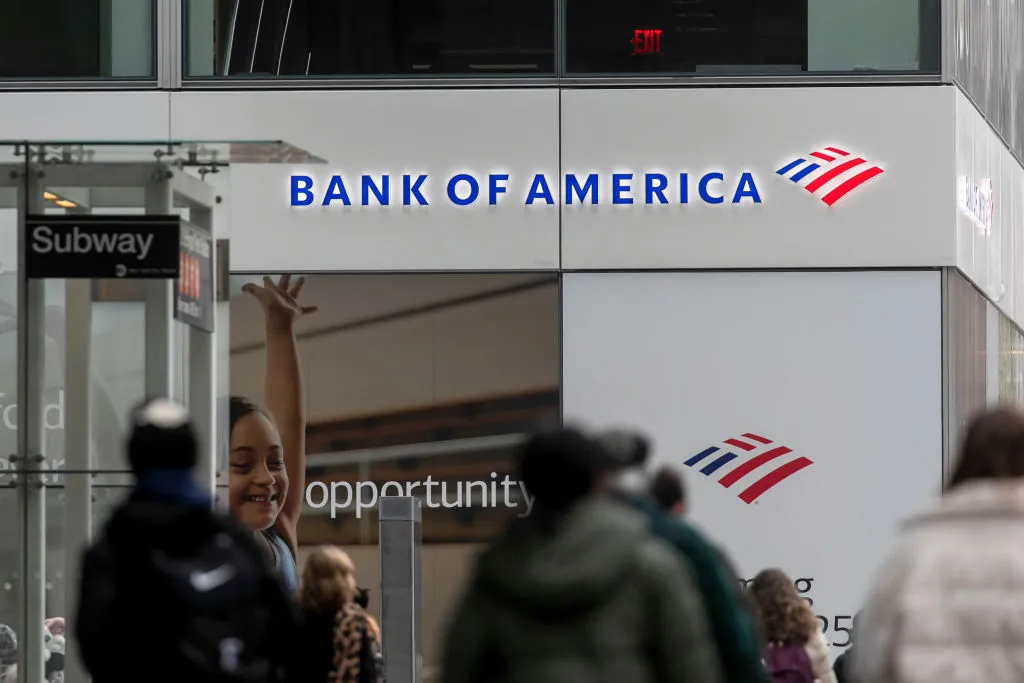
Bank of America is Berkshire Hathaway's fourth-largest holding. Buffett first acquired BAC stock in Q3 2017. Berkshire is the bank's second-largest institutional shareholder.
In an April 2023 media appearance, Buffett said that he unloaded many of the holding company's bank stocks because he didn't think they were near as solid investments as they once were. As for Bank of America, he said this about the bank and its CEO:
"I like [CEO] Brian Moynihan enormously. And I just don't wanna, I don't wanna sell it," the then 92-year-old CEO told CNBC's Becky Quick.
"But I did sell banks that we'd owned for 25 or 30 years. And if they asked me why I did it, I told them — I just think the system isn't set up quite right in terms of connecting punishment to culprits on something that's important," Buffett added.
Chevron

Thanks to the outlook for crude oil prices, the energy sector is enjoying steady and predictable free cash flow. Chevron, the only energy name among all 30 Dow Jones stocks, is returning some of this cash to shareholders through dividends and buybacks.
Make no mistake: There are few things Buffett likes more than dividends and buybacks.
It also helps that oil is a solid hedge against inflation. With inflation still running ahead of the Federal Reserve's 2% target, commodities should remain in favor.
Berkshire's massive pile of cash, equivalents and short-term investments is much better put to use in an asset such as Chevron under such conditions.
Related content
- What Set Warren Buffett Apart
- 7 of Warren Buffett's Biggest Misses
- If You'd Put $1,000 Into Berkshire Hathaway Stock 20 Years Ago, Here's What You'd Have Today