If You'd Put $1,000 Into Google Stock 20 Years Ago, Here's What You'd Have Today
Google parent Alphabet has been a market-beating machine for ages.

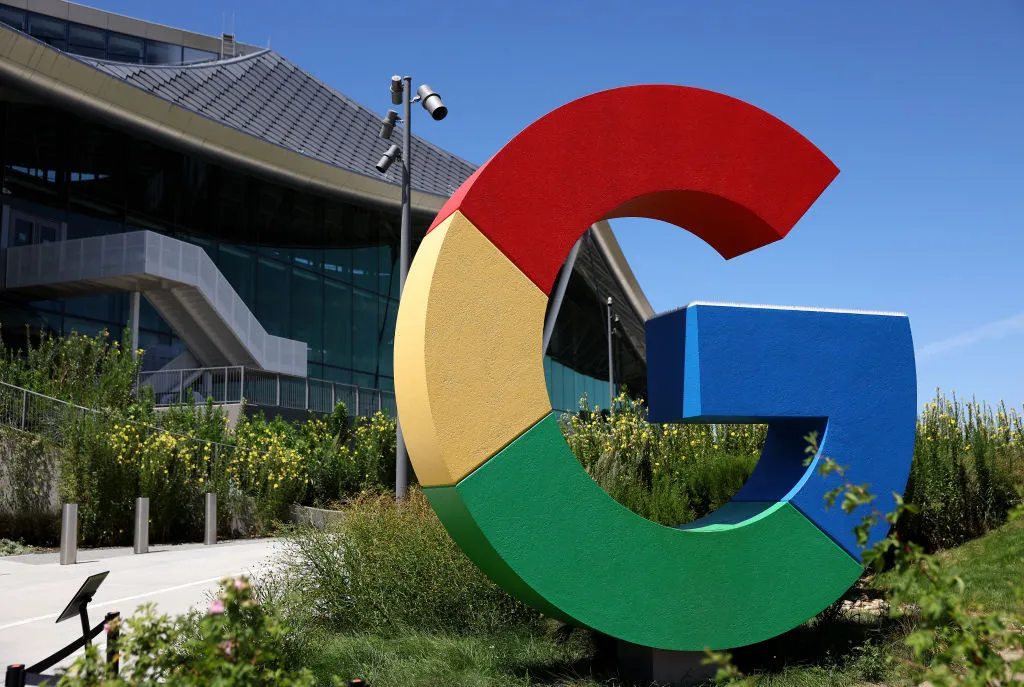
Google parent Alphabet (GOOGL) has been a buy-and-hold bonanza since it first went public more than two decades ago. Even better, analysts say the frenzy over all things AI gives GOOGL stock more room to run.
Investors knew they had something special with Google when it went public via a Dutch auction (don't ask) back in those innocent days of the early 21st century.
The company clearly offered the best internet search product, one that would eventually give it a near-monopoly in that lucrative market.
From just $107.88 $24.99 for Kiplinger Personal Finance
Become a smarter, better informed investor. Subscribe from just $107.88 $24.99, plus get up to 4 Special Issues

Sign up for Kiplinger’s Free Newsletters
Profit and prosper with the best of expert advice on investing, taxes, retirement, personal finance and more - straight to your e-mail.
Profit and prosper with the best of expert advice - straight to your e-mail.
But Google hardly rested on its search laurels. The company rolled out a steady stream of new products — mail, maps and the Chrome operating system, for example — that extended its reach across the world wide web.
In 2006, the same year GOOGL was added to the S&P 500, the company acquired a quirky startup that allowed users to upload videos to the internet. Critics questioned the wisdom of spending $1.7 billion on what looked to be a fad, but the YouTube deal turned out all right. After all, the business generated $60 billion in subscription and ad revenue in 2025, or 15% of Alphabet's entire top line.
Google, now dominant in search and omnipresent on the web, soon set its sights on mobile.
When smartphone sales exploded following Apple's (AAPL) release of the iPhone, Google entered the booming segment by creating the open-source Android mobile operating system.
And those are just a handful of highlights from the early days. By 2015, Google was operating so many diverse projects that it reorganized into a holding company called Alphabet.
Today, Google commands roughly 90% of the market for global search, and its Android operating system is found on approximately 70% of all smartphones.
Future success, however, is predicated on competing with fellow Magnificent 7 stocks Amazon.com (AMZN) and Microsoft (MSFT) in artificial intelligence and cloud-based enterprise services. Note too that analysts feel pretty good about GOOGL's prospects in these endeavors.
Although Amazon Web Services and Microsoft Azure claim higher total cloud market share, Google Cloud is currently the fastest-growing major hyperscaler. Alphabet also has a competitive advantage thanks to its vertical integration, including chips, infrastructure, training datasets and end-user applications.
Indeed, S&P Global cited the company's diversified portfolio of advertising, cloud infrastructure, artificial intelligence, hardware, self-driving cars and healthcare technology when it added GOOGL to the Dow Jones Industrial Average in June 2026.
But before we get to where Wall Street thinks the communication services stock is going, let's take a look at how it’s performed for the truly faithful over the past couple of decades.
The bottom line on Google stock?
GOOGL stock has been one of the best stocks of all time, according to research by Hendrik Bessembinder, a finance professor at the W.P. Carey School of Business at Arizona State University.
Over its entire lifetime as a publicly traded company, Alphabet generated more than $1 trillion in lifetime wealth creation, which accounts for a stock's increase in market cap adjusted for cash flows in and out of the business and other factors.

How impressive is that? Only Apple, Microsoft and Exxon Mobil (XOM) created more wealth for shareholders, per Bessembinder's findings.
Heck, GOOGL is one of just four stocks to ever top $4 trillion in market cap.
But then retail investors are probably more interested in what a long-term investment in GOOGL stock looks like on a brokerage statement.
Spoiler alert: Alphabet's outperformance has been nothing less than stupendous.
GOOGL stock outperforms the S&P 500 over pretty much any standardized time period investors care to measure.
Over its entire life as a publicly traded company, GOOGL stock has generated an annualized total return (price change plus reinvested dividends) of 29.9%. That nearly triples the broader market's total return of 10.3% over the same span.
GOOGL's 20-year performance is likewise impressive. Over the past two decades, GOOGL stock delivered an annualized total return of 19.3% versus 11.5% for the S&P 500.
Have a look at the above chart. You'll see that if you put $1,000 into GOOGL stock 20 years ago, it would be worth almost $35,000 today. The same amount invested in an S&P 500 ETF would be worth nearly $9,000.
Happily for GOOGL shareholders, analysts see plenty more upside ahead for the blue chip stock. Of the 63 analysts covering GOOGL stock surveyed by S&P Global Market Intelligence, 42 call it a Strong Buy, 14 say Buy and seven have it at Hold. That works out to a rare consensus recommendation of Strong Buy. Indeed, Alphabet routinely ranks among analysts' top S&P 500 stocks.
Speaking for the bulls, Argus Research analyst Joseph Bonner praises the company's success outside of its core search product and its potential in AI.
"While Alphabet has been criticized as a Johnny-one-note for its dependence on digital advertising, the rapid growth of Google Cloud and YouTube have started to diversify the company's revenue," writes Bonner, who rates GOOGL at Buy. "Alphabet remains at a minimum competitive, if not a leader, in the development of generative AI, the rapidly developing and perhaps disruptive new computing paradigm."
More Stocks of the Past 20 Years
- If You'd Put $1,000 Into Amazon Stock 20 Years Ago, Here's What You'd Have Today
- If You'd Put $1,000 Into Microsoft Stock 20 Years Ago, Here's What You'd Have Today
- If You'd Put $1,000 Into Netflix Stock 20 Years Ago, Here's What You'd Have Today