Nasdaq Buckles on Fear This Boom Is an AI Bubble: Stock Market Today
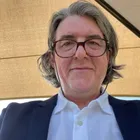
Fed Chair Kevin Warsh spoke up for the benefits of an AI boom, but markets are still showing more concern about an AI bubble.


The main equity indexes slumped again on Friday, as semiconductor stocks sold off for a ninth straight trading session. Federal Reserve Chair Kevin Warsh shed only a little light on the central bank's upcoming decision on interest rates at an event in Asia. But he did heap a lot of praise on the potential upside for the broader economy from the artificial intelligence (AI) boom.
Still, CoreWeave (CRWV, -11.9%) remains a focal point, as investors, traders and speculators fixate on capex spending and whether what we're seeing instead is an AI bubble.
The VanEck Semiconductor ETF (SMH, -3.4%) extended its two-week losing streak, as Nvidia (NVDA, -1.4%) rallied into the green around noon but slumped after midday. Tech stocks, as well as AI stocks, generally dragged on the main equity indexes.
From just $107.88 $24.99 for Kiplinger Personal Finance
Become a smarter, better informed investor. Subscribe from just $107.88 $24.99, plus get up to 4 Special Issues

Sign up for Kiplinger’s Free Newsletters
Profit and prosper with the best of expert advice on investing, taxes, retirement, personal finance and more - straight to your e-mail.
Profit and prosper with the best of expert advice - straight to your e-mail.
By the closing bell, the blue-chip Dow Jones Industrial Average, reversing early gains supported by rotation into energy and risk-off sectors such as consumer staples stocks, was down 0.3% to 52,002. Papa Dow held on for a 0.7% gain this week.
The broader S&P 500 slid 1.1% to 7,659, extending its weekly loss to 1.9%. And the Nasdaq Composite shed 2.1% to 26,140, as the tech-heavy index fell 4.5% from where it was last Friday.
The 2-year Treasury yield was down 3.0 basis points to 4.721%, as the short-term proxy for monetary policy traded in a wide range. Yields on the 10-year (+0.2 bps, 5.089%) and the 30-year (+0.7 bps, 5.435%) also moved up and down a lot on Friday.
'One Night in Bangkok' featuring Fed head Kevin Warsh
Warsh said little about the target range for the federal funds rate during an overnight "fireside chat" at the International Monetary Fund and World Bank Group annual meeting in Bangkok, Thailand.
While he was talking, though, equity index futures bounced to session highs, bond yields backed off a little more and the probability the Federal Open Market Committee (FOMC) will keep its policy rate unchanged at its late October meeting ticked up to 85.1% from 72.3% on Thursday.
That's according to CME FedWatch, which tracks price action in the 30-day fed funds futures market.
Looking for more timely stock market news to help gauge the health of your portfolio? Sign up for Closing Bell, our free newsletter that's delivered straight to your inbox at the close of each trading day.
"We removed a dose of accommodation about a month ago," Warsh said, referring to the 25-basis-point cut at the September Fed meeting. "I don't prejudge meetings. I don't believe in saying now what I might do at the meetings we have in the balance of the year."
Warsh also called AI "probably the most consequential change to the U.S. and the global economy in my lifetime. If you're a central banker and you're in the business of trying to ensure stable prices and full employment, you've got to recognize this as a shock."
Indeed, according to the Fed chair, AI will "fundamentally change the conduct of monetary policy."
With the official "blackout period" around its next policy decision starting tomorrow, that's the last we'll hear from the Fed until the conclusion of the next FOMC meeting on Wednesday, October 28.
Netflix needs a hit
Netflix (NFLX, -2.9%) announced its biggest layoffs since 2022 earlier this week, but naming a new chief content officer is probably a more important potential long-term catalyst for the communication services stock.
With NFLX down more than 15% year to date through Thursday, management is scheduled to report third-quarter results after the closing bell on Tuesday.
The stock has stagnated because of stale content that's left it struggling for engagement in an extremely competitive environment.
Co-CEOs Greg Peters and Ted Sarandos said in an internal memo that Netflix will be "disciplined about where we prioritize our people and resources" and focus on "high impact areas to improve our service."
For investors, that probably means a credible plan from the new management team to recapture eyeballs.
Flying car stock falls 2%
It's not the percentage part. It's the fact that the Magnificent 7 stock was down at all on the day Tesla (TSLA, -2.1%) introduced its Roadster, arguably the world's first flying car.
Say what you will about CEO Elon Musk and the grandiosity of his SpaceX (SPCX, -1.7%) project. This is the world's first flying car, people. "The Jetsons!" Right?
Well, actually, it's one thing to build a mind-blowing flying car, but another to introduce it when investors and traders, even speculators and policymakers, are focused on exploding capex and hyperscaler impact on the bond market.
Indeed, as Fed Chair Warsh acknowledged today, AI will boost central banks' ability to analyze data. It will also change the real economy, improve productivity and wealth.
At the same time, he cautioned, it's going to be a bumpy ride.
Related content
- Earnings Calendar and Analysis for Next Week
- What to Look Out for in Economic Data Next Week
- What the Midterms Mean for Your Stock Portfolio