Dow, S&P 500 Slip on December Rate Cut Worries, Nvidia Boosts Nasdaq: Stock Market Today
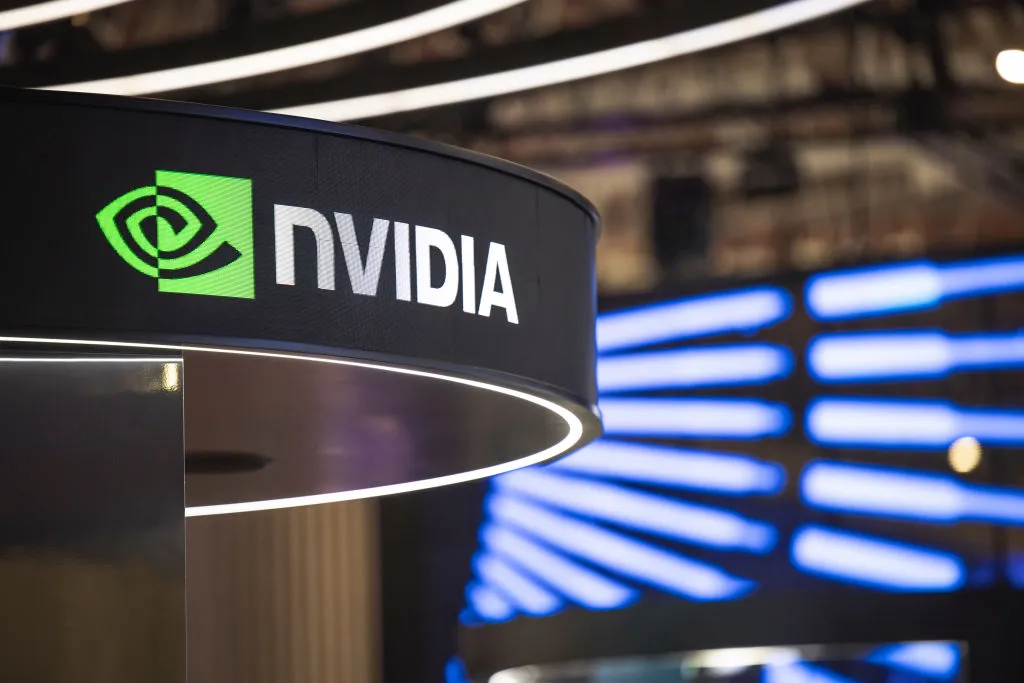
Nvidia became the first company ever to boast a $5 trillion market cap, but it wasn't enough to lift the Dow and the S&P 500.

Stocks opened modestly higher on Wednesday as several mega-cap stocks rallied ahead of a rush of Big Tech earnings. The main indexes finished mixed, though, after the Federal Reserve lowered interest rates, as expected, but suggested a December rate cut is not a sure thing.
Nvidia (NVDA) was one of the most talked-about stocks today after the artificial intelligence (AI) bellwether rose 3% to become the first company to close with a $5 trillion market cap.
NVDA's latest leg higher came as CEO Jensen Huang on Tuesday unveiled several new deals, including a $1 billion stake in networking equipment firm Nokia (NOK).
From just $107.88 $24.99 for Kiplinger Personal Finance
Become a smarter, better informed investor. Subscribe from just $107.88 $24.99, plus get up to 4 Special Issues

Sign up for Kiplinger’s Free Newsletters
Profit and prosper with the best of expert advice on investing, taxes, retirement, personal finance and more - straight to your e-mail.
Profit and prosper with the best of expert advice - straight to your e-mail.
"NVDA's approach to scaling up, scaling out, and scaling across will continue to improve the economics of future data centers," says CFRA Research analyst Angelo Zino. And the company's "new partnerships across markets like autos, robotics, communications, and quantum computing … will help spur greater AI uses cases through the end of the decade."
Also working in Nvidia's favor was President Donald Trump, who told reporters he'll "be speaking" to Chinese President Xi Jinping about Nvidia's "super duper" Blackwell AI chip when the two leaders meet on Thursday. Blackwell is Nvidia's most advanced AI chip, and current export controls restrict the company from selling it to China.
NVDA's big gains spurred upside in several mega-cap chip stocks, including Advanced Micro Devices (AMD, +2.5%), Broadcom (AVGO, +3.5%) and Micron Technology (MU, +2.1%).
Fiserv has its worst day ever after "abysmal" earnings
Elsewhere on Wall Street, Fiserv (FI) plunged 44% – its worst day ever – after the fintech and payments firm reported third-quarter earnings of $2.04 per share on revenue of $4.92 billion. This fell well short of analysts' estimates for earnings of $2.64 per share on $5.35 billion in sales.
The company also cut its full-year guidance due to what CEO Mike Lyons says is "slowing cyclical growth in Argentina" and an overreliance on short-term initiatives, which have impacted the company's ability to build long-term relationships with clients.
"As a result, we have made the decision to deprioritize these short-term revenue and expense initiatives, which, of course, has some near-term impact on our growth and profitability," Lyons said on Fiserv's earnings call.
Fiserv also announced several leadership changes, including a new chief financial officer. Additionally, it will transfer its stock exchange listing to the Nasdaq from the New York Stock Exchange and will change its ticker symbol to "FISV," effective ahead of the November 11 open.
"Investor sentiment was already very weak on FI before this morning's news," say BTIG analysts. And the "abysmal" results "will only make investor appetite more challenged."
More Magnificent 7 earnings roll in
The earnings calendar heats up after the close, with Magnificent 7 stocks Alphabet (GOOGL) and Meta Platforms (META) set to report. Microsoft (MSFT) will also unveil its quarterly results.
MSFT stock slipped 0.1% today – but maintained its $4 trillion market valuation – on news of an outage in the company's Azure and 365 services.
Microsoft says it is working to resolve this issue and customers can check its Azure status page for updates.
As for the tech giant's earnings report, Jay Woods, chief market strategist at Freedom Capital Markets, says investors want to see how the company's AI investments are "being integrated into their product suite and what impact that will have on revenue."
As for the October Fed meeting
Wednesday's biggest event was the October Fed meeting, where the central bank lowered the federal funds rate by a quarter-percentage point, as expected. It also said it will end its quantitative tightening program on December 1.
"This concludes, for now, a more than three-year process of shrinking the Fed's balance sheet that began in June 2022," says David Payne, staff economist at The Kiplinger Letter. "The Fed will still have about $6.5 trillion in its portfolio, substantially above the $4.5 trillion it had 10 years ago, before the pandemic."
The main indexes held their gains in the immediate aftermath of the Federal Open Market Committee announcement, but swung lower after Fed Chair Jerome Powell suggested market participants shouldn't necessarily expect a December rate cut.
Powell "emphasized in his opening statement that the Fed faces a quandary now, with risks of both rising inflation and rising unemployment," says Payne. "For now, the Fed believes the greater danger is to the labor market, which is why the Fed cut interest rates today. But, 'going forward is a different thing,' suggesting the Fed could pass on cutting rates in December."
At the close, the blue-chip Dow Jones Industrial Average (-0.2% at 47,632) and the broader S&P 500 (-0.3 point at 6,890) were in the red, while the Nasdaq Composite was up 0.6% at 23,958 – a new record closing high.
Related content
- What the Rich Know About Investing That You Don't
- Targa Resources, Take-Two Interactive, Boston Scientific: Why Experts Rate These Stocks at Strong Buy
- Best Stocks to Buy for Fed Rate Cuts