Lessons from Dolly Parton: How to Protect Your Estate Plan From Fights
From no-contest clauses to security protocols, advanced planning can get ahead of family disputes before they start, making it easier on your loved ones after you're gone.


For years, Dolly Parton insisted she didn't want to leave her family with a "mess" after her passing.
She had no children, and her husband of over 50 years, Carl Dean, died in 2025. Because her estate involves much more than basic financial accounts — encompassing her brand, song catalog, theme park, charities, and a large extended family — she took proactive steps.
Following her death on August 25, reports indicate she used trusts, business entities and financial managers to keep the majority of her assets out of public probate court.
From just $107.88 $24.99 for Kiplinger Personal Finance
Become a smarter, better informed investor. Subscribe from just $107.88 $24.99, plus get up to 4 Special Issues

Sign up for Kiplinger’s Free Newsletters
Profit and prosper with the best of expert advice on investing, taxes, retirement, personal finance and more - straight to your e-mail.
Profit and prosper with the best of expert advice - straight to your e-mail.
Unfortunately, even the best-laid plans can spark a fight where control and loyalty clash with money.
What's happening with Parton's estate
According to court papers reported by The New York Times and other outlets, Parton's longtime manager has sued her nephew and former head of security, Bryan Seaver, alleging he threatened staff and partners and vowed to "destroy the entire brand" unless he was paid.
In the article, Seaver denied threatening anyone associated with Parton's estate and said that his messages had been twisted to portray him as an antagonist. Parton's sister, Frieda, has said the family isn't fighting about the estate. Currently, the manager has requested a restraining order against her nephew.
Most inheritance battles are not about a $450 million empire. Instead, arguments often start with who has control of the estate, whether the inheritance was fair (or unfair), a surprise in the estate paperwork or the fact that no documents exist outlining your plan for the estate.
A new Kiplinger-Morning Consult survey highlights a generational divide in family financial planning: Two in five families have never discussed inheritance, and 30% of parents have no formal estate plan at all.
Ron Gura, co-founder and CEO of Empathy, provides some context based on a survey by the company:
- Less than one-third of families have formal estate plans (31%) or financial plans (30%) in place.
- More than half (53%) say existing estate documents are incomplete, outdated or simply unfindable.
- More than one in four rely on informal or verbal plans, which offer no legal protection and are not formally documented.
- 60% operate with fragmented or no knowledge of their family's financial plans.
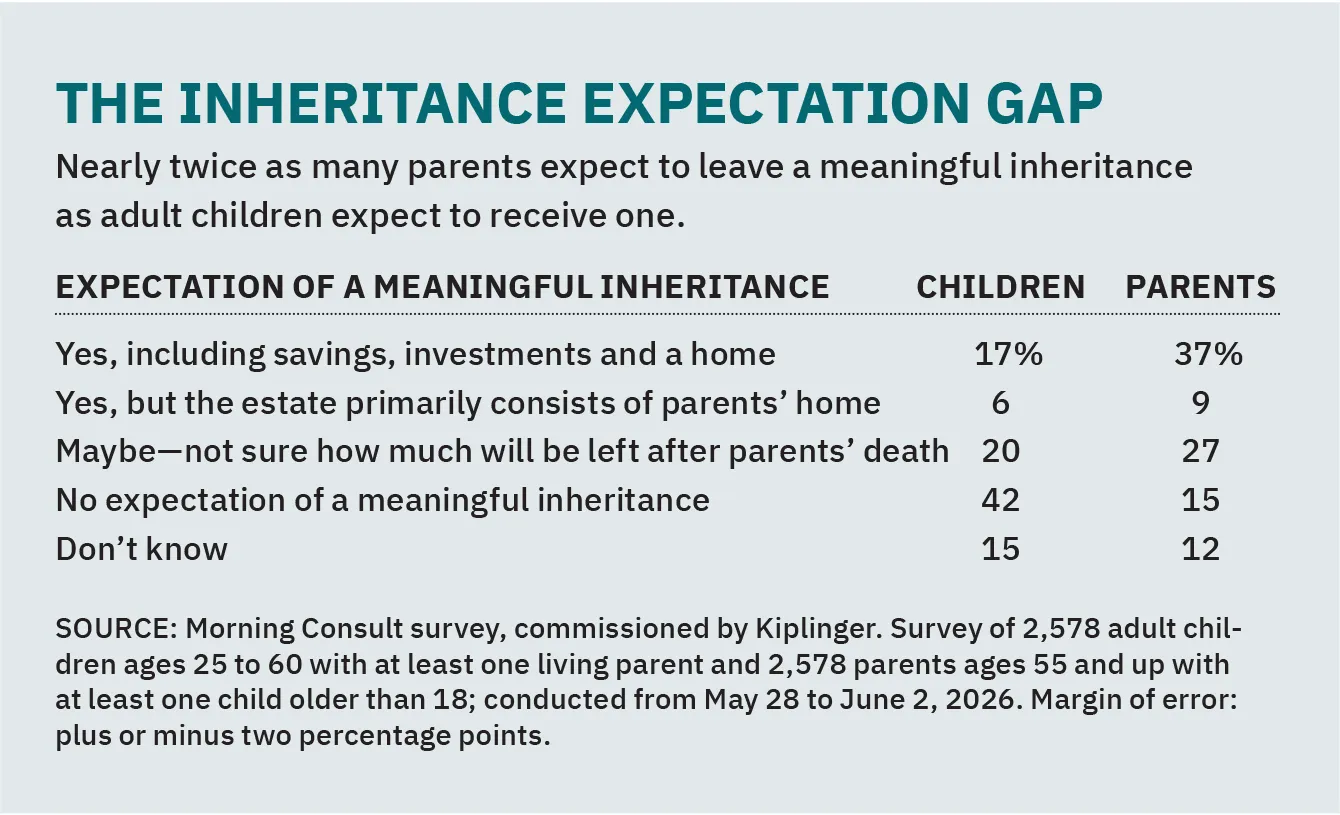
While Parton's estate isn't typical, some aspects are similar to every estate: Who gets the house, will the assets be split fairly, who is left in charge and who thought they were promised more than the estate planning documents actually say, for example.
What are the best lessons to protect your estate from post-death fights? Let's break it down.
1. Put your plan in writing
A missing, outdated or half-finished estate plan is likely to spark a dispute, even in the closest of families. That's why it's important to update your estate planning documents every three to five years or after a major life event, such as a divorce.
2. Consider a trust
A will has to go through probate court before most assets can be distributed. That process is public, can take months and can be expensive in the long run.
A funded living trust usually avoids probate for any assets you name in the trust. The trustee can follow your instructions faster and privately, without waiting for a court to approve every step.
3. Specify who is in charge
Someone must carry out your plans after you're gone. But if you don't name an executor, a court or state law might name one for you.
Choosing who is in charge lets you pick an executor who is organized, trusted and able to follow your wishes. That might be a third-party trustee or executor with the authority to change locks, pay bills and follow your plan without waiting for your family to vote.
4. Explain unequal gifts while you still can
Most fights start with "why do they get this or that and not me?" If one child gets the business and another gets cash, explain your reasoning during a family discussion.
Phil Reed, estate and asset protection attorney at Reed Law, says fairness is inevitably the first concern. But fairness and equality aren't the same: "The primary thing to keep in mind when deciding how to divide your estate is communicating the reasons for that decision and having those memorialized in your estate plan specifically."
Read more: Why Leaving an Equal Inheritance to Your Children Could Backfire
5. Write down who gets what
Make a list of "who wants what" for things such as jewelry, artwork, the lake cabin, the '67 Chevy and more, and keep it somewhere safe. Dividing your personal property beforehand can temper fights after you're gone. Dividing it after your passing is often why siblings stop speaking.
6. Keep things private
Kim Hegwood, owner and managing attorney at Your Legacy Legal Care, says that if someone is seeking privacy, a will might not be enough.
"A will must go through probate for it to be enforceable. Depending on the person's wishes, the assets they own, and how they want things to be managed upon incapacity or death, a trust may be the best type of estate planning tool to help keep it from the public eye."
7. No-contest clauses
Hegwood notes that a no-contest clause basically says, "If you challenge this plan and lose, you forfeit what I have left you." It can be a strong deterrent, but only if the person has something to lose. If you disinherit someone, a no-contest clause won't mean much to them.
However, this clause isn't absolute. "In Texas, for example, a court generally won't enforce one against someone with probable cause who brought the challenge in good faith. A no-contest clause discourages frivolous fights, but it does not replace a well-crafted plan," Hegwood says.
Final word on estate disputes
Dolly Parton reportedly took a firm stance: Having seen what happens when celebrities die without a plan, she didn't want that chaos for her own family. Unfortunately, the first public fight after her death wasn't about who got the rhinestones — it was a battle for control.
The lesson? A solid estate plan ensures your assets and healthcare wishes are honored while supporting your loved ones. But as headlines show, things don't always go as planned. While an estate plan can't erase your heirs' grief, it can keep your legacy from turning into a family feud.
Hegwood adds, "We always say the kindest thing you can do for the people you love is to make sure they never have to guess what you wanted. Grief is hard enough without adding a legal fight."
Related content
- The Trillion Dollar Talk
- How To Avoid Aretha Franklin and Prince's Estate Planning Errors
- Six Estate Planning Mistakes Prince and Other Celebrities Made
- Estate Planning Isn't Just for the Ultra-Wealthy