Should You Buy SPCX Stock?
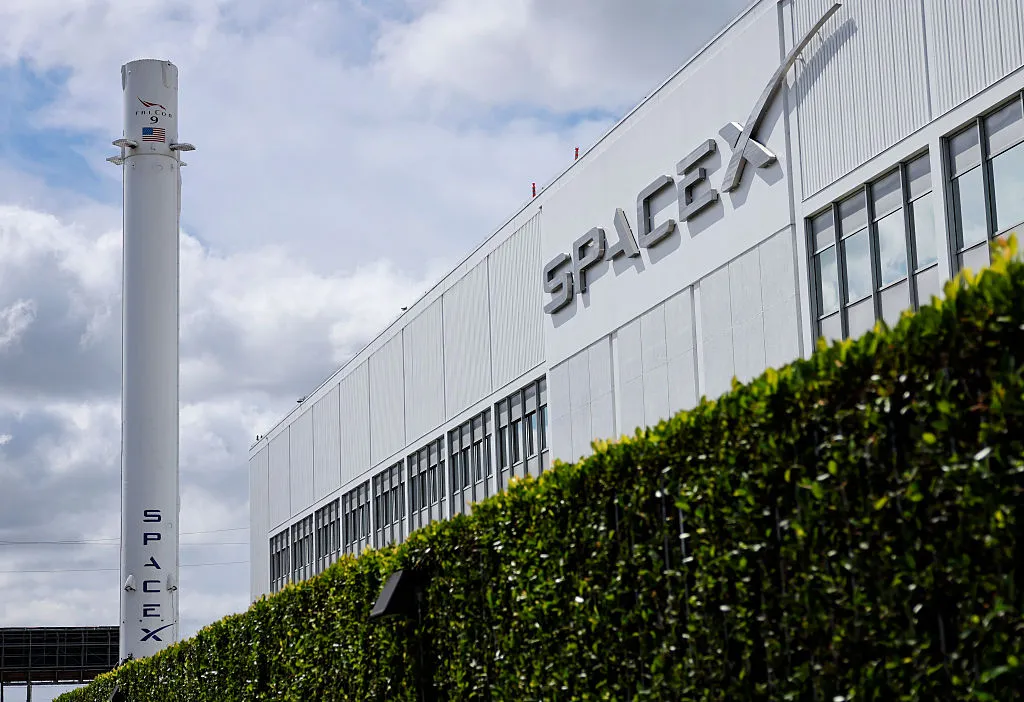
The massive SpaceX IPO has come and gone, with SPCX stock now trading on the Nasdaq.

When Elon Musk took Tesla (TSLA) to market in June 2010, the electric vehicle maker raised more than $226 million in its initial public offering (IPO).
That pales in comparison with General Motors (GM), which raised roughly $20 billion in its November 2010 offering, when the automaker returned to the public markets after filing for Chapter 11 bankruptcy in 2009.
Tesla has grown into a trillion-dollar company and the biggest U.S. automaker by market capitalization. The stock has also averaged an annual return of 42% since it began trading, outpacing the broader S&P 500 by 31 percentage points.
From just $107.88 $24.99 for Kiplinger Personal Finance
Become a smarter, better informed investor. Subscribe from just $107.88 $24.99, plus get up to 4 Special Issues

Sign up for Kiplinger’s Free Newsletters
Profit and prosper with the best of expert advice on investing, taxes, retirement, personal finance and more - straight to your e-mail.
Profit and prosper with the best of expert advice - straight to your e-mail.
Musk, however, has had his redemption on the IPO stage, with the entrepreneur taking SpaceX, his space exploration and satellite company, public in what is the biggest IPO ever.
What is SpaceX?
Elon Musk founded SpaceX in 2002, intending to lower costs for space launches and eventually build a livable colony on Mars. The company had its first successful space launch in 2008 and has since had more than 650 total launches. It also wants to build data centers in space.
"A key to its success has been a relentless focus on innovation," writes Kiplinger contributor Tom Taulli in his feature on the hottest upcoming IPOs to watch for. "The company's breakthroughs include reusable orbital rockets, which have greatly reduced the costs of space flights; vertical rocket landings; and onboard autonomous systems."
In 2015, SpaceX moved to diversify its revenue stream with Starlink, a satellite internet project that today provides coverage to roughly 10 million customers across 160 countries and territories. It also has contracts with the U.S. Department of Defense to provide satellite service through its Starshield segment to government and military organizations, including with Ukraine during its war with Russia.
The global space economy is expected to reach $1 trillion by 2034, according to Novaspace.
Geopolitical conflicts are increasing the demand for satellites, and the conflict in the Middle East shows "how space tech is crucial for missile warning and tracking, communications, surveillance, drone and vehicle connectivity, and more," writes John Miley, senior associate editor at The Kiplinger Letter.
SpaceX also bought xAI, Musk's artificial intelligence (AI) company that owns X (formerly Twitter), in February 2026 in an all-stock deal valued at roughly $250 billion. In May, Musk announced that xAI is fully absorbed by SpaceX and will rebrand as SpaceXAI.
Looking for more timely stock market news to help gauge the health of your portfolio? Sign up for Closing Bell, our free newsletter that's delivered straight to your inbox at the close of each trading day.
According to its S-1 filing, which became publicly available on May 20, SpaceX had revenue of $4.7 billion in the three months ended March 31. It also incurred a loss from operations of $1.9 billion and had adjusted EBITDA (earnings before interest, taxes, depreciation and amortization) of $1.1 billion.
In 2025, the company's revenue totaled $18.67 billion, while adjusted EBITDA arrived at $6.58 billion.
SpaceX is poised to benefit from surging growth in the global space economy, which is expected to reach $1 trillion by 2034, according to Novaspace, up from $626 billion in 2025. "The U.S., led by SpaceX launching 85% of spacecraft into orbit and its Starlink Internet service, reaps most of the business," says Miley.
When is the SpaceX IPO date?
SpaceX confidentially filed its IPO paperwork with the SEC in early April — and in late May, it filed its prospectus which revealed that Musk will own roughly 42% of the company's equity and control about 80% of the total voting power.
On Thursday, June 11, SpaceX confirmed a fixed per-share price of $135 ahead of its IPO and said it will sell 555.6 million shares. In its S-1 filing, the company said that 5% of common stock will be reserved for "certain employees and persons" to purchase at the offering price. And reports suggest roughly 20% was made available to retail investors, a higher-than-usual amount for IPOs.
At $135 per share, SpaceX raised $75 billion in its offering, making it the largest U.S. IPO ever, easily exceeding the previous record holder — Alibaba Group Holding (BABA) and its $21.8 billion offering in 2014. It also surpassed Saudi Aramco as the biggest global IPO ever.
At $135 per share, SpaceX is poised to raise $75 billion in its offering, which will make it the largest IPO ever.
The SpaceX IPO occurred on June 11, and SPCX stock made its market debut on the Nasdaq on June 12. Shares opened at $150, hit a session high of $176.52, and settled at $160.95.
SpaceX's market valuation at Friday's close was $2.105 trillion, making it the sixth-largest U.S. company by market cap.
Should you buy the SpaceX IPO?
"An initial public offering enables a private company to 'go public,' or start trading in public markets, by issuing its own shares on a stock exchange for the first time. In this way, any investor can buy shares and the company can raise capital to grow," Taulli writes in his article, "What Is an Initial Public Offering (IPO)?".
But buyer beware: IPOs can be volatile — especially for retail investors. In the "froth and frenzy, opportunities mix with peril," writes David Milstead, senior associate editor at the Kiplinger Personal Finance magazine. "The safest course may be to wait for companies to settle in some months after their debut, after one or two quarterly earnings reports."
Investors should also be aware of the Musk Effect, which refers to the impact Elon Musk's actions and commentary have had on Tesla — both on and off the price chart. As one example, Tesla's revenue and share price slumped in early 2025, in part because of backlash related to Musk's time at the Department of Government Efficiency (DOGE).
Another reason to possibly hold off on buying SpaceX stock is the Nasdaq's new "fast entry" rule that speeds the process of adding new companies to its Nasdaq-100 index.
Investors should also be aware of the Musk Effect, which refers to the impact Elon Musk's actions and commentary have had on Tesla — both on and off the price chart.
"Under the new rules (PDF), which went into effect on May 1, newly public megacaps would be eligible for inclusion after just 15 trading days – and with only five days of prior market notice," writes Kiplinger contributor Dan Burrows.
Given that "a longer waiting period informs price discovery," Burrows explains, "it's fair to say passive investors won't be getting the best price" on these newly public companies.
The bottom line: Whether you buy the SpaceX IPO comes down to your own risk tolerance and personal investing goals. If you decide to buy shares of SpaceX stock when it first begins trading, do so in a small amount that you can afford to lose and have a trading plan in place.
Related content
- How to Invest in Companies Before They Go Public
- The Riskiest S&P 500 Stocks Right Now
- An Investing Pro's Advice on Managing Risk
- The Best Tech Stocks to Buy