7 Ways the Pandemic Will Change Big U.S. Cities
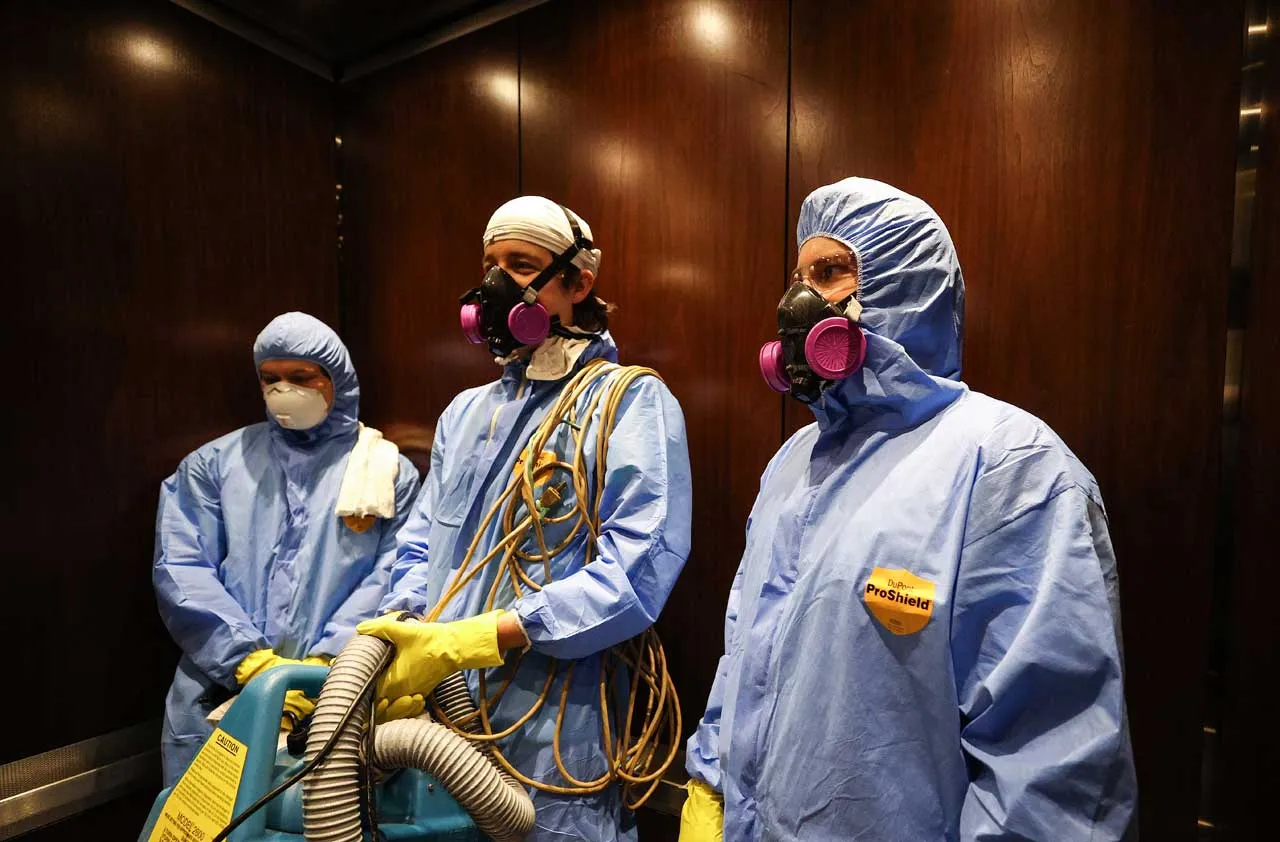
Historically, pandemics transform cities.

You are now subscribed
Your newsletter sign-up was successful
Want to add more newsletters?

Delivered daily
Kiplinger Today
Profit and prosper with the best of Kiplinger's advice on investing, taxes, retirement, personal finance and much more delivered daily. Smart money moves start here.

Sent five days a week
Kiplinger A Step Ahead
Get practical help to make better financial decisions in your everyday life, from spending to savings on top deals.

Delivered daily
Kiplinger Closing Bell
Get today's biggest financial and investing headlines delivered to your inbox every day the U.S. stock market is open.

Sent twice a week
Kiplinger Adviser Intel
Financial pros across the country share best practices and fresh tactics to preserve and grow your wealth.

Delivered weekly
Kiplinger Tax Tips
Trim your federal and state tax bills with practical tax-planning and tax-cutting strategies.

Sent twice a week
Kiplinger Retirement Tips
Your twice-a-week guide to planning and enjoying a financially secure and richly rewarding retirement

Sent bimonthly.
Kiplinger Adviser Angle
Insights for advisers, wealth managers and other financial professionals.

Sent twice a week
Kiplinger Investing Weekly
Your twice-a-week roundup of promising stocks, funds, companies and industries you should consider, ones you should avoid, and why.

Sent weekly for six weeks
Kiplinger Invest for Retirement
Your step-by-step six-part series on how to invest for retirement, from devising a successful strategy to exactly which investments to choose.
Historically, pandemics transform cities. Outbreaks of cholera and other diseases, for example, spurred improvements in planning and sanitation throughout the 19th and early 20th centuries. COVID-19 will also leave a lasting impact, in part by accelerating preexisting trends.
In the short term, cities will likely suffer as the virus highlights the disadvantages of dense urban spaces. Even before COVID-19, population growth in urban counties had flatlined. Several factors will favor the suburbs—some old (the lower cost of living, for example) and some new (an increase in telework).
So, will COVID-19 usher in a new era of de-urbanization? Not necessarily. Indeed, cities may be in the best position to lead the economic recovery after the pandemic, much as they did after the Great Recession. “Superstar” cities with strong tech industries like San Francisco and Seattle will likely rebound the fastest.
Read on to discover seven post-pandemic developments to expect in big cities across America.

Many of Your Favorite Restaurants Will Disappear
The devastation of the retail and restaurant sectors, both key sources of jobs and tax revenues for cities, will be particularly painful. One in five restaurants could permanently close because of the pandemic. Stores and eateries that remain will look and feel different, with limits on the number of customers allowed inside and lots of physical dividers.
Long term, the pandemic will help accelerate the hybridization and consolidation of retail. In the future, more stores will double as (or share space with) restaurants and coffee shops, catering to customers’ growing desire for experiences as well as goods.
Even before COVID-19, the U.S. had a massive surplus of shopping real estate, with anywhere from 23.5 to 46.6 square feet of retail space per person (versus 2.4 square feet per person in Germany and 1.5 square feet per person in Mexico). Expect some of that space to be repurposed as lifestyle and recreation centers, even housing.
Sponsored Content



Many Downtown Offices Will Remain Vacant
Office and retail vacancy rates will spike and may stay elevated for the next few years, depending on the pace of the economic recovery. Companies will likely continue reducing their office footprint as a growing number of employees work from home. Fewer workers downtown will further compound the pain of city restaurant and retail sectors, slowing their recovery.
As with retail, unused office space may also be converted to residential, helping to ease the current shortage of affordable housing in urban areas.
Sponsored Content

Bracelets for Office and Factory Workers
The next office fashion trend? Electronic bracelets or smartwatches that buzz whenever workers get too close to each other. That’s just one example of the hardware employers will use to ensure social distancing and allow for “contact tracing” of COVID-19 in the workplace. Another: location tracking systems, so employers can retrace the steps of workers who contract the virus and determine who else may be at risk.
Other features of the post-pandemic workplace: Regular temperature checks. More physical barriers between workers. The cubicle may be poised for a comeback, especially as open floor plans—now a feature in seven of 10 offices—become deeply unpopular.
Sponsored Content

Big Cities: Still Home to the Fastest-Growing Jobs
Suburban job growth has outpaced urban job growth for decades. But in the long term, urban areas have the mix of jobs projected to grow the fastest over the next decade, including medical and life scientists and software developers.
Again, cities may lose some of these jobs to telework. Others may eventually shift to the suburbs as employers pursue lower costs—but most will not. Tech-sector jobs, for example, are highly concentrated in urban areas to take advantage of network effects.
Sponsored Content

More Traffic Congestion
There may be fewer workers coming downtown each weekday in the future, but there could be more cars. Americans will likely be shunning public transit for private vehicles, making traffic congestion worse as economic activity resumes.
Rail systems in Chicago, San Francisco and New York, for example, have seen ridership decline by 90% or more since the start of the pandemic. Bus ridership has also tumbled, though it held up better than rail because it depends less on suburban commuters.
Sponsored Content

Smaller Crowds at Concerts and Sporting Events
Concerts and sporting events will be less crowded, with limits on the number of people per venue—when they finally happen again. At the very least, expect more empty seats and hand sanitizer stations everywhere. Some public health experts have also proposed temperature checks for fans before they enter.
Still, even as major sports leagues consider plans to resume play—the NFL, for example, is hoping is hoping the 2020 season will proceed as planned this fall, with fans in stadiums—most Americans say they don’t want to go to games until a vaccine is widely available.
Sponsored Content

Tech Will Take Over
Technology essential to coping with the virus will only grow in prominence, from online grocery delivery to urban informatics. That's the practice of gleaning insights from big data to make policy decisions, now a tool to “test and trace” the spread of COVID-19.
Globally, so-called “urban tech” is a $65 billion industry, with the U.S. accounting for roughly a third of all such investment. While some segments of urban tech will struggle after COVID-19, most notably coworking spaces such as WeWork, others will thrive. Even ride-sharing services such as Uber, while hard hit now, could ultimately benefit from people’s wariness of public transportation.
But however useful, expect many of these new tools to raise privacy concerns.
Sponsored Content

-
 4 Estate Planning Documents Every High-Net-Worth Family Needs
The key to successful estate planning for HNW families isn't just drafting these four documents, but ensuring they're current and immediately accessible.
-
 Love and Legacy: What Couples Rarely Talk About (But Should)
Couples who talk openly about finances, including estate planning, are more likely to head into retirement joyfully. How can you get the conversation going?
-
 How to Get the Fair Value for Your Shares in This Situation
When a sale of substantially all corporate assets is approved by majority vote, shareholders on the losing side of the vote should understand their rights.


-
 Trump Reshapes Foreign Policy
The Kiplinger Letter The President starts the new year by putting allies and adversaries on notice.
-
 Congress Set for Busy Winter
The Kiplinger Letter The Letter editors review the bills Congress will decide on this year. The government funding bill is paramount, but other issues vie for lawmakers’ attention.
-
 The Kiplinger Letter's 10 Forecasts for 2026
The Kiplinger Letter Here are some of the biggest events and trends in economics, politics and tech that will shape the new year.
-
 What to Expect from the Global Economy in 2026
The Kiplinger Letter Economic growth across the globe will be highly uneven, with some major economies accelerating while others hit the brakes.
-
 Amid Mounting Uncertainty: Five Forecasts About AI
The Kiplinger Letter With the risk of overspending on AI data centers hotly debated, here are some forecasts about AI that we can make with some confidence.
-
 Worried About an AI Bubble? Here’s What You Need to Know
The Kiplinger Letter Though AI is a transformative technology, it’s worth paying attention to the rising economic and financial risks. Here’s some guidance to navigate AI’s future.
-
 Will AI Videos Disrupt Social Media?
The Kiplinger Letter With the introduction of OpenAI’s new AI social media app, Sora, the internet is about to be flooded with startling AI-generated videos.
-
What Services Are Open During the Government Shutdown?
The Kiplinger Letter As the shutdown drags on, many basic federal services will increasingly be affected.


