Boost Your Retirement Income With a Cool Side Hustle
Turning your hobbies and passions into extra cash comes with a bonus: adding purpose to your post-career life.


Between the higher cost of living these days and a shifting view of what retirement means as people live longer, healthier lives, side hustles have taken on new importance in the years after leaving full-time work — and a growing appeal.
Some 45% of retirees are currently working in some paid capacity, according to a 2026 survey by Western & Southern Financial Group.
And many more would like to join them: A report last year by the financial services firm D.A. Davidson found that six in 10 retirees wish they had a side hustle to help support their ideal retirement lifestyle, and nearly two-thirds of those 50 and older who haven’t stopped working full-time yet are considering taking on a side gig once they do.
From just $107.88 $24.99 for Kiplinger Personal Finance
Become a smarter, better informed investor. Subscribe from just $107.88 $24.99, plus get up to 4 Special Issues

Sign up for Kiplinger’s Free Newsletters
Profit and prosper with the best of expert advice on investing, taxes, retirement, personal finance and more - straight to your e-mail.
Profit and prosper with the best of expert advice - straight to your e-mail.
Money is only part of the motivation. Nearly two-thirds of the retirees in the Western & Southern study who are either working or considering it said their reasons were personal, most commonly about wanting to stay productive and mentally sharp, compared with one-third who cited financial necessity.
Similarly, among retirees with a side hustle in the D.A. Davidson survey, more than half (55%) said they pursued the work in order to participate in an activity they find mentally or socially stimulating.
Experts say that fusing your interests with an opportunity to generate income through a side hustle can be a smart and integral part of retirement planning, something that helps with financial, lifestyle and personal goals. Intrigued?
Here are four profiles of side hustlers who have mastered this mix, along with the lessons and inspiration in their experiences for others interested in following a similar path.
Turning used items into retirement income

Throughout their careers, Wendy A. and Cevin Williamson have followed traditional advice to build a nest egg, diligently setting aside part of their earnings from work in tax-advantaged savings accounts.
But they’re banking on their sideline reselling business — Nina’s Jewels, named for Wendy’s daughter — as a primary source of earned income once Wendy retires from her job in nonprofit consulting and the couple closes or sells their framing store, both because it’s lucrative and because it’s fun.
That wasn’t always the goal. By the time the couple married in 2017, Wendy, now 52, had been casually selling things online for about a decade, turning unwanted household items and gently used clothing into cash. The year after their wedding, the couple decided to get serious about growing the reselling business as a way to supplement their income, both now and after they retire.
They started by selling Cevin’s collection of vintage toys and tens of thousands of trading cards, learning more about the resale business in the process. Eventually, they began purchasing items they could sell from garage sales, thrift stores and other online vendors. They even bought the entire contents of an abandoned storage unit.
While eBay is the behemoth of online selling, the Williamsons have branched out to platforms such as Poshmark, Mercari, Etsy and Depop because each marketplace has a different audience, varying areas of specialty and a distinct vibe. "Not every buyer is on eBay," Wendy says, despite its dominance in the space. She has had items sit for more than a year on eBay, then sold them right away after cross-listing them on another platform. As the couple learned more about reselling, they created the Nina’s Jewels YouTube channel to share their experiences.
In 2025, Nina’s Jewels had $75,000 in gross revenue from eBay alone, but Wendy says she knows many resellers who make well into six figures annually. The couple formed a limited liability company in 2021 to keep their personal assets separate from the business. Their revenue from the venture primarily comes from reselling, but Nina’s Jewels also has other, smaller income streams. For example, the couple gets paid for allowing Google to place targeted ads on their YouTube channel. The couple also have affiliate partnerships with brands such as Amazon that pay them a commission when customers click through and purchase items they’ve promoted.
The business delivers benefits beyond a healthy revenue stream, too. The couple enjoys going to garage sales and Goodwill stores together on weekends. "It keeps us in shape, keeps us active, keeps us going, and we love it," she says. Environmentally conscious, Wendy also likes helping to give used items a second life and keep them out of landfills.
The Big Lesson: Limit your initial investment and protect yourself
Whether you’re already retired or close to it, carefully consider how much money and time you’re willing to commit to a new sideline venture, says Nick Loper, founder of Side Hustle Nation, an online community and information resource for side-hustlers.
"If I’m transitioning to a fixed-income situation, I don’t necessarily want to invest a ton of start-up capital," he says.
For example, when the Williamsons began selling, both initially and when they got serious about the business, they started with items they already owned, then invested that revenue in purchasing more inventory to sell; they did not pull any money from savings or income they needed to live on.
Also, consider how much time you have to devote to your side hustle, as well as how you want to spend that time in retirement. "The last thing you need is a second job that you come to dread," Loper says.
In the Williamsons’ case, reselling offers the couple an opportunity to spend time together doing something they love.
Also be sure to protect the savings you’ve amassed for your retirement years, advises certified public accountant Catherine Roe, president and CEO of Cowart Roe, an accounting and business advisory firm in New Orleans.
Starting any business involves some risk — something could go awry and cause property damage, say, or a dissatisfied customer might threaten to sue. To minimize potential losses depending on the size and scope of your side hustle, you might consider getting liability insurance, which can cover any claims against the business. Or, as the Williamsons have done, you could form a legal business entity such as a limited liability company, which will keep your personal assets separate from those of the business.
Depending on the type of side hustle you take on and how big the business becomes, you might also want to line up an accountant and business adviser or attorney who, as needed, can answer questions and help manage challenges. "You want to have an array of professionals in your court," Roe says.
Cashing in on what you know

"Mostly retired," with four grown children and 13 grandchildren, Todd Tripp, 62, prioritizes a flexible schedule that allows him both to spend time with family and to shuttle between homes in Utah and Alaska. Tripp, who has been an electrician, plumber and general contractor over the course of his career, has stepped back from his family-owned construction business, but he has found a way to use his lifetime of experience and make extra cash by dispensing advice to homeowners, remodelers and do-it-yourself repair people.
Three years ago, he learned about JustAnswer, a platform that pays knowledgeable professionals to answer users' questions, and reached out to learn more. Soon after the JustAnswer team reviewed his credentials, Tripp was fielding online inquiries ranging from how to fix a garage door opener to what to do about a leaky toilet to how to obtain the proper permits for a home remodeling project.
JustAnswer charges users a monthly membership fee of up to $65 based on the category of questions they need answered. Experts like Tripp get paid per answer. Between January and August this year, he made $27,000 responding to users. He estimates that he spends a couple of hours on the platform per day, using his five decades of construction, trades and landscaping experience.
Depending on the category and how many questions they answer, experts can earn $2,000 to $7,000 per month, with top experts in categories such as technology and legal subjects earning as much as $14,000 per month, according to JustAnswer.
Part of Tripp’s success has been developing a rapport with some users, who return to ask him questions repeatedly. Recently, he advised one repeat customer in Massachusetts on how to pot her lily bulbs for the winter.
"They get ahold of me, and it’s amazing how quickly you can make that connection," he says. "And you just feel great when you get done helping them."
The Big Lesson: Capitalize on the expertise you built over your career
You can parlay the knowledge and contacts you have from a career or longtime hobby into a side hustle, giving you the chance to be your own boss or explore something you’ve always wanted to do, says Cade Bekanich, a certified financial planner and founder of West Pittston, Pa.–based Park Lane Financial Group.
He points to his grandfather, who collected coins while he worked full-time as a teacher. When he retired, he opened a shop that sold coins and precious metals.
"It really started with the relationships that he’d developed throughout his career," Bekanich says — a network that his grandfather tapped to help him turn coin and metal sales into a profitable venture. That type of transition can be enormously rewarding, as Tripp is experiencing.
Besides JustAnswer, several platforms can connect you with gigs that pay for your knowledge and skill. Among them are Respondent, which enlists business professionals to provide their opinions on a wide array of topics, from remodeling to tech; and Wyzant and Varsity Tutors, two of several sites that enlist tutors in subjects from math and science to foreign languages and music.
Following a passion — and always evolving
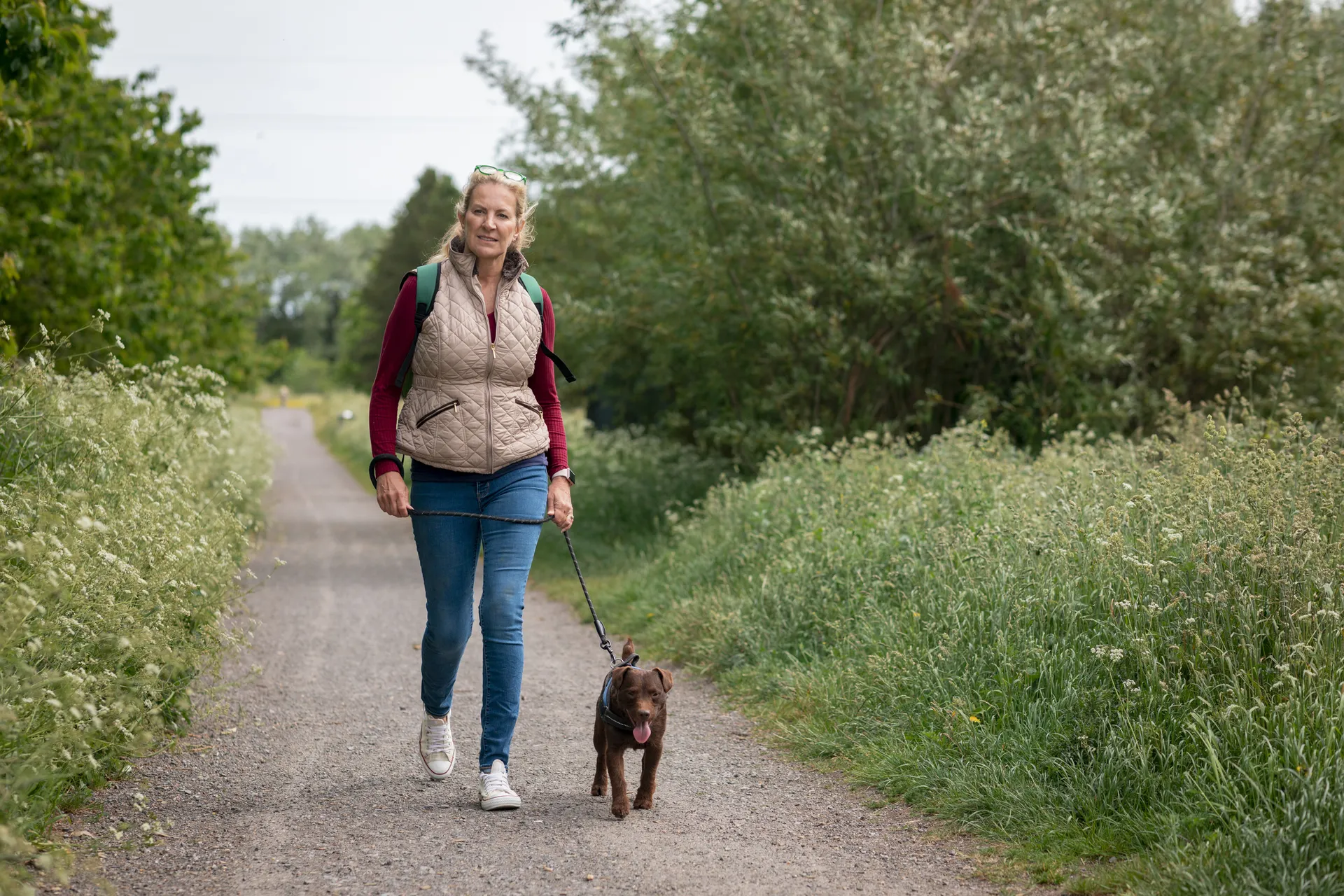
A chance meeting with a professional dog walker on a California hiking trail more than 30 years ago set Kristin Morrison on a career path that she intends to keep going as a side hustle well into her traditional retirement years.
At the time, Morrison was in her mid-twenties, working as a restaurant server while trying to figure out what she wanted to do with her life. The dog walker ended up hiring her. She realized she loved walking dogs, so she decided to venture out on her own, turning pet-sitting and dog-walking into her own sideline business.
A year later, a local newspaper profile about her catapulted her side hustle to a whole other level. "I got 50 client calls in 24 hours," she says, and she left her restaurant job to focus on the business full-time.
Over the following years, Morrison grew the business to "multiple six figures" in revenue. At its peak, she employed 35 pet sitters and dog walkers and four managers, and she wrote a book — Six-Figure Pet Sitting: Catapult Your Pet Sitting Business to Unlimited Success — before selling the business in 2013.
Yet even with all her success, Morrison kept creating side hustles as her interests and passions evolved. While she still owned her pet-sitting business, she launched Six-Figure Pet Business Academy, which offers resources, information and coaching to pet sitters, dog walkers, pet groomers, dog trainers and dog daycare owners — a venture she continues to run.
Those clients referred other business owners to her for guidance, even when the businesses didn’t have anything to do with pets. So Morrison began yet another side gig, becoming a certified business and life coach dispensing advice to a broader clientele. In 2023, she created her latest sideline: a podcast called Business Pathfinder, in which she provides real-time coaching sessions to business owners.
Morrison’s work style has evolved, too. When she owned the pet-sitting business, she typically put in 12- to 14-hour days, sometimes seven days a week. Now, she spends roughly 10 to 20 hours per week as a business and life coach, splitting her time between the San Francisco Bay Area and Hawaii — a more sustainable pace and lifestyle as she grows older.
Morrison, who is now in her late fifties, sees her side hustles as an integral part of her "retirement" plan. "I actually do not see myself ‘retiring’ in the usual sense of the word, but rather to keep doing things I love for as long as I love doing them," she says.
The Big Lesson: Choose a gig you love to do and that gives you purpose
Besides generating extra income in retirement, side hustles can give you a reason "to put your boots on in the morning," says investment adviser John Jones, at Heritage Financial in Alachua, Fla. He estimates a third of his retiree clients have side gigs and many do so for a sense of purpose, because stopping work cold turkey after decades can be challenging.
Kathy Kristof, founder of the website Sidehusl.com, says that people are remaining vibrant for longer, so it’s not surprising that they are interested in exploring new ventures or types of work instead of simply withdrawing from the workforce. That shift raises new questions: "Now you can start looking around and saying, ‘How can I connect my passions to profit?’ like you did when you were 25 or 22," she says.
Retirees likely already have some income, which can give them the freedom to explore new opportunities that reflect the way they want to spend their time, she adds. Sites such as Kristof’s Sidehusl.com and Side Hustle Nation can help you identify options to find one that best suits your needs and interests.
Starting early to boost retirement income

At 39, Karin Capellan still has a while to go before she retires. But she’s using her side hustle now to make bigger contributions to her employer-sponsored retirement plan, to help ensure she’ll have ample savings when she’s ready to step back from her career.
Capellan, a flight attendant for the past 13 years, launched K and J Party Rentals in West Babylon, N.Y., in 2020 after going to a tent company’s going-out-of-business auction, where she was surprised to see party planners and event companies snapping up merchandise.
She purchased a disco ball and headed home, an idea forming in her head: While many event venues and larger party supply companies were being forced out of business by the pandemic, people were still hosting smaller, socially distanced gatherings in their own backyards. Perhaps, she thought, there was an unexpected niche in this market.
Capellan began looking for other event companies that were going out of business and purchased tables and chairs from them. Once she had built up enough inventory, she began listing the party items for rent on Facebook Marketplace. "From there, one thing led to another, and I was busy every weekend," she says.
Soon, she expanded into balloon decorations and other popular party features, such as marquees, photo booths and backdrop rentals. The business has grown steadily, grossing nearly $162,000 in 2025 without advertising. Instead, word of mouth and 248 five-star Google reviews have helped the business attract regular customers, including several corporate clients. Capellan says her background working in industries such as airlines and restaurants taught her how to provide excellent customer service.
The company’s success was unexpected, but welcome. "Honestly, I didn’t think it was going to grow this much. I had no idea," she chuckles.
She uses her seniority with the airline and ability to make her own schedule to keep her flying hours to 40 per month — just enough to keep her health insurance and retirement benefits. And as the business has grown and she has been able to rely more on the income it generates for living expenses, she’s steadily increased the percentage of her airline paycheck that she contributes to her employer-sponsored retirement plan.
That extra boost to long-term savings should compound nicely over the next couple of decades or so. For now, as her sideline business continues to expand, Capellan plans to keep the party going, working both for the airline and in her rental business for years to come.
The Big Lesson: Use a side hustle during your working years to boost long-term financial security
Getting into the habit of setting aside a set percentage of the money you make from a side job for retirement savings in your younger years can be a powerful tool to help you build an ample nest egg for later in life.
If, like Capellan, you have access to a 401(k) plan from your primary employer, you can boost the percentage you’re currently contributing, up to a maximum of $24,500 in 2026, with workers 50 and older allowed an extra $8,000 this year (or up to an additional $11,500 for those between 60 and 63).
Or you can take advantage of savings vehicles specifically for people who have self-employment income, such as a Simplified Employee Pension (SEP) IRA or a solo 401(k), which have higher contribution limits. For example, with a SEP, which is the simplest account to set up, you can set aside as much as 20% of your net earnings from a side hustle, up to a maximum of $72,000 in 2026.
Even small amounts in additional savings can have a significant impact over time. If, for instance, you contribute $250 a month to a tax-deferred savings account from a side hustle that brings in about $15,000 a year, starting at age 40, you’ll have nearly $200,000 more socked away by the time you hit full retirement age (FRA) at 67, assuming you earn an average 6% annually on the account.
That’s not too shabby a payoff for a side hustle that may also continue to reward you in terms of purpose and personal satisfaction well into your retirement years.
The Best Side Hustles For Retirees

Choosing the side hustle in retirement that best suits your needs depends on a few factors, including your reasons for wanting to pursue one. Whether you’re looking for extra income or a sense of purpose, here are a few well-suited options for retirees.
If your schedule is flexible and you love to travel: "Retirees who love travel should consider seasonal work options," says Kathy Kristof, founder of Sidehusl.com. She recommends checking out sites such as CoolWorks and VagaJobs, which advertise openings at ski lodges, resorts and camps. Usually, accommodations and meals are paid for or subsidized, and "you earn a few bucks too," she says. Kristof says hospitality operations that offer these jobs favor healthy, active retirees because their social skills make them ideal for people-facing positions.
If you’re mobile and good with details: Several behind-the-scenes roles let you earn money by putting your observational or organizational skills to work. If you have some construction knowledge, for example, Nick Loper, founder of Side Hustle Nation, suggests looking into being a construction loan draw inspector, a position that confirms milestone progress for banks to release loan funds.
Platforms such as LandGorilla are looking for inspectors. Becoming a mobile notary public is another option — more than half earn more than $2,000 per month, according to the National Notary Association, which offers information on becoming a notary. Requirements and fees vary by state.
If you have specific expertise: If giving advice or opinions or sharing your experience is appealing, JustAnswer isn’t the only option. Clarity.fm matches start-up founders with various experts who can help them launch and grow their businesses. Maven connects users with vetted experts in fields such as life sciences, government and policy, and financial services.
Respondent.io pays you to participate in high-level research studies, focus groups and surveys — as much as hundreds of dollars per session. Loper adds that consulting or freelancing in your field can be another lucrative side hustle. Kristof also suggests Rare Patient Voice, which connects medical researchers looking for feedback on health products and issues with patients and caregivers, paying an average of $120 an hour.
Note: This item first appeared in Kiplinger Personal Finance Magazine, a monthly, trustworthy source of advice and guidance. Subscribe to help you make more money and keep more of the money you make here.
Related Content
