The Hidden Costs of Inheriting an Investment Portfolio
Inheriting a portfolio isn't as straightforward as it might seem. Taxes, missed IRA deadlines and high fees can impact how much you'll receive.


Inheriting an investment portfolio can feel like receiving a windfall. The tricky part is that the dollar value you see on the account statement isn't necessarily the amount you'll get to keep.
"A million dollars of inherited assets is not necessarily a million dollars of equivalent economic value," says David Simkowitz, founder and CEO of SimkowitzCo. "The type of account, tax basis, embedded tax liability and future income taxation all matter."
Taxes can take a bite out of sale proceeds. Inherited retirement accounts might come with distribution requirements that incur penalties if they're missed. The investments themselves could carry high fees or risks that don't make sense for your situation. Sorting it all out might require paying for tax, legal or financial advice.
From just $107.88 $24.99 for Kiplinger Personal Finance
Become a smarter, better informed investor. Subscribe from just $107.88 $24.99, plus get up to 4 Special Issues

Sign up for Kiplinger’s Free Newsletters
Profit and prosper with the best of expert advice on investing, taxes, retirement, personal finance and more - straight to your e-mail.
Profit and prosper with the best of expert advice - straight to your e-mail.
Understanding these hidden costs of inheriting an investment portfolio before you start making changes can go a long way toward preserving more of the wealth you've received.
The tax bill might come later
Inheriting property generally isn't a taxable event, but that doesn't mean it's tax-free forever.
"For most individuals, it's not the inheritance that triggers a tax bill but the sale or distribution" of the assets you inherited, says Erin Wood, senior vice president of advanced planning at AssetMark.
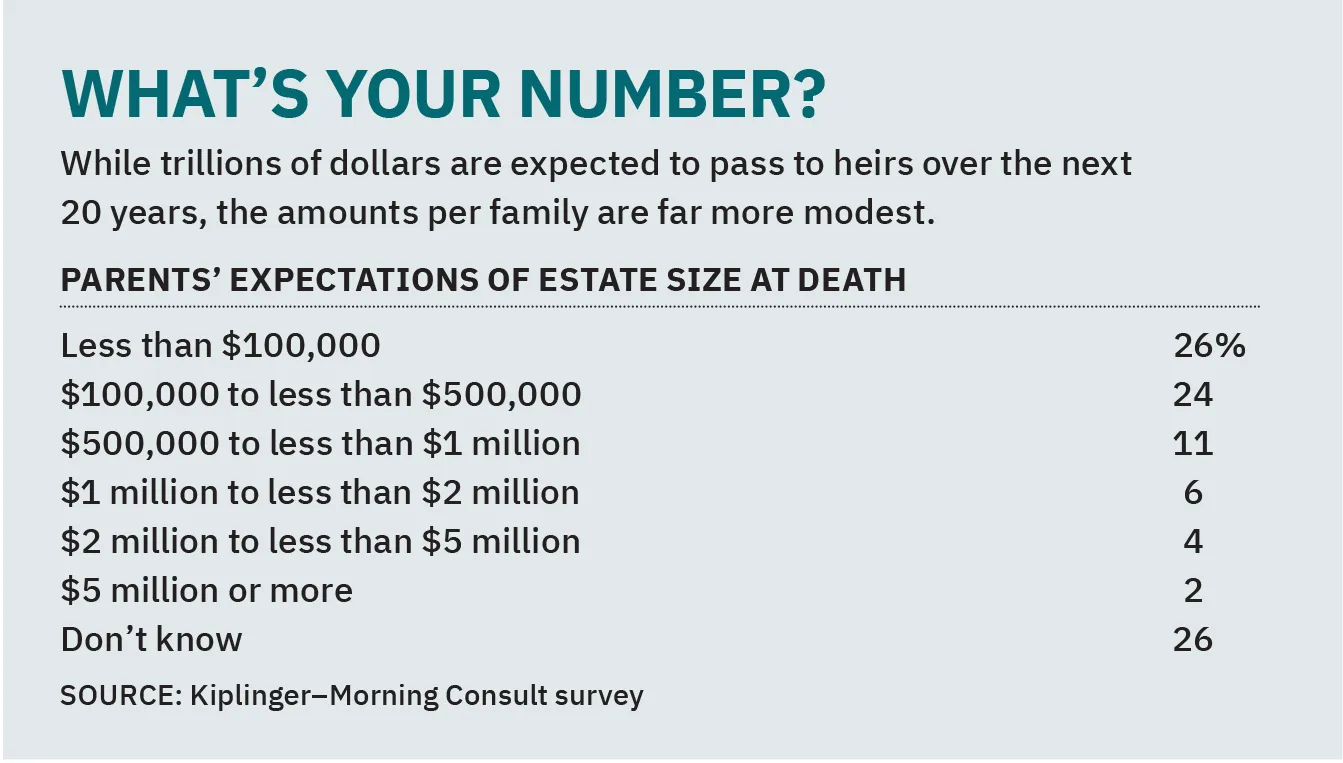
There's plenty of confusion around that distinction. A 2026 Morning Consult survey commissioned by Kiplinger found that one-third of adult children are unsure if they'd owe taxes on an inheritance.
The actual tax consequences will depend on what you inherited and the type of account it was held in. Many taxable investments receive a step-up in cost basis to the fair market value on the date of death. The cost basis is the starting value the IRS uses to determine your gain or loss when you sell an asset.

With a stepped-up basis, "any unrealized capital gains accumulated during the decedent's lifetime are generally wiped away," says Tara Thompson Popernik, executive vice president of wealth planning at LPL Financial.
But make sure the correct basis is reflected in your brokerage account records before you sell. Popernik recalls one beneficiary who failed to correct the cost properly before selling and received a tax form reflecting significant gains that required help from a CPA to correct.
Income-producing investments can create other surprises. For example, interest earned on taxable bonds you inherit is generally taxable income. If you previously only earned W-2 income, you "may now need to make estimated tax payments to cover the earnings from an inherited portfolio," Popernik says.
Other assets present their own tax wrinkles. Wood points to non-qualified annuities, where accumulated income may pass directly to the beneficiary rather than disappearing through a stepped-up basis. She also notes that state inheritance taxes can apply.
Retirement accounts can carry costly deadlines
Inherited retirement accounts are a different animal entirely. Traditional IRAs, for example, can contain money that hasn't yet been taxed. Many nonspouse beneficiaries are required to fully distribute an inherited IRA within 10 years of inheriting. Along the way, required minimum distributions (RMDs) might also apply.
"Missing an RMD on an inherited IRA is sometimes the biggest surprise, particularly because of the associated penalty," says Justyn Volesko, partner and co-head of the Cerity Partners Family Office.
You could face a 25% excise tax on the amount that should have been withdrawn, although that can drop to 10% if the shortfall is corrected promptly enough.
The moral of the story isn't that you should race to empty all inherited retirement accounts. Rather, you want to be aware of which rules and deadlines apply so you can act accordingly.
Fees and professional costs can add up
Unfortunately, taxes and penalties aren't the only expenses that can quietly eat into your inheritance. The investments themselves may also be expensive.
"I have seen inherited portfolios in mutual funds with high expense ratios that are easy to miss," Volesko says. The adviser managing the portfolio might also be charging a fee.

Then there are the costs of sorting out the inheritance itself. You could end up paying for legal or tax advice, investment management or even estate valuation work. Those bills can sting, but trying to avoid every professional fee can also backfire.
"I would distinguish between a professional cost and a professional value," Simkowitz says. "Paying for coordinated tax, legal and financial advice can sometimes prevent a beneficiary from making a much more expensive mistake."
Make sure the professionals you work with aren't operating in isolation. "An inheritance should be treated as a coordinated planning event, not simply an asset-transfer event," Simkowitz says.
Doing nothing can cost you, too
This last hidden cost might be the sneakiest of all: The cost of holding onto a portfolio designed for someone else.
There can be an inclination to keep an inherited portfolio intact to honor the person who bequeathed it to you, "but keeping a portfolio unchanged is itself an investment decision," Simkowitz says.
The person you're inheriting from may have had a different timeline, risk tolerance or financial goals. "A portfolio designed for an older investor who prioritized income may not be appropriate for a younger beneficiary focused on long-term growth," Popernik says.
The portfolio might also have concentrated stock positions, especially if your benefactor spent decades building a business or accumulating shares of a single company. "What represented wealth creation for one generation can represent unnecessary concentration risk for the next," Simkowitz says.
This doesn't mean you need to sell Grandma's favorite stock on day one, but each holding should be evaluated based on its own merits.
"I would encourage beneficiaries not to ask only, 'What did I inherit?' but also, 'Why do I still own it?' " Simkowitz says.
More Trillion Dollar Talk
- The Best Stocks to Gift Your Grandchildren
- Critical Questions to Ask a Financial Adviser About an Inherited Stock Portfolio
- I'm a Retirement Editor, But My Parents' Estate Tripped Me Up with a Snake, a Gun and a Mystery Box
