How Real Families Are Handling The Great Wealth Transfer
Kiplinger is exploring the Trillion Dollar Talk. Join us to see what we've found and how we can help you.


Note: This item first appeared in Kiplinger Personal Finance Magazine, a monthly, trustworthy source of advice and guidance, as a letter from the editor. We're sharing it here to shed light on our findings for our digital audience, as part of our Trillion Dollar Talk campaign. Subscribe to Kiplinger to help you make more money and keep more of the money you make here.
In our cover story this month, we've taken a deep dive into what the Great Wealth Transfer — the estimated $124 trillion of assets that will flow from older generations to heirs and charities through 2048 — means for families. While a good chunk of that transfer will come from a small slice of high-net-worth households, those who aren't among the super-rich are making plans to share their wealth over the coming couple of decades, too.
To gather insight into how families are handling this historic shift, Kiplinger commissioned an exclusive survey, conducted by research firm Morning Consult, of more than 5,000 older parents and adult children, asking for their knowledge and expectations surrounding the inheritance that parents will leave for their heirs.
From just $107.88 $24.99 for Kiplinger Personal Finance
Become a smarter, better informed investor. Subscribe from just $107.88 $24.99, plus get up to 4 Special Issues

Sign up for Kiplinger’s Free Newsletters
Profit and prosper with the best of expert advice on investing, taxes, retirement, personal finance and more - straight to your e-mail.
Profit and prosper with the best of expert advice - straight to your e-mail.
Drawing from the survey's findings, the story you can find here offers advice on how families can successfully navigate this transition, from determining what information you may want to disclose to your children about their inheritance ahead of time to ensuring that you pass along your values, too. In another story, we outline some key takeaways from the survey.
And in a third story, we provide guidelines on having conversations with your adult children that will leave them well positioned to manage their inheritance and minimize conflicts and confusion among your heirs when the assets change hands.
How real families are handling this transition
As a complement to the stories in our cover package, we asked readers to send us their responses to this question: Are you giving away some of your money or assets to your heirs while you're still living, or do you intend to leave a larger inheritance later? I'm sharing a few responses here.
Many readers said they are offering some financial help while they're still around to see their children enjoy it, and at a stage during which their kids may most need the assistance. Says one reader, "My in-laws gave us money at a time in our lives when we were raising three children, and it was very helpful to our family. We feel that our retirement is secure and have started giving some money each year to our children while they are young adults, as they raise children and buy homes. I feel that it can benefit them more at this stage of their lives than later."
Another reader emphasized the importance of conveying financial lessons along with giving gifts. "Our philosophy for giving to children is to make their lives better, not remove the incentive for hard work and development of good spending habits," he says. He and his wife provided about 35% of the down payment for their son's home purchase, and they explained to him how paying extra on his mortgage can reduce total interest on the loan and shorten the time it takes to pay it off.
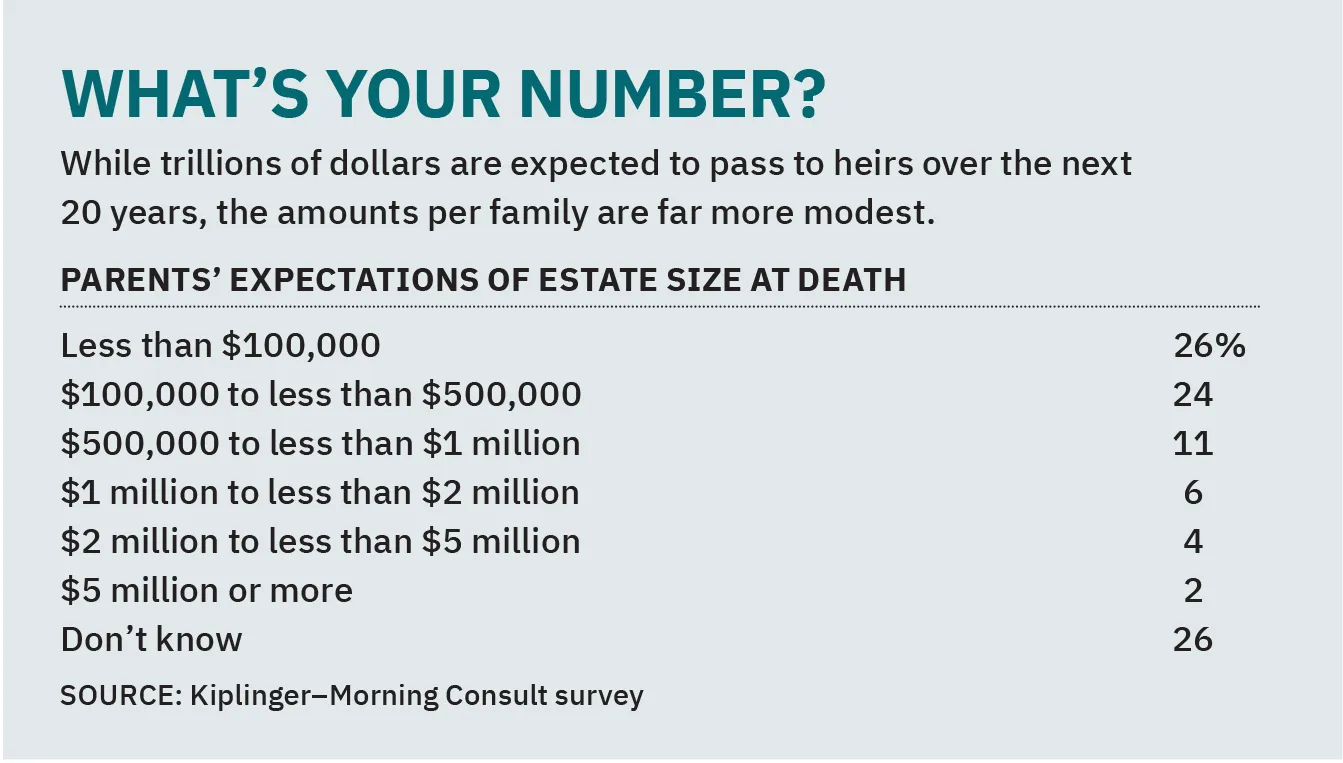
Several of you mentioned that you're helping your grandchildren, too, funding their retirement accounts and college-savings plans. One reader is contributing $5,000 yearly to each of his five grandchildren's 529 plans, with a goal of contributing $100,000 total per beneficiary.
"Because I was willing to start early, my family can benefit from the tax-free growth of these funds," he says. And, he notes, if any of the grandchildren don't use all the savings on education expenses, they can roll over as much as $35,000 from the 529 to a Roth IRA tax- and penalty-free, "giving that generation a head start on retirement savings."
A reader whose two oldest grandchildren are in college is boosting their retirement savings — and encouraging them to start thinking about investing—by contributing to their Roth IRAs. And, he says, "Once they begin their careers, we will offer to match their retirement-fund contribution."
More Trillion Dollar Talk
- The Great Wealth Transfer is Creating a New Generation of Family CFOs
- The $124 Trillion Great Wealth Transfer: Fact vs Fiction Quiz
- Could You Handle a Sudden Windfall?
