Nvidia CES 2025 Updates: What Investors Need to Know
Nvidia stock is the worst Dow Jones stock Tuesday after the AI bellwether made several announcements at CES 2025. Here's what you need to know.

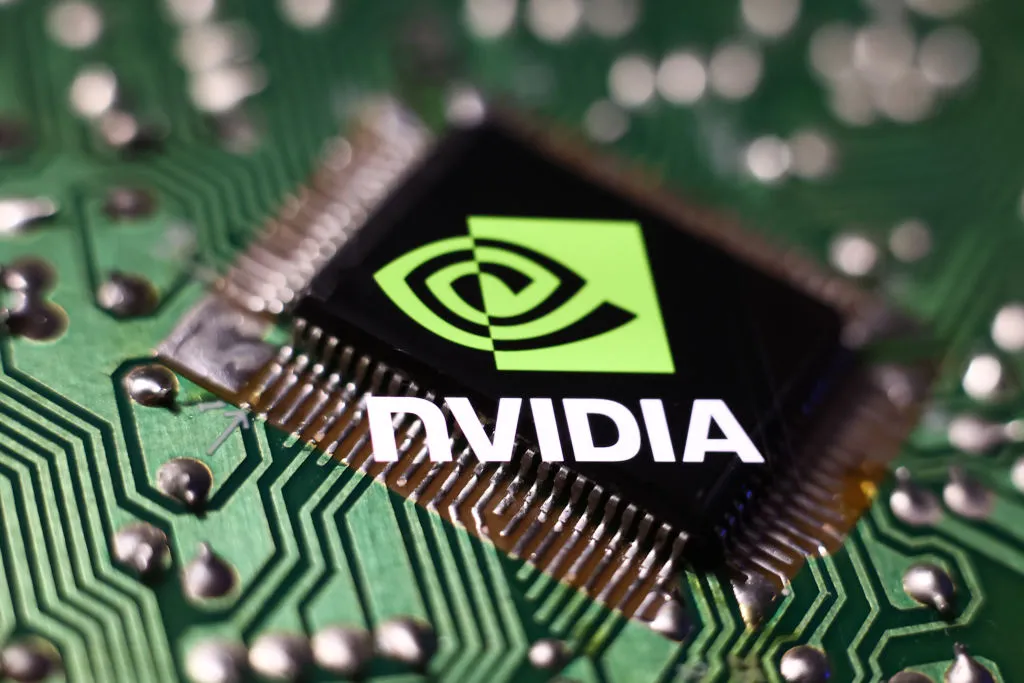
Nvidia (NVDA) stock is the worst Dow Jones stock Tuesday even after the artificial intelligence (AI) chipmaker made several significant announcements at CES 2025, formerly known as the Consumer Electronics Show (CES), including "the most advanced consumer GPUs."
Amongst Nvidia's list of announcements was the unveiling of its Blackwell GeForce RTX 50 Series GPUs and new AI-focused products, including Project DIGITS AI supercomputers.
The new Blackwell GeForce RTX 50 series Desktop and Laptop GPUs will be powered by the Nvidia Blackwell architecture, which CEO Jensen Huang said is "the most significant computer graphics innovation since we introduced programmable shading 25 years ago."
From just $107.88 $24.99 for Kiplinger Personal Finance
Become a smarter, better informed investor. Subscribe from just $107.88 $24.99, plus get up to 4 Special Issues

Sign up for Kiplinger’s Free Newsletters
Profit and prosper with the best of expert advice on investing, taxes, retirement, personal finance and more - straight to your e-mail.
Profit and prosper with the best of expert advice - straight to your e-mail.
Meanwhile, Project DIGITS will provide users access to the Nvidia Grace Blackwell platform to develop and run models from their own desktop systems, the company said.
"AI will be mainstream in every application for every industry. With Project DIGITS, the Grace Blackwell Superchip comes to millions of developers," Huang said. "Placing an AI supercomputer on the desks of every data scientist, AI researcher and student empowers them to engage and shape the age of AI."
Nvidia's other announcements centered on the Cosmos platform to advance the development of physical AI, including autonomous vehicles and robots, and expanded automotive partnerships, including with Toyota.
Is Nvidia stock a buy, sell or hold?
Wall Street still sees Nvidia as one of the best stocks to buy even after its strong performance in 2024. Indeed, shares surged 171% last year and are up another 3% in early 2025.
According to S&P Global Market Intelligence, the average analyst target price for NVDA stock is $172.48, representing implied upside of nearly 22% to current levels. Additionally, the consensus recommendation is a Strong Buy.
Financial services firm Stifel has a Buy rating and an $180 price target on the semiconductor stock.
"We believe that NVDA is well positioned in markets that combine to yield an overall total addressable market of more than $100 billion exiting 2025 and a longer-term opportunity funnel that could approach $1 trillion," says Stifel analyst Ruben Roy.
Roy adds that the bulk of Nvidia's near-term opportunities "will come from high-performance computing, hyperscale and cloud data center, and enterprise and edge computing."
The analyst says that while NVDA's exposure to gaming, automotive and professional visualization are still favorable, "the shift from general-purpose compute to accelerated compute represents the company's most significant revenue and profitability growth opportunity over the next several years, in our view."
Related Content
- Kiplinger's Earnings Calendar for This Week
- Analysts' Top S&P 500 Stocks to Buy Now
- Best AI Stocks to Buy: Smart Artificial Intelligence Investments
