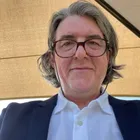
Navigating the New Fed: 5 Conflicts Kevin Warsh Has to Tackle Now
Fed Chair Kevin Warsh, the new leader of the most important central bank in the world, faces multiple challenges to his still-emerging authority.


Kevin Warsh is making his first official trip to Capitol Hill since he was sworn in as the 17th chair of the Board of Governors of the Federal Reserve System in May.
The Fed chair will tell Congress the central bank has "no tolerance" for high inflation, and cool June Consumer Price Index (CPI) data offers some momentary relief.
But the ceasefire between the U.S. and Iran is over.
From just $107.88 $24.99 for Kiplinger Personal Finance
Become a smarter, better informed investor. Subscribe from just $107.88 $24.99, plus get up to 4 Special Issues

Sign up for Kiplinger’s Free Newsletters
Profit and prosper with the best of expert advice on investing, taxes, retirement, personal finance and more - straight to your e-mail.
Profit and prosper with the best of expert advice - straight to your e-mail.
And, less than a month after the June Fed meeting and two weeks before the Federal Open Market Committee (FOMC) gathers for a second time under his leadership, Warsh is being challenged by battles on multiple fronts.
What happens at the Strait of Hormuz is well beyond his control. And he's unlikely to say much about attacks on his authority from both the executive branch and the judicial branch.
But it's probably good for all of us if Warsh is seen to be working with FOMC dissidents to establish credibility with central bank colleagues and other financial market participants and stakeholders.
Those markets had been aggressively pricing in higher interest rates ahead of Warsh's two-day testimony, while even President Donald Trump would say, loudly, that he put his man there to cut the federal funds rate, and fast.
In the long run, Warsh will have to consider how far he'll go to meet White House demands. He already must account for other policy choices, such as using tariffs as a tool of foreign affairs and opting for war in the Middle East.
In the longer run, Warsh will be Fed chair after the expiration of President Trump's second term on January 20, 2029.
At the same time, though the Supreme Court has already said the president can't fire Fed governors "at will," the central bank's power as we currently understand it is under active review.
Things are in the saddle, to borrow from Ralph Waldo Emerson, and they're riding Kevin Warsh.
Let's talk about five conflicts, both literal and figurative, driving the narrative around the not-so-new-anymore Fed chair right now and what they mean for the most important central bank in the world for the long term.
1. Warsh v. Greenspan
Warsh wants to be measured by his ability to manage inflation, and he plans to achieve price stability via the fed funds rate. He reiterated that explicit commitment in remarks prepared for his testimony on July 14.
A "monetarist" at heart, his role model appears to be Alan Greenspan. We'll see what happens, though, when Warsh tries to shrink the Fed's balance sheet.
Reversing what started as "quantitative easing" when Warsh was former Fed Chair Ben Bernanke's right-hand man during the global financial crisis/Great Recession will impact bond prices and interest rates.
The thing to remember about Greenspan is not so much the policy details as the mere presence. He was there when markets required assurance about their continuing ability to function, which is really saying a lot if you think about it.

He also gave cover for policymakers on the fiscal side as their processes grew more and more sclerotic, even if they had no idea what he was talking about.
Bernanke, his immediate successor, understood the ultimate assignment, even if he had to clean up messes Greenspan allowed. So, too, did Janet Yellen, then Jerome Powell.
They also made mistakes along the way, each of them. But the up-and-to-the-right trend continues.
See what I mean?
2. Warsh v. Powell
Warsh's immediate predecessor, Powell, is still a member of the Fed board. The former Fed chair is committed to staying in place until legal threats to the central bank's independence are resolved.
He voted in favor of holding rates steady in June. Monetary policy is still important, but Powell is working for a bigger-picture objective at the same time.
This is about independence, the long term, as Powell said in late April, referring to Trump's lengthy campaign to remove him.

"I worry that these attacks are battering the institution and putting at risk the thing that really matters to the public, which is the ability to conduct monetary policies without taking into consideration political factors," he said. "It is so important for our economy, for the people that we serve, that they can depend, over time, on a central bank that operates that way, free of political influence."
Powell said he wouldn't leave the Fed until an investigation into cost overruns for a project to renovate the central bank's headquarters "is well and truly over with transparency and finality," noting that his decisions "will continue to be guided entirely by what I believe is in the best interest of the institution and the people we serve."
3. Warsh v. Waller
This is about inflation and interest rates, the short term, as well as Warsh's wish to limit Fed communications. And Christopher Waller, who was considered a potential successor to Powell, is staking out less totemic territory than the ex-chair.
Indeed, as Neil Dutta of Renaissance Macro writes, remarks Waller delivered on the eve of Warsh's congressional testimony suggest this Fed governor "is laying the groundwork for a hike as soon as the July FOMC meeting."

Waller and his colleagues will certainly welcome cooler-than-forecast June CPI data. But that data is subject to what happens in the Middle East.
So maybe July is not a "live" meeting, during which the FOMC will consider raising the fed funds rate. Dutta says Waller understands something else about central banking in this 21st-century moment:
"Let Waller's speech serve as a reminder that while Warsh might be circumspect around his own views, Waller has no problem letting his views be known," the economist observes. "The information void gets filled by the rest of the committee."
4. U.S. v. Iran
Fiscal policymakers make choices, too.
As long as Iran controls the tempo of the war in the Middle East and to the extent the Islamic Republic manages the Strait of Hormuz come peacetime, the effects of the 2026 energy shock will linger.
Uncertainty about oil and gas prices will undermine the economy, simple as that, the Warsh Fed acknowledged in its brief policy statement in June.

The month-over-month data will be noisy. But softness in year-over-year core inflation data suggests the energy shock is relatively contained, and that's definitely comforting for those who'd like to see lower interest rates.
What's discomfiting is that Iran seems to be able to attack critical energy infrastructure targets whenever it feels the need to assert its will, and the Trump administration's Truth Social diplomacy is not working.
5. Trump v. Cook (and Trump v. Barr)
All three branches are in on this play: On June 29, the Supreme Court said President Trump couldn't fire Fed Governor Lisa Cook, yet.
Writing for the majority in Trump v. Cook (pdf), Chief Justice John Roberts said the Trump administration's interpretation of the law would transform the Fed's for-cause protection into at-will employment.
According to Roberts, that's "an interpretive leap out of step with the statute Congress enacted and our Nation's tradition of central banking protected from political interference."
But Roberts left open the possibility that Trump can remove Cook, pending the Fed governor's case against the president in a lower federal court. "To be clear," the chief justice explained, "the ultimate question of whether the President can remove Cook for cause will depend in part on the underlying facts."
The same day the Court dropped that decision, Trump promised to "take appropriate action immediately" to remove Cook.
And the Roberts majority opinion includes a footnote that opens up the Fed's regulatory function as an avenue of attack. Two dissents focused on this issue, questioning whether and how this oversight fits within the central bank's monetary policymaking.

Associate Justice Amy Coney Barrett asked, “Do all the Federal Reserve's existing regulatory powers have the requisite connection to monetary policy? If not, are they grandfathered in? And is the Federal Reserve unique, or might history sanction other exceptions too? The court does not say."
So, the question becomes, what is central banking? It's not an active case on the federal docket, but the case to test it could very well be Trump v. Barr.
Former Vice Chair for Supervision Michael Barr led the 2023 Federal Reserve Review into the collapse of Silicon Valley Bank (SVB). His report is currently subject to an independent review.
Though current Vice Chair for Supervision Miki Bowman has said it's not about assigning blame, Barr and other former Fed officials are concerned about the purpose and intent of the independent review, as are Senate Democrats.
Barr's term on the Fed board is set to expire on January 31, 2032.
As Capital Account co-writer Ryan Tracy suggests, the Fed's regulatory powers "seem to be a liability to those concerned about monetary policy independence."
Indeed, Associate Justice Clarence Thomas observed in his dissent that the first two U.S. central banks had no executive authority, but the Fed regulates most of the banking economy.
"The president, therefore, may remove Cook for any reason that he wants and by any procedure that he wants," Thomas concludes.
Related content
- 3 Ways Kevin Warsh Will Change the Fed
- Fed Zeppelin: 5 Songs That Explain the Biggest Central Bank in the World
- June Fed Meeting: Updates and Commentary