A Playbook for Tech Investors After Jensen Huang Resigns as Nvidia CEO
Jensen Huang's resignation as CEO shakes Nvidia, but tech investors should know this is a stock-specific event rather than the end of the AI boom.

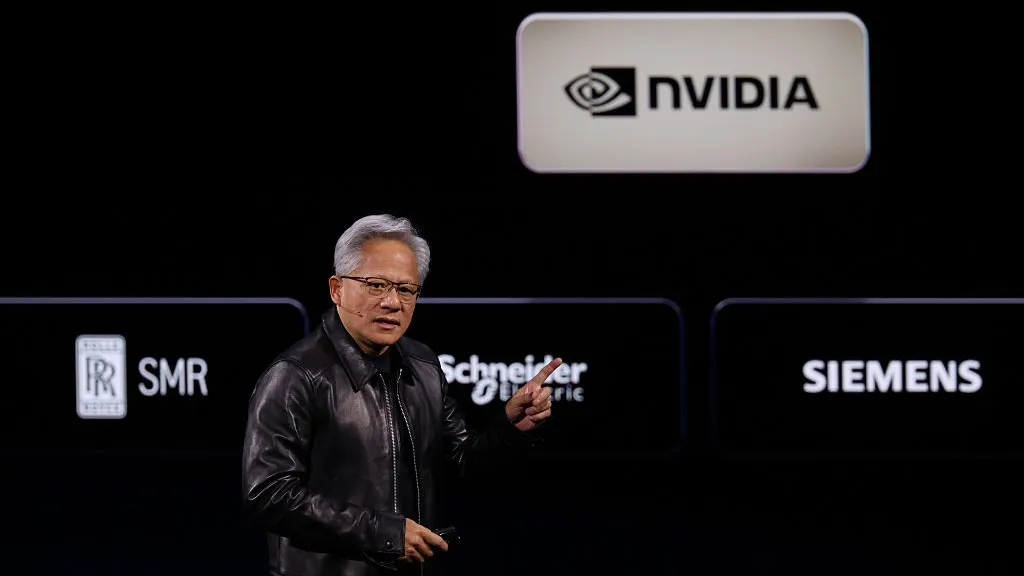
Jensen Huang has stepped down as CEO of Nvidia (NVDA) after it was revealed he had a second affair, this time with Kimberly Powell, his direct report. The board had already launched an investigation into his relationship with Alice Huang, an executive at a Singapore-based cloud company whom U.S. officials have classified as a Chinese spy.
This is obviously a real blow to Nvidia and any other framing is just hopelessly optimistic. Jensen wasn't just the CEO. He was the company's chief strategist, chief salesman, ambassador to Washington and, increasingly, the "Bank of AI," backing its own customers to the tune of an estimated $230 billion. Lose him, and you lose all four at once.
Worse yet, there's no obvious successor. Chief Financial Officer (CFO) Colette Kress has been named interim CEO. There will now be a search that most likely ends with Arm Holdings' (ARM) Rene Haas or CUDA architect Ian Buck.
From just $107.88 $24.99 for Kiplinger Personal Finance
Become a smarter, better informed investor. Subscribe from just $107.88 $24.99, plus get up to 4 Special Issues

Sign up for Kiplinger’s Free Newsletters
Profit and prosper with the best of expert advice on investing, taxes, retirement, personal finance and more - straight to your e-mail.
Profit and prosper with the best of expert advice - straight to your e-mail.
Either way, Nvidia's share of the AI chip market was already slipping, and now it slides faster, from roughly 80% today to the 60s by 2028, by our estimate, as custom silicon projects gain momentum. The tech stock pays for that with a lower valuation and lower earnings. This is a major loss for Nvidia stock.
But here's what the market needs to hear: this is an Nvidia problem, not an AI problem. The chips still get bought; the only question is from whom. Big Tech funds its AI buildout from its own cash flow, and none of that changes because Nvidia's boardroom is on fire.
We see this shaving just two to four points off 2027 AI compute growth, mostly among the smaller AI cloud companies that leaned on Nvidia's money. That's a slowdown, not a stall. The after-hours tape already gets it: Nvidia and the companies that depend on it fell, while Advanced Micro Devices (AMD) and Broadcom (AVGO) rallied and the Nasdaq barely blinked. Every big buyer now wants a second source of chips, and Nvidia's loss is AMD's and Broadcom's gain.
The playbook is simple: lean out of the Nvidia complex and lean into AMD and the custom chip complex. We're talking Broadcom, Marvell Technology (MRVL) and related partners. That's where you want to play ball now.
Lastly, is this the bottom for AI chip stocks? History says scandals and frauds can be clearing-out events and mark major bottoms. But there's a distinction in history: a scandal marks the bottom when it's the last shoe to drop and a self-contained event, but the middle of a bigger sell-off when it's not self-contained and representative of a broader contagion. We put the odds at 65/35 that this one is self-contained. The swing factor is Megaspeed, the Nvidia customer at the center of the China allegations, so Nvidia's earnings call next week and the board investigation need to be followed closely.
But let's remember that the AI boom was never one man. The demand is real, the money is flowing, and the market share Nvidia gives up has to go somewhere. Smart money follows it.
The bottom line for tech investors
The scandal is a death blow for Nvidia stock and a major hit to the broader Nvidia funding ecosystem — think CoreWeave (CRWV), Dell Technologies (DELL), IREN (IREN), Super Micro Computer (SMCI), etc. — but will have minimal impact on overall AI infrastructure spending plans.
It will also result in meaningful market share expansion for both direct chip competitors — AMD, Arm, Intel (INTC) — and the custom silicon complex, Broadcom/Marvell Technology.
Lean into those ecosystems. Lean out of Nvidia. The AI trade rolls on. Leadership just changes.
Related content
- 10 Major AI Companies You Should Know
- Anthropic IPO: Should You Buy ANT Stock?
- 5 Stocks to Buy Before the Next AI Demand Shock Hits