Be Roth Smart: An Investment Guide to Roth IRAs
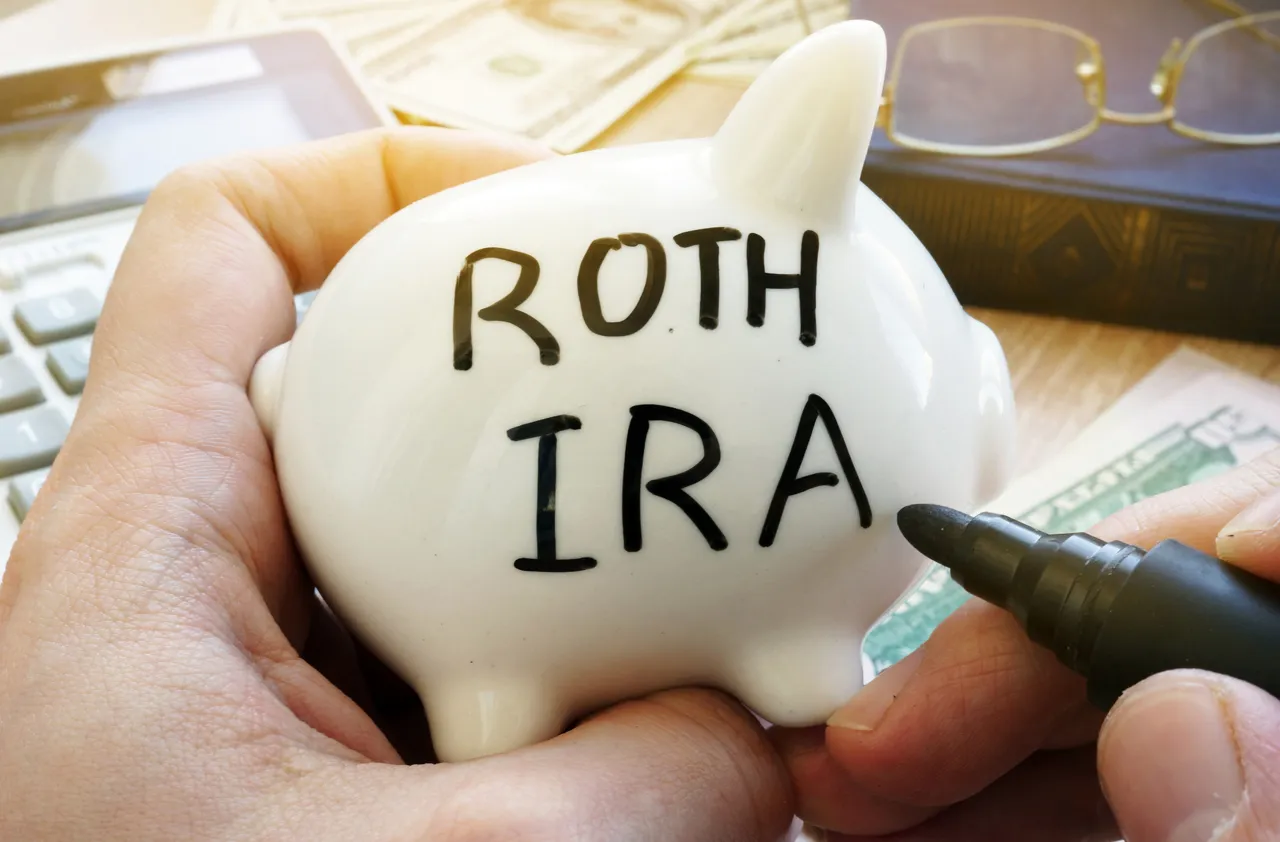
Roth IRAs are the closest thing we have to tax-free retirement savings out there, so make sure you take full advantage. Here is how Roths work and three ways to get money into them.

You are now subscribed
Your newsletter sign-up was successful
Want to add more newsletters?

Delivered daily
Kiplinger Today
Profit and prosper with the best of Kiplinger's advice on investing, taxes, retirement, personal finance and much more delivered daily. Smart money moves start here.

Sent five days a week
Kiplinger A Step Ahead
Get practical help to make better financial decisions in your everyday life, from spending to savings on top deals.

Delivered daily
Kiplinger Closing Bell
Get today's biggest financial and investing headlines delivered to your inbox every day the U.S. stock market is open.

Sent twice a week
Kiplinger Adviser Intel
Financial pros across the country share best practices and fresh tactics to preserve and grow your wealth.

Delivered weekly
Kiplinger Tax Tips
Trim your federal and state tax bills with practical tax-planning and tax-cutting strategies.

Sent twice a week
Kiplinger Retirement Tips
Your twice-a-week guide to planning and enjoying a financially secure and richly rewarding retirement

Sent bimonthly.
Kiplinger Adviser Angle
Insights for advisers, wealth managers and other financial professionals.

Sent twice a week
Kiplinger Investing Weekly
Your twice-a-week roundup of promising stocks, funds, companies and industries you should consider, ones you should avoid, and why.

Sent weekly for six weeks
Kiplinger Invest for Retirement
Your step-by-step six-part series on how to invest for retirement, from devising a successful strategy to exactly which investments to choose.
Twenty years ago, a mind-blowing paradigm shift hit the American investment scene: retirement accounts with essentially no tax. This innovation was called the Roth IRA.
Roth IRAs were created to incentivize individuals to better prepare for retirement by allowing them to save after-tax earnings in an account where it was possible to withdraw contributions and earnings completely tax-free throughout retirement.
Because of this advantage over other investment vehicles, almost everyone should consider Roth IRAs as a core component of saving and spending plans for retirement. The potential growth of tax-free returns compounding over prolonged periods of time is significant and can potentially eliminate the government’s role in your retirement.
From just $107.88 $24.99 for Kiplinger Personal Finance
Become a smarter, better informed investor. Subscribe from just $107.88 $24.99, plus get up to 4 Special Issues

Sign up for Kiplinger’s Free Newsletters
Profit and prosper with the best of expert advice on investing, taxes, retirement, personal finance and more - straight to your e-mail.
Profit and prosper with the best of expert advice - straight to your e-mail.
But how did this incredible investment option come to be? And how could you take full advantage? Let’s dig deeper.
First, a Brief History of the Roth IRA
Roth IRAs were born out of the 1997 Taxpayer Relief Act and named after Sen. William Roth of Delaware, who co-authored the bill. Back then, the contribution limit was set at $2,000, with the hope that these new accounts would encourage workers to save more for retirement.
Over the past 20 years the Roth IRA has evolved:
- In 2001, Congress modified the contribution limits to increase with inflation and added “catch-up” contributions of $1,000 for workers 50 and older.
- In 2002, rollovers of after-tax money in employer plans to Roth IRAs became available.
- In 2006, the Roth 401(k) and 403(b) were created, but only accessible if offered by an employer.
- In 2008, the conversion of a traditional IRA to a Roth IRA was allowed for individuals with adjusted gross incomes (AGI) under $100,000.
- In 2010, the government repealed the $100,000 AGI limit on Roth IRA conversions, opening up the possibility of creating tax-free retirement accounts to a significantly larger audience.
- In 2018, the Tax Cuts and Jobs act eliminated the option to recharacterize a Roth IRA conversion. A recharacterization effectively allowed an individual to “undo” a Roth conversion if they changed their minds after completing the conversion.
Despite 20 years of meaningful evolution and improved accessibility, the goal of a tax-free (or at least tax-reduced) retirement remains only a pipe dream for most savers. According to the Investment Company Institute, only 50% of individuals with IRAs today have a Roth IRA, and only 9% of all IRA assets are held in Roth accounts. So, if you are part of the 50% of the population who don’t have a Roth IRA yet, let me lay out how you can make a Roth IRA work for you.
How to Get Money Into a Roth IRA
Generally, there are three ways to fund a Roth IRA account: contributions, rollovers and conversions.
Contributions
You must be working to contribute to a Roth IRA, because having earned income is a requirement. Annual contributions are limited to the amount of income earned or $5,500 ($6,500 if over age 50) — whichever is lower. You can continue to contribute indefinitely, so long as you have earned income (unlike a traditional IRA, which eliminates contributions once you turn age 70.5). Non-working spouses can also make contributions based on the earned income of their working spouses. The ability to make direct Roth IRA contributions begins to phase out when your AGI is over $120,000 if single and $189,000 if married filing jointly.
If you are unable to make a direct Roth IRA contribution and do not have a separate traditional IRA, a “backdoor” Roth IRA contribution may be beneficial. This strategy involves two separate transactions: a non-deductible contribution to a traditional IRA, followed by a Roth IRA conversion. When the conversion occurs, taxes are paid on any increase in the traditional IRA in excess of the non-deductible contribution when the conversion occurs.
Rollovers
A rollover is the second most common method for getting money into a Roth IRA. This funding method applies when you have already made contributions to a Roth-type account — such as a Roth 401(k) or a 403(b) — through your employer. Upon retirement, separation from service or potentially while you are still working (if your employer allows it), you can transfer the balance of this account directly to a Roth IRA. Remember, Roth employer plans and Roth IRAs each have unique attributes that should be evaluated prior to making any rollover decision.
Conversions
The least common, but often the most effective, method for funding a Roth IRA is via a Roth conversion. A Roth conversion requires that you have an existing balance in a tax-deferred account (e.g., a traditional IRA or a pre-tax employer plan). When you convert, you move the money from the tax-deferred account to a Roth IRA, and the amount transferred gets treated as taxable income. After the taxman is paid, any future appreciation on the funds inside the account will avoid taxes going forward. Unlike a Roth IRA contribution, with a Roth conversion there is no earned income requirement nor a minimum or maximum amount you can convert (however, be sure that you can pay the tax bill that comes with a big conversion without causing yourself any problems). Therefore, anyone with a qualified pre-tax retirement account can take advantage of a Roth IRA conversion.
In most circumstances, doing strategic partial conversions of an account over time makes the most sense. These conversions are most beneficial during low-income years, especially after retirement during the period before you start collecting Social Security, as your taxable income (and tax rates) may drop substantially. By completing one conversion at that time, you get multiple tax benefits: paying tax at a lower rate and reducing future required minimum distributions (RMDs) — which, of course, are taxable — when you turn 70.5 and are forced to start withdrawing savings from these pre-tax retirement accounts.
How to Get Money Out of a Roth IRA
Roth IRAs provide wonderful flexibility when it comes to accessing your money. With a traditional IRA, you would have to pay taxes and a 10% penalty on any withdrawals you make before age 59.5. With a Roth IRA, on the other hand, you can withdraw any amount of your contributions (but not the earnings) at any age without paying any taxes or penalties. This is a huge opportunity, especially if you’re crafting a retirement income plan that starts before age 59.5. If you need to withdraw the investment earnings on those contributions, however, you can only do so tax- and penalty-free as long as you are over age 59.5 and have owned the account for at least five tax years.
Withdrawals of previous Roth conversion amounts (but not any earnings) are not subject to income tax regardless of age, because the tax was paid at the time of the conversion. If you withdraw the converted amount before age 59.5, however, you may be subject to penalty if the withdrawal occurs within the first five years of the conversion. Whether the earnings on the converted amounts are subject to tax is dependent on the age and time of the distribution relative to the conversion date. If you are under age 59.5, the earnings on the converted amounts are generally subject to tax and/or penalty. If you are over age 59.5, income tax is only assessed if the earnings are withdrawn prior to holding the converted amount for at least five years. Penalties are never assessed on distributions of earnings when over age 59.5.
Another withdrawal advantage of a Roth IRA is that there are no RMDs once you turn 70.5. This benefit is especially powerful for those retirees who will not spend all of their savings during their lifetime as it allows additional tax-free savings to compound not just for you but your inevitable beneficiaries.
When Does a Roth IRA Make Sense?
The whole point of using a Roth IRA and having an individualized tax strategy is to take advantage of tax rate arbitrage, meaning that you pay tax at a lower rate at the time of the contribution/conversion than you otherwise would when you take withdrawals from your tax-deferred retirement accounts. Leaving too much money in a traditional IRA can create an issue when you go to take RMDs.
If your RMDs exceed your lifestyle spending and extra income pushes you into a higher tax bracket, you’ll be forced to pay a bigger tax bill on your retirement savings. By utilizing a Roth conversion at a time when you are in a lower tax bracket, you pay the lower rate, reduce future RMDs and withdraw your investments’ earnings tax-free. It’s a win-win-win.
But a Roth conversion strategy requires a thoughtful approach to take advantage of your tax arbitrage opportunity. If you’re at the height of your career, it’s likely not an ideal time to make a Roth conversion, as you’re likely in the highest tax bracket you will ever be in. However, if you are early in your career, now may be a great time to open a Roth IRA and start contributing with plenty of time to see your savings grow.
On a similar note, if you are a recent retiree or have reduced income, recent tax reform has made Roth conversions even more attractive. With lower rates and expanded tax brackets, taxes are “on sale.” This means that this could be a great time to integrate a tax-free strategy as part of your broader financial plan.
Another perk with Roth IRAs is that you can pass them down to your children, who will continue to benefit from tax-free growth as well. Even though Roth IRA beneficiaries have to start RMDs, a Roth IRA can be the most tax-efficient asset that you can pass on to your children or grandchildren as a part of your estate plan.
How has a Roth IRA invested in the S&P 500 fared over the past 20 years?
Rewind yourself back to 1998 with all of the Y2K hysteria and pretend you’ve saved $2,000 into a Roth IRA and $2,000 into a taxable investment account. For the next 20 years, let’s assume both accounts are invested in the S&P 500 and that dividends are reinvested for which the taxable account pays tax (28% for 1998-2002, 15% for 2003-2017). Let’s also assume both investments are sold on Jan. 1, 2018, and that gains in the taxable account are subject to a 15% tax rate. This allows us to compare the after-tax balance of the taxable account with the Roth IRA balance over that same time period.
After the 1998-2018 period, the Roth IRA accumulated 20% more wealth than the taxable investment account. Despite the bursting tech bubble and financial crisis, the Roth account grew from $2,000 to $8,021 while the taxable account was only worth $6,701. That’s a good chunk of change and a great real-world example of the potential impact of a Roth IRA.
Be Roth Smart
Creating tax-free money in a Roth IRA can be a powerful strategy, but it needs to be done in the context of a broader financial plan because saving in a Roth IRA or completing a Roth IRA conversion will have impacts on your cash flow and retirement spending options. Generally, when you have a Roth IRA it becomes your most tax-efficient asset, and thus you may want to preserve that asset over the long term. As a result, it’s often the case that the Roth money becomes the best asset for leaving as part of your estate, so it’s important to keep in mind that any contributions/conversions may ultimately benefit your beneficiaries more than they benefit you.
If you are considering utilizing a Roth IRA as a part of your retirement plan, here are a few questions to ask your financial adviser or tax specialist to make sure you are on track:
What percentage of your retirement is in tax-free accounts?
How does your multiyear path for creating a tax-free retirement respond to new tax laws?

-
 Ask the Tax Editor: Federal Income Tax Deductions
Ask the Editor In this week's Ask the Editor Q&A, Joy Taylor answers questions on federal income tax deductions
-
 States With No-Fault Car Insurance Laws (and How No-Fault Car Insurance Works)
A breakdown of the confusing rules around no-fault car insurance in every state where it exists.
-
 7 Frugal Habits to Keep Even When You're Rich
Some frugal habits are worth it, no matter what tax bracket you're in.


-
 For the 2% Club, the Guardrails Approach and the 4% Rule Do Not Work: Here's What Works Instead
For retirees with a pension, traditional withdrawal rules could be too restrictive. You need a tailored income plan that is much more flexible and realistic.
-
 Retiring Next Year? Now Is the Time to Start Designing What Your Retirement Will Look Like
This is when you should be shifting your focus from growing your portfolio to designing an income and tax strategy that aligns your resources with your purpose.
-
 I'm a Financial Planner: This Layered Approach for Your Retirement Money Can Help Lower Your Stress
To be confident about retirement, consider building a safety net by dividing assets into distinct layers and establishing a regular review process. Here's how.
-
 The 4 Estate Planning Documents Every High-Net-Worth Family Needs (Not Just a Will)
The key to successful estate planning for HNW families isn't just drafting these four documents, but ensuring they're current and immediately accessible.
-
 Love and Legacy: What Couples Rarely Talk About (But Should)
Couples who talk openly about finances, including estate planning, are more likely to head into retirement joyfully. How can you get the conversation going?
-
 How to Get the Fair Value for Your Shares When You Are in the Minority Vote on a Sale of Substantially All Corporate Assets
When a sale of substantially all corporate assets is approved by majority vote, shareholders on the losing side of the vote should understand their rights.
-
 How to Add a Pet Trust to Your Estate Plan: Don't Leave Your Best Friend to Chance
Adding a pet trust to your estate plan can ensure your pets are properly looked after when you're no longer able to care for them. This is how to go about it.
-
 Want to Avoid Leaving Chaos in Your Wake? Don't Leave Behind an Outdated Estate Plan
An outdated or incomplete estate plan could cause confusion for those handling your affairs at a difficult time. This guide highlights what to update and when.


