Can Jeff Bezos and Warren Buffett Save Health Care?
Amazon, Berkshire Hathaway and JPMorgan have teamed up to provide more affordable health care for their employees. But little else is known about this new venture.

The cost of providing health insurance to a company’s employees grew nearly 7% last year, extending not only a long-standing streak of rising costs, but accelerating that trend. Indeed, between 2002 and 2016, the average amount of money a family of four spent on health care each year grew a whopping 180%.
Putting it bluntly: Regardless of who’s paying the bill (and how), health care has become expensive.
It’s not surprising, then, that corporations that are at least partially responsible for providing employees with health insurance are finally pushing back against an industry that has had little incentive to contain costs.
From just $107.88 $24.99 for Kiplinger Personal Finance
Become a smarter, better informed investor. Subscribe from just $107.88 $24.99, plus get up to 4 Special Issues

Sign up for Kiplinger’s Free Newsletters
Profit and prosper with the best of expert advice on investing, taxes, retirement, personal finance and more - straight to your e-mail.
Profit and prosper with the best of expert advice - straight to your e-mail.
What is surprising is the collection of strange bedfellows that are uniting to stop unbridled health-care costs: Amazon.com (AMZN, $1,450.89), Warren Buffett’s Berkshire Hathaway (BRK.B, $214.38) and mega-bank JPMorgan Chase (JPM, $115.67). The trio just announced a joint venture intended to “check the rise in health costs while concurrently enhancing patient satisfaction and outcomes.”
The standalone company apparently is intended to serve the employees of the three companies in question. They have provided few details beyond that. However, despite the ambiguity of the joint venture, the players involved point to the potential for a new model that could shape things to come.
If so, that’s first and foremost a problem for health insurers like UnitedHealth Group (UNH) and Aetna (AET).
The Shape of Things to Come?
The press release making the announcement was posted early Tuesday, Jan. 30, explaining why the new partnership was formed, but not describing exactly what it would do.
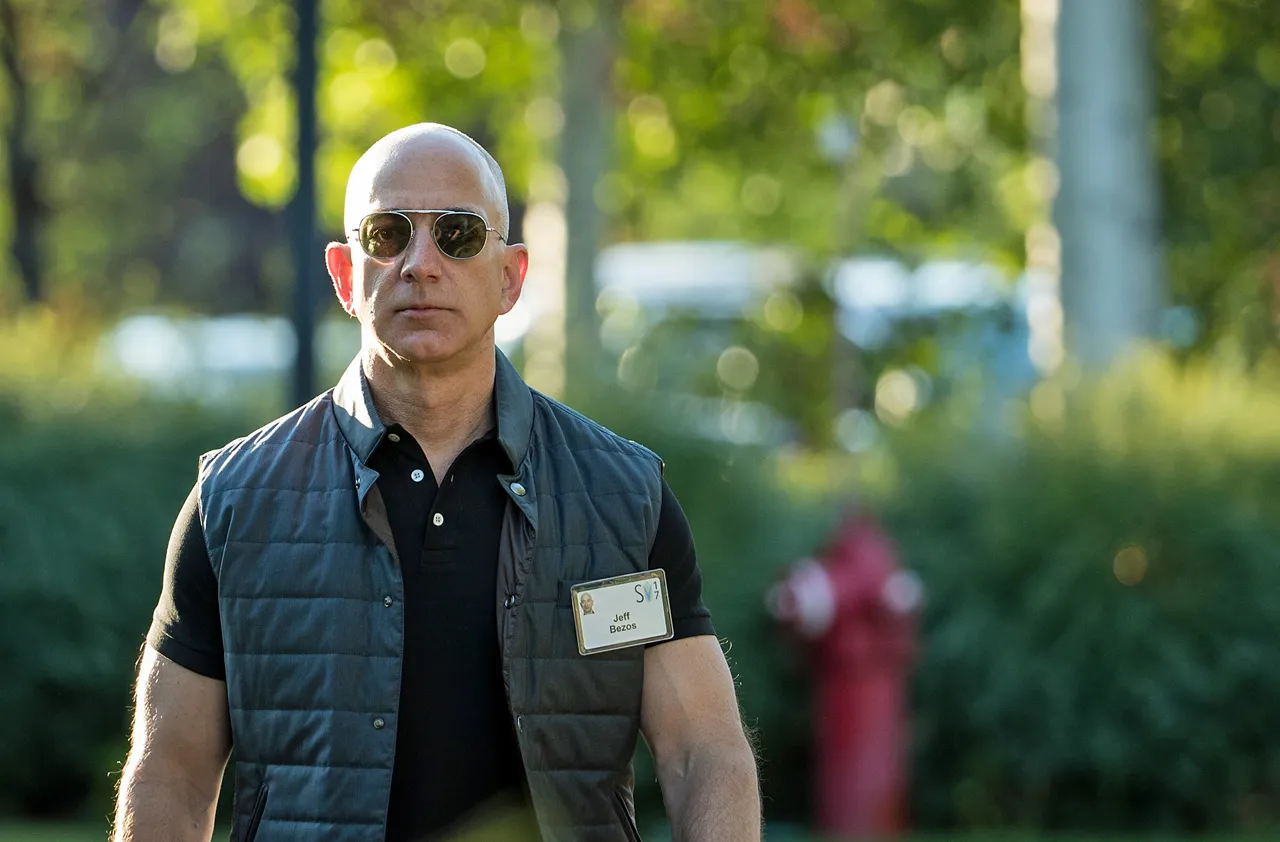
Amazon CEO Jeff Bezos writes, “Hard as it might be, reducing health care’s burden on the economy while improving outcomes for employees and their families would be worth the effort.” Berkshire’s iconic stock picker was more colorful, writing, “The ballooning costs of healthcare act as a hungry tapeworm on the American economy. Our group does not come to this problem with answers. But we also do not accept it as inevitable.”
Buffett may have been more accurate than he wished he had been. There are no answers yet about what this venture will look like at the finish line. But the alliance does point to the shape of things to come.
One aspect of containing health-care costs, for instance, is offering medical equipment or pharmaceuticals available at their cost. In light of the collective scale and multi-industry reach the three companies enjoy, the group has negotiating leverage. As Andrew Hart of Wallace Hart Capital Management pointed out, “These three companies employ over 1.1 million and health-care coverage would extend to their families, so this endeavor could cover 1 million to 3 million people. That’s an insurance pool similar in size to many U.S. states.”
Broadly speaking, however, the consensus is that the joint venture ultimately will aim to displace insurers, which have done little to help contain health-care costs because they have little incentive to do so. While the industry’s landscape includes numerous insurers, there still aren’t enough of them in enough geographical markets to provide meaningful competition.
Loop Capital Markets analyst Anthony Chukumba added that the standalone organization would lean heavily on Amazon’s technological expertise and Berkshire’s insurance operational experience.
Regardless of what the final product is, most everyone agrees that the organization, if successful, will exert some much-needed pressure on pharmaceutical companies and suppliers of health-care service that haven’t been pressured enough for years. If and when the model is copied by other employers, look for even bigger cost cuts.
Skeptics Remain
Few would deny the United States’ health-care system is becoming less affordable, but not all analysts believe this trio of for-profit organizations can establish a game-changing nonprofit organization to take care of the 1 billion-plus workers they collectively employ.
Piper Jaffray analyst Sarah James is one of those doubters, saying, “We do not expect this JV to be a meaningful disruptor to the industry, despite the stock reaction indicating that it is.” Cantor Fitzgerald health services analyst Steven Halper says the announcement has “more bark than bite at this point.”
They may have valid points, considering that disparate players in the health-care arena also are starting to form vertical alliances.
Case in point: Drugstore chain CVS Health (CVS) has agreed to acquire health insurer Aetna, melding at least one aspect of the health-care industry – dispensing pharmaceuticals – with another. It’s not just about selling drugs, however. CVS also operates 1,100 health clinics within its stores, providing simpler services like treating colds and other minor ailments that don’t merit an ER visit, and don’t require the hassle of making an appointment with a regularly seen primary care physician.
Craig Garthwaite, a professor at Northwestern’s Kellogg School of Management, offered an example of the potential cost-savings for all involved: “If you only have responsibility for the cost of the diabetes medication, you might impose a higher co-pay. If you’re responsible for all the medical costs that can ensue if people don’t get their diabetes medications, then you may want a smaller co-pay.”
Just because CVS and Aetna may be able to jointly achieve their goal, however, doesn’t mean JPMorgan, Berkshire and Amazon can. And even if the consortium can, it won’t happen right away. Experts don’t think the yet-to-be-formed team will be up and running until 2020. That gives existing players plenty of time and incentive to do so. The trio’s venture may well be unnecessary by the time it comes into existence.
The Takeaway
It can’t be stressed enough: There is no clear picture of what Bezos, Buffett and JPMorgan CEO Jamie Dimon have in mind. Any speculation about the potential for disruption is just that – speculation. It must also be reiterated that the initial goal here is to create a top-down health-care system that isn’t an enterprise in and of itself, but rather an employee benefit. It’s not (yet) a marketable product.
The move toward a not-for-profit system is a new bent, of course, but potentially the one that will work in the end – if the entity is the insurer, the deliverer and the post-care service provider, it has a true incentive to keep costs low.
Drug-making and overnight (or more intensive) hospital stays are off the table for this new entity, for now. But that might not matter. The goal and likely initiatives to get there could be enough to provide a much-needed shakeup in how the nation views health care.
Bottom line? The goal, as it stands now, is to create a top-down health-care system that isn’t an enterprise in and of itself, but rather an employee benefit. As Hart concluded, “This includes something for everyone to like: American business using innovation and private funding to solve a societal problem all while creating a not-for-profit based health-care system. It’s hard to find a downside to the creation of this ‘laboratory’ in how to design a better health-care apparatus.”
The Amazon/Berkshire/JPMorgan plan is a unique one in that – perhaps for the first time ever – all the involved parties are on the same side of the table.
