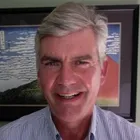
I’m a Retirement Expert Who Just Turned 65. Here’s the Advice I’m Actually Following
After more than two decades writing about retirement, here's what I've learned.


After more than two decades writing about retirement — first at Fidelity Investments and now as an independent financial writer and coach — I recently crossed an important threshold:
I turned 65.
For most of my career, retirement was something I analyzed from the outside. I interviewed economists, portfolio managers and retirement specialists about how people build wealth — and eventually live off it.
From just $107.88 $24.99 for Kiplinger Personal Finance
Become a smarter, better informed investor. Subscribe from just $107.88 $24.99, plus get up to 4 Special Issues

Sign up for Kiplinger’s Free Newsletters
Profit and prosper with the best of expert advice on investing, taxes, retirement, personal finance and more - straight to your e-mail.
Profit and prosper with the best of expert advice - straight to your e-mail.
Now I’m doing it myself. And what I’ve realized is this: not all financial advice holds up in real life. But a handful of lessons do — and they matter more than ever once retirement stops being theoretical.
Here are five that have proven durable.
1. Keep it simple — and don't go it alone
Would you be satisfied earning about 10% annually over the long run?
I would. That’s roughly what the S&P 500 has delivered over the past 25 years — despite the dot-com crash, the financial crisis, COVID and the 2022 bear market. Investors who stayed disciplined and avoided overreacting generally did well.
That’s why I’ve come to believe simple portfolios often outperform complicated ones.
For most investors, a diversified mix of low-cost ETFs — spread across all 11 sectors — is more than enough. You don’t need to chase the next hot stock or layer on complex strategies.
But here’s where my thinking evolved even further: simplicity doesn’t mean going it alone. My wife and I have worked with the same financial adviser for more than a decade. Even after years of writing about investing, I’ve found that an experienced adviser sees things I don’t.
A specific example stands out. A few years ago, I was inclined to hold onto a concentrated position in a Silicon Valley software giant that had appreciated significantly. It felt like a winner — why sell?
Our adviser saw it differently. He flagged the tax exposure and concentration risk and recommended gradually trimming the position over multiple years to manage capital gains. It wasn’t a flashy move. But it was the right one.
That decision helped us reduce risk, improve diversification and avoid a much larger tax hit later.
Key lesson: Keep your portfolio simple — and rely on experienced guidance to make it better.
2. Build your risk capacity — not just your confidence
Investors often talk about risk tolerance — that’s how comfortable they feel when markets move.
But what matters more in retirement is risk capacity, that’s your ability to absorb those moves financially.
That comes down to fundamentals:
- income (or lack of it in retirement)
- savings
- debt
- cash reserves
I’ve always tried to keep debt low, but I also recognize that not all debt is bad. For example, I still carry a 2.99% mortgage on our primary home in New Hampshire. Financially, it makes more sense to invest excess cash than pay it off early. But that only works because the rest of our balance sheet is strong.
High debt, on the other hand, reduces flexibility, especially in retirement when you no longer have a steady income to offset it.
That’s why I think of risk capacity as the foundation of the house. If it’s solid, you can ride out market storms. If it’s weak, even small disruptions feel bigger.
Key lesson: Focus less on how risk feels — and more on what your financial life can handle.
3. When markets get loud, step back
I’ve spent years watching markets closely. At Fidelity, I tracked the VIX — the market’s “fear index.” When it spikes, you know something is rattling investors.
But one of the most important lessons I’ve learned is this:
You don’t need to react to every spike.
I remember the early days of the COVID market selloff. I couldn’t believe the hit my portfolio took in just a few days. Markets were falling fast. Headlines were relentless. Even with all my experience, I felt the pull to “do something.”
Instead, I made a conscious decision: I stopped checking my portfolio.
No logging into Fidelity. No watching CNBC. No reacting.
I focused on what I could control — our long-term plan and our cash reserves. Within months, markets stabilized. Within a year, they had recovered.
That experience reinforced something simple but powerful: reacting to short-term noise often does more harm than good. Having a six-month emergency fund made that decision easier. It gave me the confidence to stay invested.
Key lesson: In volatile markets, discipline often means doing less — not more.
4. Medicare is complicated — even when you think you're prepared
I’ve written dozens of articles about Medicare. I thought I understood it.
Then I turned 65.
Like many people, I did my homework. I researched plans, talked to experts and even worked with a Medicare adviser. When I found a plan through Martin’s Point Healthcare, it felt like a home run. It had great benefits, no additional premium, easy access to care, and even a $600 wellness card.
I recommended it to friends and clients.
Then, just a few months later, Martin’s Point announced it was leaving New Hampshire entirely.
Suddenly, I was back where millions of retirees find themselves — comparing plans, weighing trade-offs and trying to make sense of a complicated system. I remember thinking: I’ve written about this for years — and I’m still dealing with it in real time.
That’s when it hit me. Plans change. Networks change. Doctors change. You can’t control the system, but you can stay engaged.
Fortunately, Medicare gives you an annual opportunity to review and adjust your coverage. That flexibility matters — because the system isn’t static.
Key lesson: Medicare decisions aren’t “one and done.” They require ongoing attention.
5. Giving becomes more meaningful over time
Not all financial lessons are about investing.
This year marks my 20th anniversary of opening a donor-advised fund (DAF) at Fidelity Charitable. At the time, it felt like a practical decision — a more efficient way to manage charitable giving. Over time, it became something much more meaningful.
Giving started with small moments:
- supporting a friend riding in the Pan-Mass Challenge (where I’ve volunteered for 30+ years as a massage therapist) or a Best Buddies event
- donating to family and community causes
- giving to a local church or synagogue
- supporting organizations like Gather, Lasagna Love, and Inspired Sound Initiative
But with a DAF, I began to see patterns — the causes I cared about, the people committed to service, the impact of consistent giving.
There’s also something powerful about simplicity. When someone reaches out for support, you can respond immediately.
But what surprised me most was this: structured giving made me more generous. It turned intention into action.
Key lesson: As financial stability grows, so does the opportunity to make a meaningful difference.
What I understand now
After decades of writing about retirement — and now living it — I see financial planning a little differently.
It’s not just about building wealth.
It’s about building a life that feels meaningful — one where financial stability creates freedom, generosity and peace of mind.
Related Content