How Much Money You'd Make in the Stock Market Instead of Financing a New Car
If you can hold off buying a new car — and have the discipline to reinvest the savings — you could turbocharge your retirement savings.

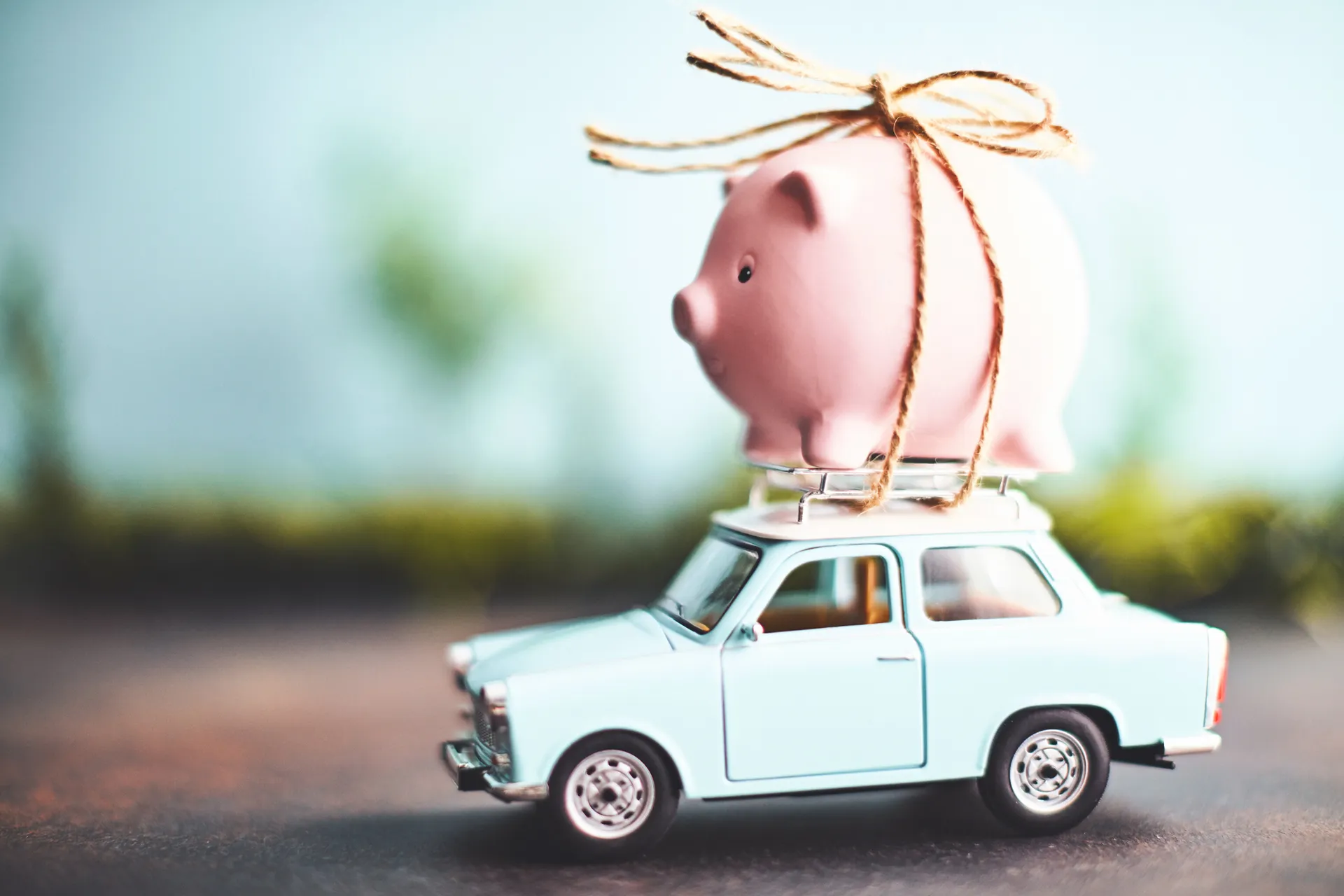
We've all read stories about the budgetary wonders of self-restraint. You know the tale: If those darned millennials gave up Starbucks and avocado toast, we'd solve the housing affordability crisis or something.
I don't actually know. I don't read those stories.
That's precisely why I laughed when my editor brought up a question she'd seen a few times from readers: "I can afford a nice car. But should I suck it up for a few years with my current vehicle, and use the money I'll save not making payments on a new car to invest instead?"
From just $107.88 $24.99 for Kiplinger Personal Finance
Become a smarter, better informed investor. Subscribe from just $107.88 $24.99, plus get up to 4 Special Issues

Sign up for Kiplinger’s Free Newsletters
Profit and prosper with the best of expert advice on investing, taxes, retirement, personal finance and more - straight to your e-mail.
Profit and prosper with the best of expert advice - straight to your e-mail.
Well, that's partly why I laughed.
It's also funny because both my family rides are on track to be paid off (early!) by the end of the year, and I've already been thinking about which 2026/2027 models I'd like to use the trade-in value on. Because if I have a financial weakness, it's the allure of stepping into a new car every few years.
But after going through this exercise, I begrudgingly have to admit the financial rewards of hanging on for a few more years are too sweet to resist.
Let me walk you through exactly how much money you can make by taking a significant pile of monthly savings — in this case, the hefty difference between financing a new vehicle and hanging on to a paid-off car — and putting it toward building your personal wealth.
New-car costs vs used-car costs

First, I need to determine just how much I'd save by holding on to my current hooptie.
If we're calculating the costs of owning a car, we're typically looking at five main categories: 1.) Car payment, 2.) insurance, 3.) repairs/maintenance, 4.) fuel and 5.) registration/license/etc. But we only need to consider the first three; the final two won't differ much based on whether your car is paid off or not.
Let's look at those first three factors through two different lenses: a new vehicle being financed over five years, or a five-year-old car that is already paid off.
- Car payment: The average monthly payment on a new vehicle during the fourth quarter of 2025 was $767, according to LendingTree. That compares to absolutely nothing for an owned and paid-for vehicle.
- Insurance: I went to Bankrate's auto-insurance calculator to look at the costs for insuring a new small SUV, as well as one that's eight years old (the midpoint age of my paid-off car). That came out to $1,692 annually for the new car, and $1,300 annually for my current car.
- Repairs/maintenance: Consumer Reports data provided 10-year costs for repairs and maintenance across roughly 30 car brands. Better still, they broke it down by years one through five and years six through 10. Based on the averages of this data, I could expect to pay $370 per year on repairs and maintenance on a new car, but $1,326 annually on my current car during the next five years of its life.
Category |
New |
Used |
Financing |
$9,204 |
$0 |
Repairs/maintenance |
$370 |
$1,326 |
Insurance |
$1,692 |
$1,300 |
Total |
$11,266 |
$2,626 |
Annual savings |
Row 5 - Cell 1 | $8,640 |
Monthly savings |
Row 6 - Cell 1 | $720 |
In all, I'm saving $8,640 per year, which comes out to $720 per month.
That's a lot of investment ammunition. And all it will cost me is five years of tearful gazes while pawing glass as I drive by the local dealer's lot.
What happens to your portfolio when you invest those savings?

Next, let's look at what happens when I put that difference to work in the stock market.
Here are the ground rules:
- I will contribute the $720 in savings to my account every month.
- I will purchase shares of the Fidelity 500 Index Fund (FXAIX). Why not an ETF? Believe it or not, this mutual fund is currently cheaper than every S&P 500-tracking ETF. FXAIX charges 0.015% in annual expenses. The lowest-cost S&P 500 ETF, State Street SPDR Portfolio S&P 500 ETF (SPYM), charges 0.02%.
- I have a fractional-share broker. But if I didn't, I would have to buy whole shares of SPYM, thus not be able to invest all $720 each month. But because mutual funds are bought in dollar amounts, not shares, and because most funds from Fidelity have no minimum initial or subsequent investments, I would still be able to invest all $720 every month in FXAIX.
- I will assume an 8.04% annual return, which is the average annual return of the S&P 500 over the past 50 years, according to NYU Stern School of Business data.
Let's see how things look after five years:
Year |
Contributed |
Fund A interest |
Fund A balance |
Year 1 |
$8,640.00 |
$313.94 |
$8,953.94 |
Year 2 |
$8,640.00 |
$1,033.84 |
$18,627.77 |
Year 3 |
$8,640.00 |
$1,811.61 |
$29,079.39 |
Year 4 |
$8,640.00 |
$2,651.92 |
$40,371.31 |
Year 5 |
$8,640.00 |
$3,559.79 |
$52,571.10 |
Not bad! In short, I've taken $43,200 worth of savings and gained nearly $9,400 on top of it.
This isn't a real-world result. The stock market isn't going to perfectly compound at 8.04% for five straight years. There'll be ups and downs, so my actual savings could be more or less. But this starts to give us an idea of how contributing and compounding significant additional sums can add up quickly.
Anyway, at this point, I will have owned the same car for 10 years. Even if we're assuming I own a Honda or a Toyota, I'm probably not going to push my luck past a decade.
Plus, I'm only human. New-car smell eclipses all.
So, I finally wave goodbye to my old vehicle and purchase a new one. Goodbye, future monthly savings. But my tidy $52,571 isn't going anywhere, so there's no reason why I shouldn't let it remain invested.
Let's say I'm 48 years old at this point in my theoretical timeline. Here's what another 15 years could do before an early retirement at age 63.
Year |
Interest |
Balance |
Year 6 |
$4,226.72 |
$56,797.82 |
Year 7 |
$4,566.54 |
$61,364.36 |
Year 8 |
$4,933.69 |
$66,298.06 |
Year 9 |
$5,330.36 |
$71,628.42 |
Year 10 |
$5,758.92 |
$77,387.34 |
Year 11 |
$6,221.94 |
$83,609.29 |
Year 12 |
$6,722.19 |
$90,331.47 |
Year 13 |
$7,262.65 |
$97,594.12 |
Year 14 |
$7,846.57 |
$105,440.69 |
Year 15 |
$8,477.43 |
$113,918.12 |
Year 16 |
$9,159.02 |
$123,077.14 |
Year 17 |
$9,895.40 |
$132,972.54 |
Year 18 |
$10,690.99 |
$143,663.53 |
Year 19 |
$11,550.55 |
$155,214.08 |
Year 20 |
$12,479.21 |
$167,693.29 |
By age 63, my original $43,200 in savings is now worth almost $168,000.
But I say to myself, "You know what? My other retirement savings — which at this point are more appropriately/conservatively positioned than an all-S&P 500 portfolio — have done exactly what I need them to, and I don't need to touch my automotive IRA. Let's let it ride another five years!"
Year |
Interest |
Balance |
Year 21 |
$13,482.54 |
$181,175.83 |
Year 22 |
$14,566.54 |
$195,742.37 |
Year 23 |
$15,737.69 |
$211,480.05 |
Year 24 |
$17,003.00 |
$228,483.05 |
Year 25 |
$18,370.04 |
$246,853.09 |
I've tacked on an additional $80,000 in just five years. My final balance of $246,853.09 is now six times the size of my cumulative five-year car savings.
That said, I want to run one more calculation. All of the above assumed my real current age, which — sigh — has a 4 in front of it. But let's say a younger, spritelier version of myself decided to make this intelligent choice when I was 30 — and let's assume I was aiming for a retirement age of 65. All of the above tables would still apply; I'm just adding another 10 years' worth of investment.
Year |
Interest |
Balance |
Year 26 |
$19,846.99 |
$266,700.08 |
Year 27 |
$21,442.69 |
$288,142.76 |
Year 28 |
$23,166.68 |
$311,309.44 |
Year 29 |
$25,029.28 |
$336,338.72 |
Year 30 |
$27,041.63 |
$363,380.36 |
Year 31 |
$29,215.78 |
$392,596.14 |
Year 32 |
$31,564.73 |
$424,160.87 |
Year 33 |
$34,102.53 |
$458,263.40 |
Year 34 |
$36,844.38 |
$495,107.78 |
Year 35 |
$39,806.67 |
$534,914.44 |
I'd be looking at gains of more than 12x. What started as $43,200 in automobile savings would have blossomed into more than $535,000 … which, at least today, would be enough to purchase a brand-spanking new 2026 Aston Martin Vanquish Volante.
A fitting return on my younger self's sacrifice.
Related content