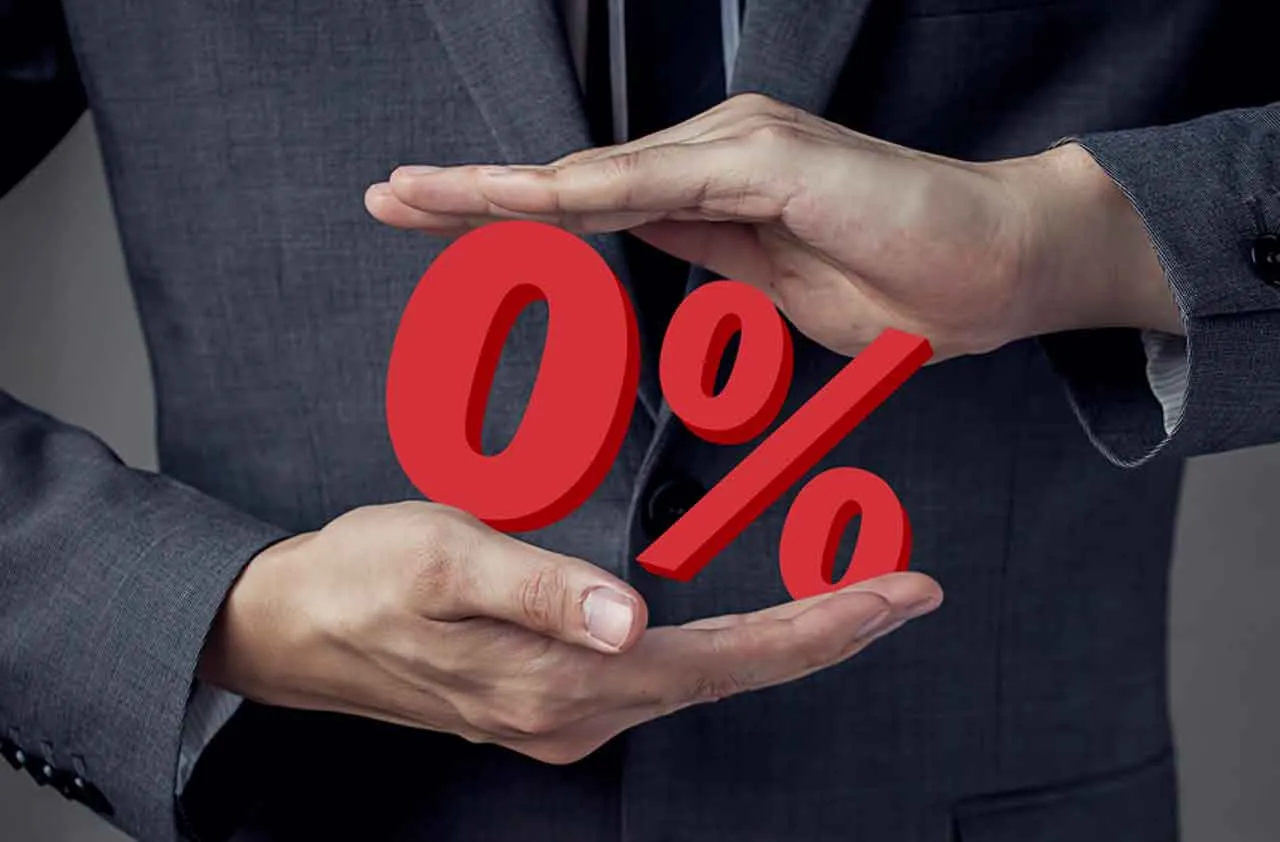
Here Come the Zero-Fee ETFs
A fund that pays you to invest? That’s coming, too.
Profit and prosper with the best of Kiplinger's advice on investing, taxes, retirement, personal finance and much more. Delivered daily. Enter your email in the box and click Sign Me Up.
You are now subscribed
Your newsletter sign-up was successful
Want to add more newsletters?
Delivered daily
Kiplinger Today
Profit and prosper with the best of Kiplinger's advice on investing, taxes, retirement, personal finance and much more delivered daily. Smart money moves start here.
Sent five days a week
Kiplinger A Step Ahead
Get practical help to make better financial decisions in your everyday life, from spending to savings on top deals.
Delivered daily
Kiplinger Closing Bell
Get today's biggest financial and investing headlines delivered to your inbox every day the U.S. stock market is open.
Sent twice a week
Kiplinger Adviser Intel
Financial pros across the country share best practices and fresh tactics to preserve and grow your wealth.
Delivered weekly
Kiplinger Tax Tips
Trim your federal and state tax bills with practical tax-planning and tax-cutting strategies.
Sent twice a week
Kiplinger Retirement Tips
Your twice-a-week guide to planning and enjoying a financially secure and richly rewarding retirement
Sent bimonthly.
Kiplinger Adviser Angle
Insights for advisers, wealth managers and other financial professionals.
Sent twice a week
Kiplinger Investing Weekly
Your twice-a-week roundup of promising stocks, funds, companies and industries you should consider, ones you should avoid, and why.
Sent weekly for six weeks
Kiplinger Invest for Retirement
Your step-by-step six-part series on how to invest for retirement, from devising a successful strategy to exactly which investments to choose.
The race to the bottom for fund fees has finally hit, well, bottom. Two exchange-traded funds that launched at the beginning of April charge 0% in expense ratios—at least for the first 14 months. Another ETF, awaiting Securities and Exchange Commission review, could initially cost less than zero.
The just-launched free ETFs come from online lender SoFi. The firm will waive each of the funds’ 0.19% annual expense ratio until at least June 2020. SoFi Select 500 (symbol SFY) focuses on growing, large-company U.S. stocks; SoFi Next 500 (SFYX) homes in on shares of midsize and smaller U.S. firms. CFRA analyst Todd Rosenbluth thinks the funds will remain free for more than one year. “Either the funds will be successful and the 0% fee will be extended, or they won’t and the products will shut down,” he says.
Meanwhile, relative newcomer Salt Financial is awaiting SEC approval of a low-volatility U.S. stock ETF that would essentially pay its shareholders to invest, at least for a while. Through April 30, 2020, the adviser says it will waive its 0.29% fee and contribute the annualized equivalent of 0.05% on assets, up to $50,000 per year, to the assets of the fund. That means that for every $10,000 invested in the fund, Salt would put in another $5 to boost the value of the fund’s shares.
From just $107.88 $24.99 for Kiplinger Personal Finance
Become a smarter, better informed investor. Subscribe from just $107.88 $24.99, plus get up to 4 Special Issues

Sign up for Kiplinger’s Free Newsletters
Profit and prosper with the best of expert advice on investing, taxes, retirement, personal finance and more - straight to your e-mail.
Profit and prosper with the best of expert advice - straight to your e-mail.
Both Salt and SoFi have come late to the ETF party, so they are hungry for business as ETFs become more popular in investor portfolios. According to Charles Schwab, ETFs made up 33.5% of investors’ portfolios in 2018, up from 20.8% in 2015. “Firms are eager to participate in this growing market, and they are willing to waive fees to do so,” says Rosenbluth.
Investors should note that fees in the new ETFs are waived only temporarily. More important, fees (or the lack thereof) aren’t everything. Before investors buy in, they should examine a fund’s strategy, its underlying index and how it fits with the rest of their portfolio. Additional no-fee ETFs may come along, but they won’t become the norm, says Rosenbluth.
Our defensive picks shine. Kiplinger ETF 20 funds did their job, tracking their indexes through a choppy market over the past 12 months. Vanguard Total Stock Market, even with its 0.03% expense ratio, edged the 8.6% return of its benchmark, CRSP US Total Market index, with a 9.2% gain.
Other bright spots include two defensive U.S. stock funds, Vanguard Dividend Appreciation (symbol VIG) and Schwab US Dividend Equity (SCHD), both of which beat Standard & Poor’s 500-stock index over the past 12 months. Two of our actively managed Kip ETF 20 bond funds, Pimco Active Bond (BOND) and Pimco Enhanced Low Duration Active (LDUR), also beat their bogeys. Foreign stock funds fared poorly due to trade tensions and slower economic growth overseas.

Profit and prosper with the best of Kiplinger's advice on investing, taxes, retirement, personal finance and much more. Delivered daily. Enter your email in the box and click Sign Me Up.

Nellie joined Kiplinger in August 2011 after a seven-year stint in Hong Kong. There, she worked for the Wall Street Journal Asia, where as lifestyle editor, she launched and edited Scene Asia, an online guide to food, wine, entertainment and the arts in Asia. Prior to that, she was an editor at Weekend Journal, the Friday lifestyle section of the Wall Street Journal Asia. Kiplinger isn't Nellie's first foray into personal finance: She has also worked at SmartMoney (rising from fact-checker to senior writer), and she was a senior editor at Money.
-
3 Reasons to Use a 5-Year CD As You Approach RetirementA five-year CD can help you reach other milestones as you approach retirement.
-
Your Adult Kids Are Doing Fine. Is It Time To Spend Some of Their Inheritance?If your kids are successful, do they need an inheritance? Ask yourself these four questions before passing down another dollar.
-
4 Estate Planning Documents Every High-Net-Worth Family NeedsThe key to successful estate planning for HNW families isn't just drafting these four documents, but ensuring they're current and immediately accessible.
-
Best Mutual Funds to Invest In for 2026The best mutual funds will capitalize on new trends expected to emerge in the new year, all while offering low costs and solid management.
-
What Fed Rate Cuts Mean For Fixed-Income InvestorsThe Fed's rate-cutting campaign has the fixed-income market set for an encore of Q4 2024.
-
3 Major Changes Investors Must Prepare for in 2026A possible stock market bubble. Trump accounts. Tokenized stocks. These are just three developments investors need to be aware of in the coming months.
-
Government Shutdown Puts IPO Resurgence at RiskThe IPO market has been sizzling in recent months, but the government shutdown threatens to put a short-term halt to public offerings. Here's why.
-
The Most Tax-Friendly States for Investing in 2025 (Hint: There Are Two)State Taxes Living in one of these places could lower your 2025 investment taxes — especially if you invest in real estate.
-
The Final Countdown for Retirees with Investment IncomeRetirement Tax Don’t assume Social Security withholding is enough. Some retirement income may require a quarterly estimated tax payment by the September 15 deadline.
-
Mutual Funds Are About to Get the ETF Treatment. Here's What It Means for InvestorsThe SEC is expected to decide soon whether mutual funds from dozens of providers can be offered as ETF share classes.
-
Should You Buy These ETFs Before the Fed Cuts Rates?The Fed is expected to cut the federal funds rate at the December Fed meeting, and investors should consider these ETFs as interest rates head lower.