Bernanke's Ultimate Legacy
The former Fed chairman's decisions in 2008 were an act of courage that averted an economic collapse far worse than we experienced.

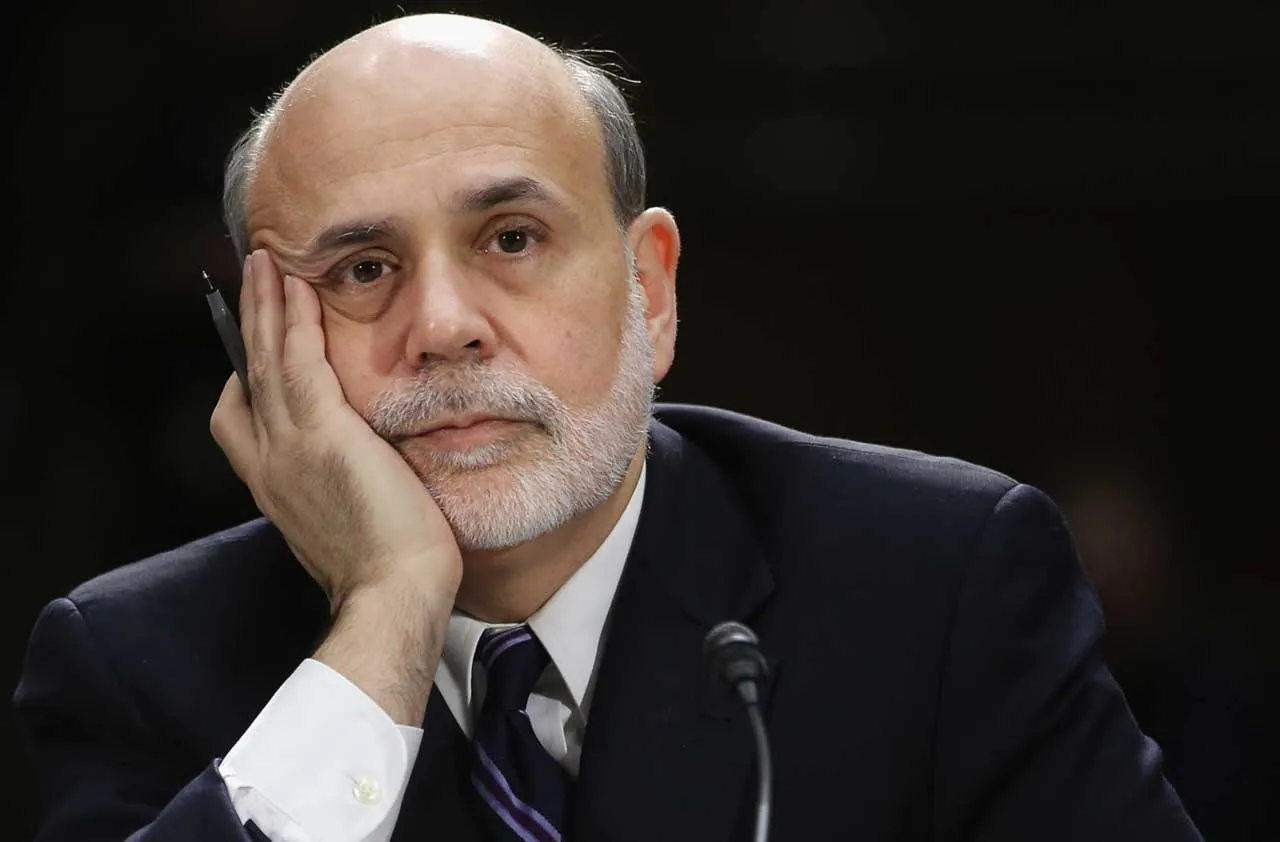
Ben Bernanke was the Federal Reserve’s most controversial chairman. He is revered by some, who claim that he saved the world from financial collapse, and despised by others, who criticize his Wall Street bailouts and his policy of keeping short-term interest rates near 0% for years. He saved investment bank Bear Stearns, yet six months later he let Lehman Brothers fail—only to flip-flop less than 48 hours after that and bail out insurance giant American International Group. So it’s not surprising that both the investment and academic communities eagerly awaited Bernanke’s recently published memoir, The Courage to Act, to explain what motivated his actions.
Bernanke’s ideas about monetary policy, along with those of many other economists, were heavily influenced by Milton Friedman’s highly regarded A Monetary History of the United States. Friedman concluded that the Fed’s failure to prevent the collapse of the banking system, and the subsequent contraction of the money supply and credit, was the most important cause of the Great Depression. Invited to speak at Friedman’s 90th birthday celebration in 2002, Bernanke, then a member of the Fed but not yet chairman, heartily praised the impact of A Monetary History. At the end of his introduction, he turned to Friedman and declared, “Regarding the Great Depression, you’re right. We did it. We’re very sorry. But thanks to you, we won’t do it again.”
Keeping his promise to Friedman, Bernanke acted to save Bear Stearns. But he didn’t anticipate the torrent of criticism from lawmakers. Both Congress and President Bush sternly instructed Bernanke and Treasury Secretary Henry Paulson: “No more bailouts!” Surprisingly, Bernanke claims this warning did not influence the Fed’s decision to let Lehman Brothers fail. In contrast to Bear Stearns, Bernanke asserts, Lehman was “deeply insolvent” and the Fed had no authority to inject capital or make a loan if the Fed was not reasonably sure the money could be fully repaid. Bernanke and Paulson held out a slim hope that the financial markets could weather the bankruptcy.
From just $107.88 $24.99 for Kiplinger Personal Finance
Become a smarter, better informed investor. Subscribe from just $107.88 $24.99, plus get up to 4 Special Issues

Sign up for Kiplinger’s Free Newsletters
Profit and prosper with the best of expert advice on investing, taxes, retirement, personal finance and more - straight to your e-mail.
Profit and prosper with the best of expert advice - straight to your e-mail.
But the markets could not. The chaos unleashed on Monday, September 15, 2008, when Lehman filed for bankruptcy, was not contained. The flight to safety was so intense that creditors pulled their loans from major financial institutions, setting the stage for an epic financial collapse.
As panic spread, I was not surprised that Bernanke turned 180 degrees and bailed out AIG. Despite congressional opposition, Bernanke’s promise to Milton Friedman trumped the withering political criticism.
Political realities. Although Bernanke sticks with his story that he had no authority to bail out Lehman, the true reason for his decision was rooted in political realities. He writes, “In short, even if it had somehow been possible for the Fed on its own to save Lehman, and then perhaps even AIG, we would not have had either the capacity or the political support to undertake any future financial rescues. ... It seems clear that Congress would never have acted [to approve subsequent Fed bank loans] absent the failure of some large firm and the associated damage to the system” [emphasis added].
The Fed could have saved Lehman, but then it would have had to save not only AIG but Merrill Lynch and all the others. Congress would have risen up in anger and all but abolished the Fed. Even after Lehman’s failure and the resulting chaos, Bernanke barely mustered enough support to continue to lend to financial firms. When the final chapters of this crisis are written, they’ll conclude that Bernanke’s decisions were an act of courage that averted an economic collapse far worse than we experienced.
