What the SEC's Shift on Shareholder Proposals Means for Investors
The SEC's move to rescind Rule 14a-8 creates new hurdles for shareholders seeking to influence company policies. Here's what you need to know.

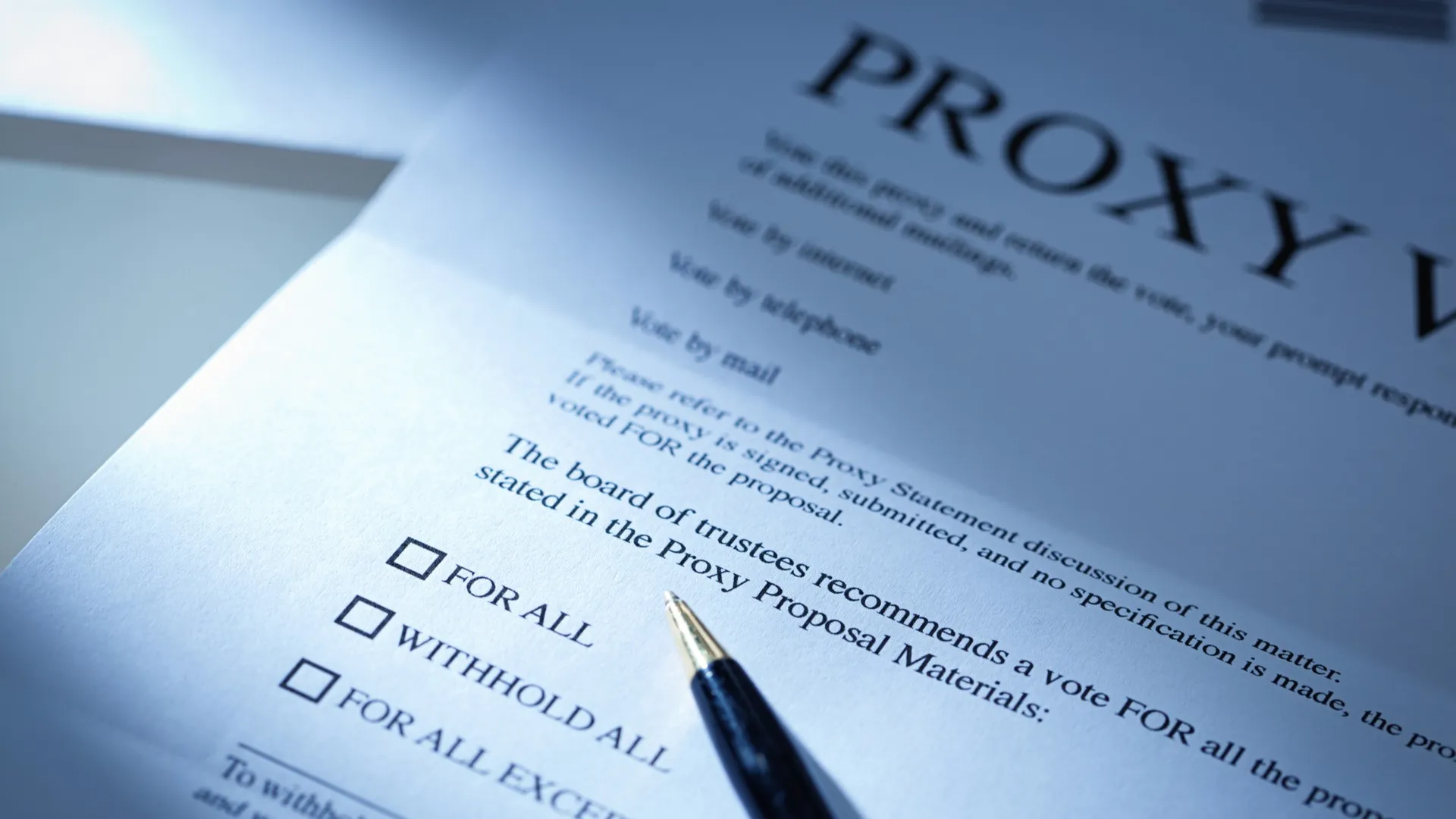
If you own individual stocks, you've probably seen a shareholder proposal or two buried in a company's proxy statement. It might have requested a report on greenhouse gas emissions, a vote on executive pay or a push for more board diversity.
Some might seem serious. Others might seem frivolous or overly political. But whatever the issue, it mattered to someone, and it ended up on the proxy materials.
For decades, the Securities and Exchange Commission (SEC) played referee in deciding which of these proposals companies had to take seriously and include on the ballot.
From just $107.88 $24.99 for Kiplinger Personal Finance
Become a smarter, better informed investor. Subscribe from just $107.88 $24.99, plus get up to 4 Special Issues

Sign up for Kiplinger’s Free Newsletters
Profit and prosper with the best of expert advice on investing, taxes, retirement, personal finance and more - straight to your e-mail.
Profit and prosper with the best of expert advice - straight to your e-mail.
That's changing. Going forward, the SEC is shifting that responsibility to companies, the courts and possibly to individual states.
Only about 30% of retail investors actually vote their shareholder proxies. Does this impact us as investors?
It certainly could.
Let's cover what exactly is happening and how it potentially impacts our portfolios.
What exactly is changing with shareholder proposals?
Individual shareholders cannot micromanage the company they're invested in. They elect a board of directors to do that.
However, one mechanism that allows for direct shareholder democracy is shareholder proposals. There are rules, and proposals can't pertain to the "ordinary business" of the company. That's the prerogative of the board.
Rule 14a-8 (PDF) is the SEC regulation that lets eligible shareholders force a company to include their proposals in its official proxy materials at the company's expense.
Companies that wanted to exclude a proposal — say, because it duplicated a past vote or meddled in ordinary business — had to notify the SEC and could ask its staff for a "no-action letter." That letter signaled whether the SEC agreed the company could legally leave the proposal out. It wasn't a binding legal decision, but companies treated it as the closest thing to one, and it kept most disputes out of court.
In November 2025, the SEC's Division of Corporation Finance said it would stop giving substantive answers to most no-action requests for the 2026 proxy season, citing lack of staff bandwidth. By August 2026, it went further: The division announced it would no longer weigh in on any 14a-8 exclusion requests.
Companies still must notify the SEC before excluding a proposal, but they're now making the call on their own, without a referee.
That's not the end of it. SEC Chairman Paul Atkins has argued that Rule 14a-8 oversteps the SEC's authority and that shareholder-proposal questions belong to state corporate law instead.
On September 16, the SEC formally proposed rescinding Rule 14a-8 altogether. This means the federal floor that guarantees shareholders a shot at the ballot could disappear, leaving the rules to vary by the state where a company is incorporated.
What does this mean for investors?
To start, it means fewer proposals to vote on in your shareholder proxies.
Companies are already excluding more proposals, and shareholders who disagree are taking them to court. Litigation, once rare — fewer than 30 such lawsuits in the past 50 years — is accelerating, with six lawsuits filed in the 2026 proxy season. In at least two cases, the company reversed its exclusion decision and settled rather than fight in court.
Very few individual investors can lawyer up about a proxy proposal. The ones that do tend to be large asset managers and activist investors with deep pockets. As a result, the proposals that do make it to a shareholder vote tend to be the priorities of a select few.
We might also see a flood of companies rushing to re-incorporate in states that are more "company friendly" and less "shareholder friendly."

Right now, Rule 14a-8 sets a single federal floor. Any company, regardless of where it's incorporated, must include a qualifying proposal from any shareholder who has owned $2,000 of stock for at least three years, $15,000 for two years, or $25,000 for one year.
If the SEC rescinds Rule 14a-8, whether a shareholder can force a proposal onto the ballot will depend entirely on the state of incorporation's corporate law and the company's bylaws. There will be no uniform national standard. That matters, because states differ enormously.
For example, in Texas, a company can set an ownership threshold as high as $1 million in shares to qualify to file a proposal. That automatically eliminates the overwhelming majority of individual investors. Texas is actively positioning itself as being more hostile to shareholder proposals than Delaware, which is why some firms, including Tesla (TSLA), are re-incorporating there.
The bottom line on the SEC's proposal to rescind Rule 14a-8
The SEC's proposal to rescind Rule 14a-8 will potentially weaken corporate governance. It will make it harder for motivated investors to push back against excessive executive pay or to rein in a headstrong leader (think Elon Musk).
It could also make it harder for investors to pursue environmental, social or governance (ESG) initiatives. Or, if they do, they may have to follow the lead of a larger institutional investor who might have very different priorities.
With fewer options to influence company policy via proxy voting, individual investors will have to resort to a simpler remedy. If they're unhappy with the direction the company is going, they can vote with their feet and sell the stock.
Related content
