
Starting Out
20 Ways to Waste Your Money
Plug your financial leaks and pocket the savings.
By Erin Burt, Contributing Editor, Kiplinger.com
July 23, 2009
- Comments
- Email This Article
- Print This Article
- Order a Reprint
Advertisement
Whether a newbie or seasoned budgeter, nearly everyone has spending holes -- leaks in your budget that drain money with you hardly noticing.
These small drips can add up to big bucks. Once you find the holes and plug them, you'll keep more money in your pocket. That spare cash could be the ticket to finally being able to save, invest, or break your cycle of living paycheck to paycheck.
Here are 20 common ways people waste money. See if any of these sound familiar, and then look for ways to plug your own leaks.
How to waste your money
1. Buy new instead of used. Talk about a spending leak -- or, rather, a gush. Cars lose most of their value in the first few years, meaning thousands of dollars down the drain. However, recent used models -- those that are less than five years old -- can be a real value because you get a car that's still in fine working order for a fraction of the new-car price. And you'll pay less in collision insurance and taxes, too.
Cars aren't the only things worth buying used. Consider the savings on pre-owned books, toys, exercise equipment and furniture. (Of course, there are some things you're better off buying new, including mattresses, laptops, linens, shoes and safety equipment, such as car seats and bike helmets.)
2. Carry a credit-card balance. If you have a $1,000 balance on a card charging 18%, you blow $180 every year on interest. That's money you could certainly put to better use elsewhere. Get in the habit of paying off your balance in full each month.
3. Buy on impulse. When you buy before you think, you don't give yourself time to shop around for the best price. Resist the urge to make an impulse purchase by giving yourself a cool-off period. Go home and sleep on the decision. If you still want to make the purchase a day or so later, do your comparison shopping, check your budget and go for it. Oftentimes, though, I bet you'll decide you don't need the item after all.
4. Pay to use an ATM. A buck or two here and there may not seem like a big deal. But if you're frequenting ATMs outside your bank's network, the surcharges can add up quickly. Put that money back in your pocket by using ATMs in a surcharge-free network such as Allpoint or Money Pass.
5. Dine out frequently. A habit of spending $10, $20, $30 per person for dinner can be a huge drain on your wallet. Throw in a $6 sandwich for lunch and a $4 latte in the morning, and you've got quite a leak. Learn to cook, pack your lunch and brew your coffee at home and you could save a couple hundred bucks each month.
6. Let your money wallow. If you are stashing your savings in your checking account or a traditional bank account, you are wasting money. You could put it in a high-interest online savings account and get paid to save. You can even get an interest-bearing checking account through such reputable companies as Everbank, Charles Schwab, E*Trade and ING Direct.
7. Pay an upfront fee for a mutual fund. Selecting no-load funds can save you more than 5% in sales charges. Of course, no matter how well a fund has done in the past, you can't be sure how it will perform in the future. But if you pay a load, you'll begin the performance derby in the hole to the tune of the load. See the Kiplinger 25 for our favorite no-load funds.
8. Pay too much in taxes on investments. Are you investing in a tax-sheltered 401(k) or Roth IRA? If you're not maxing out those accounts before you invest in a taxable account, you're spending too much.
9. Buy brand-name instead of generic. From groceries to clothing to prescription drugs, you could save money by choosing the off-brand over the fancy label. And in many cases, you won't sacrifice much in quality. Clever advertising and fancy packaging don't make brand-name products better than lesser-known brands (see Similar Products, Different Prices).
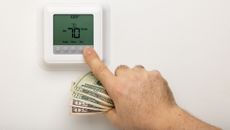
10. Waste electricity. Of the total energy used to run home electronics, 40% is consumed when the appliances are turned off. Appliances with a clock or that operate by remote are typical culprits. The obvious way to pull the plug on your energy vampires is to do just that -- pull the plug. Or buy a device to do it for you, such as a Smart Power Strip ($31 to $44 at www.smarthomeusa.com), which will stop drawing electricity when the gadgets are turned off and pay for itself within a few months.
11. Pay banking fees. Overdraw your checking account and you'll pay $20 to $30 a pop, so it pays to keep tabs on your balance. Plus, are you still paying for a checking account? Free deals abound -- but make sure they're really free. For instance, will the bank charge a fee if your balance drops below a certain level or if you download your info into a personal-finance software program? That's not free.
12. Buy things you don't use. This sounds like a no-brainer to avoid, but how many times have you seen something on sale and thought you couldn't pass it up? Even if something is 50% off, you're spending too much if you don't use it. Couponing, for instance, can be a great way to save on your grocery bills. But if you buy things you wouldn't have purchased in the first place simply for the sake of using the coupon, you're wasting your money. The same goes for buying in bulk. A bargain is no bargain if it sits unused on your shelf or gets thrown away.
13. Own an extra car. Okay, so a car is a necessity for most people. But face it -- cars are a huge drain, from their loan payments to insurance fees to gas and maintenance costs. Own more than one car and you'll double or triple those expenses. Ask yourself if that second or third car is really necessary. Are you holding on to an old car for sentimental reasons? Can you or your spouse carpool, take public transportation or bike to work?
14. Ignore your local dollar store. Shopping at the dollar store can be hit-and-miss, but it's not all kitsch or junk. If you know what to buy, you can find some real bargains. For instance, my local dollar store charges 50 cents for greeting cards versus the $3-plus at a drug store or gift shop. (I have a big extended family so I figure this saves me more than $100 per year.) You can also score a deal on cleaning supplies, small kitchen tools, shampoos and soaps, holiday decorations, gift wrap and balloon bouquets.
15. Keep unhealthy habits. Smoking is not only bad for your health, it burns up your cash. A pack-a-day habit at $6 a pack costs $180 a month and $2,190 a year. A junk-food or tanning-bed habit can be costly as well. Not to mention the money you'll waste on medical bills down the road.
16. Be complacent about insurance. Your bill arrives and you pay it without a second thought. When was the last time you shopped around to determine whether you're getting the best deal? Rates vary widely from insurer to insurer and year to year. Reshopping your auto, home or renters insurance might save you hundreds of dollars.
It also pays to evaluate your insurance needs. For instance, upping your out-of-pocket deductible from $250 to $1,000 can save you 15% or more on your car insurance. Consider using the same insurer for your home and auto insurance -- you could snag up to 15% off for a multiple-line policy. And make sure you're not paying for insurance you don't need. For instance, you need life insurance only if someone is financially dependent upon you (such as a child).
17. Give Uncle Sam an interest-free loan. If you get a tax refund each April, you let the government take too much money in taxes from your paycheck all year long. Get that money back in your pocket -- and put it to work for you -- by adjusting your tax withholding. With a little discipline, you can use that extra cash each month to get started saving or pay down debt (or make ends meet to avoid going into debt in the first place). You can file a new Form W-4 with your employer at any time. Use our easy calculator to help you figure out what to put on the form.
18. Pay for something you can get for free. Dust off your library card and check out books, music and movies for free (or dirt-cheap). Don't pay to receive your credit report when you're allowed to get it at no charge by law. Take advantage of kids-eat-free promotions. And dial 1-800-FREE-411 for free directory assistance. ( See our list for more fabulous freebies.)
19. Don't use a flexible-spending account. Your employer may allow you to set aside pretax dollars to pay for medical costs not covered by insurance. You can use the money for expenses such as therapy, contact lenses, insurance co-payments and over-the-counter drugs. (See a full list of qualified expenses.) You may be able to do the same for child-care costs. Why pay for things with post-tax money when you could be paying with pre-tax money? Not using an FSA would be a waste of money.
Make sure, however, that you use our tool to figure out how much money you should put in your FSA. You don't want to stash away too much because if you don't use all the money in your account by the end of the plan year, you lose it.
20. Pay for unnecessary services. How many cable channels can a person watch? Do you really need all those extra features for your cell phone? Are you getting your money's worth out of that gym membership? Are you taking full advantage of your subscriptions (such as Netflix, TiVo or magazines)? Take a look at what you're paying for and what your family is actually using. Trim accordingly.
What do you think is a waste of money? Share in the comments box below.
- Comments
- RSS
Permission to post your comment is assumed when you submit it. The name you provide will be used to identify your post, and NOT your e-mail address. We reserve the right to excerpt or edit any posted comments for clarity, appropriateness, civility, and relevance to the topic.
View our full privacy policy


Reader Comments (72)
Posted by: Victoria at 07/23/2009 08:12:04 AM
Weddings. Don't get me wrong, I believe in marriage, but people waste so much money on weddings! What's the average cost, now, $20k? Just what a new couple needs...to start out their lives together in massive debt. Have a party by all means. But don't go overboard. That money could be better used elsewhere.
Posted by: StraightTalkMe at 07/23/2009 09:28:00 AM
Dump your land line. Use a cellphone. But one caveat: Having a contract cellphone is another waste of money. Pay up front and get no bills, surprise fees or overages. Check out Straight Talk (StraightTalkDOTcom). Buy a phone and choose a plan: 30 days with 1,000 nationwide minutes minutes and 1,000 text for $30, or 30 days of Unlimited nationwide minutes and texts for $45.
Posted by: Helen at 07/23/2009 09:46:20 AM
Insurance for Children? They are not the money makers. Buying something cheap and it breaks or wears out too soon and you have to replace it again ! Go for the little more expensive that will last longer, like the saying goes "you get what you pay for"
Posted by: Mark at 07/23/2009 10:58:11 AM
Don't subscribe to magazines when you can read them for free on the internet! Don't pay for internet subscription mags either!
Posted by: JM at 07/23/2009 11:51:55 AM
Agree with most of this but not the flexible spending account. After using those for several years, I've opted to not use them now. Perhaps it was just the plans I was under but it took so much time to get expenses reimbursed that it wasn't worth it. It was always a hassle and with the number of hours I was spending on it versus what I was saving, it just didn't make sense.
Posted by: DBM at 07/23/2009 01:34:51 PM
Use gasbuddy to find the cheapest gas station within a reasonable distance or en route. Try to buy washable clothes over dry cleanable only.
Posted by: joe_thousandaire at 07/23/2009 03:21:13 PM
I really enjoy your articles for the most part Erin. But in this one I think you made a too common mistake of pointing the blame of financial ruin to the automobile. I understand, its a tantalizingly easy target: they lose their value, destroy the planet, put us in debt, even the companies that make them can't stay afloat. So here's the question - how many successful, financially independent people do you know that don't have access to reliable transportation? I don't know any. What happens when cutting corners on your transportation comes back to cut you. An older warranty-lacking vehicle can all of the sudden cost thousands in unexpected repairs and missed work hours. Then there's the issue of safety, I'm sorry but that ten year old vehicle you're keep driving around to save a few bucks is not going to protect you in an accident the way a newer model would. Driving is the most dangerous activity a typical person takes part in each day, not the place to go cheap. There are obvious downfalls to car ownership, but if chosen wisely and well maintained your car (or even your second car) can be more of an asset than a liability.
Posted by: DES at 07/23/2009 04:50:09 PM
This is all penny ante stuff. The way to avoid wasting money is to decide how much to save each month and put that money away before you spend anything.
Posted by: CoachD at 07/23/2009 08:03:00 PM
Regarding the automobile choice, used vehicles inspected by an expert ($50) have saved me and others thousands many time over. Consumer Reports (free at the library) provides safety ratings as does most car pricing sites. CarFax gives you the vehicle history. The only dissenters I've ever run into were new car dealers and their sales staff. Mid to large used sedans will survive a life-threatening accident as well or better than the smaller cars produced today for high MPG. Side impacts at intersections are likely your best protected event for newer cars with side airbags. For those who travel in intersections with questionable drivers, I would concede a car with bags on each side would be comforting. FWIW
Posted by: CoachD at 07/23/2009 08:10:14 PM
PS - Erin specified late model vehicles (less than five years old) of which the best models you can buy at 40-50% of new. Buy at 3 and sell at 7. If your family has 2 cars, stagger every 2 years and you'll always have reliable transportation.
Posted by: Kevin McCormally at 07/24/2009 01:15:56 PM
Hi, I'm the editorial director for Kiplinger. This is a response for Mark: Hey, let's not go too far. There are good reasons to subscribe to magazines, not the least of which is to support the journalists who produce the great stories that find their way to the Web.
Posted by: valerie at 07/24/2009 01:30:12 PM
i bought my first car new and my 2nd car used. it's 15 years old and still runs. no major maintenance. i was in an accident and i'm looking to replace my vehicle. i was thinking new, but i will most likely go with something used. it really is the better option. i am debt free.
Posted by: Annie Q at 07/24/2009 03:00:42 PM
Another way to waste money is to finance a car. We buy our cars used, with cash, so we don't take the new-car price hit and we don't pay finance charges. It works as long as you buy a high-quality car. Currently we have a 2000 Lexus that we bought in 2003. The only work we have ever had done on the car was to have the brakes relined a year or so ago. It's nine years old, works perfectly, and looks great, and best of all costs us nothing except gas and insurance.
Posted by: Henry Elwyn at 07/25/2009 06:46:16 AM
Newspapers (except the Sunday edition which has all the coupons). Everything that's in a newspaper can be found online for free. Save money and save a tree.
Posted by: Chuck at 07/25/2009 07:39:45 AM
#10 is misleading and not practical. Home electronics are spread all over the home. I would need a dozen SmartPower devices to follow the recommendation. Better advice is to replace old refridgerators and A/C equipment. These are the huge energy wasters in many homes.
Posted by: scott at 07/25/2009 02:09:57 PM
"You could put it in a high-interest online savings account and get paid to save. You can even get an interest-bearing checking account through such reputable companies as Everbank, Charles Schwab, E*Trade and ING Direct." Last time I checked Schwab was paying 0.7% intrest on it's checking. Hardly "High-interest"!
Posted by: Don at 07/25/2009 05:58:26 PM
RE: #8, this is mostly good advice. But remember that your retirement savings are locked up until you reach a certain age. It's generally wise to have savings and investments apart from your retirement funds as well. Just be mindful of capital gains, and use your losses to reduce your adjusted gross income in consultation with your tax preparer.
Posted by: Karen Townsend at 07/26/2009 11:14:51 AM
Vices like alchohol, tobacco and lottery are a huge waste of money. Check out awesome money saving tips at www.womensave.org The site will help you save thousands a year without hardly any effort. ...It is free to use. Don't miss out. Erin Burt, please check your email, I sent you a letter and look forward to hearing back from you.
Posted by: corey at 07/26/2009 11:49:41 AM
suggesting that people should buy generic drugs to save money is irresponsible. i have a very serious neurological condition which requires absolute consistency in the chemical make-up of the medications that i take to treat it. since generic medications are legally required to match the "recipe" of the branded drug by only 70% , taking them would put my health at serious risk. the rest of the article is great, but financial experts should stay away from giving medical advice.
Posted by: Hiram Hohandel at 07/26/2009 12:23:02 PM
In your report, you Forgot to mention that More Americans buy Alcohol than Cigarettes, Alcohol, which is Far worse than junk food and Cigarettes combined, due to excessive drinking, driving dangers, and Many health conditions cost consumers and innocent people millions of dollars annually. Simply because it is Socially Acceptable,
Posted by: Ginny at 07/26/2009 12:34:44 PM
Why do you have to constantly attack a Load commission on mutual funds. The professional who earns that $5.oo (reps share is $2.5 to $4) on a $100 monthly investment spends a lot of time filling out paperwork, not to mention they should be recommending a suitable mutual fund that fits the persons risk tolerance. Account form, suitablity form, account form and copies of all forms for his broker/dealer plus maintain a file of statements forever. This doesen't include that most people who buy on their own get scared at the first down turn and sell or when they see a TV they want they cash in their fund often taking IRS penalties. A reg. rep. should keep in touch, hold hands during a down market, change addresses when they move and beneficiaries when they marry. B shares which you also don't like are actually better for an investment under $100,000 as they have a small fee internally which goes away in the 6th year and they convert to to A shares with lower charges. Even though the maxium B share charge is 100 bases pts it is actually the real costs and usually .45 to .65 depending on the expenses of the fund. A person who buys a B share who has a penalty is more likely to not cash in the investment and stay-the-course during down markets. Many load mutual funds allow a $50 beginning investment and $50 a month whereas most no-loads have a $1000 to $10,000 miniumu allowing more people to invest and more UGMA Accounts for KIDS. No loads add their fees for advertising and their home office staff. They can have very expensive internal fees especially if they are a regular equity fund and not an index funds. We are professionals out here and we do give a service and most people starting out investing don't have a clue of what kind of investments they own. When I talk to people with 401k they don't even know if they are in a bond fund or an equity fund. So just like you we work for a living and we earn the service we give clients. Sadly to say most professionas (we spend $2000 to $5,000 a year for Continuing Ed, insurnace and licensing fees) won't take a small investor (under $25,000 as they are usually uninformed, nervous and time consuming) We bear the professional risk. since you never publish the advantage of a good financiall professional they don't know how to choose a good one or do they know what is their responsiblity in developing an investment program and long term plan.
Posted by: Erik Hubbard at 07/26/2009 04:27:51 PM
Don't forget buying bottled water! The money you can save by filling up a sports water bottle from the tap and keeping it in the fridge. And if you're worried about it being purified then buy a brita water filter. . . you only have to buy one.
Posted by: Joot at 07/26/2009 10:46:10 PM
Sorry, Kevin. One of the first things I did when first noticing a change in the economy was to cancel all my paid subscriptions but Consumers Report because of how expensive it was becoming. Plus, I found myself reading only half a magazine before getting bored with it. I agree with Joe_thousandaire on cars. As a single woman now old as dirt the best thing I can do for myself is to drive a car not older than five years for all the reasons he mentions. I'm a long-time AAA member but have you ever had to call for road service? It can take up to two hours or more for help to arrive and there's not many places I want to be stuck in with a disabled vehicle even for five minutes with all the nut cases running lose these days. Many of the items Erin lists could easily be eliminated by most people and if I had to I'd start with bank fees, ATM fees (there's no excuse for paying these except maybe in a life-threatening emergency), all the coffee nonsense--unless one is wealthy. Victoria mentioned weddings. How obscene has this become? Twenty, thirty thousand or more for one day's ceremony? It's nuts. I do plan to do something about the phone bills though. It's not the actual bills that are bothersome, but all the taxes, fees and surcharges that come close to adding up to as much or more than the actual monthly amounts. I'll be checking out that web site in the morning.
Posted by: Jay at 07/27/2009 02:03:08 PM
Rethink the Netflix comment. There's nothing more convenient than having movies at my fingertips. Not to mention, a family of four forks over $70 at a minimum for a regular night at the movies. Don't let the movie be an IMAX movie. That adds at least $3 per ticket. Netflicks costs me $14.95 a month and here's what I get: two movies of my choice at a time sent continuously. That means each time I send one, they send another. I could actually reduce it down to 1 movie, go from $14.95 to $8.95 and still have a good flow of movies. THEN I purchased the Ruku box for a one time fee of $99. Now I can stream movies to my TV instantly. For a movie lover, this is the greatest thing since sliced bread. I do have TVonPC8000.com and that's a fantastic program as well. My wife works on the weekend so when I can get rid of the kids and have no responsibilities, I can veg out and watch TV shows, movies, documentaries, or whatever I want, without shelling out literally thousands of dollars to the movie theaters for a single movie, popcorn and the inconvenience of finding a parking spot! Go Netflix!
Posted by: Joe at 07/27/2009 03:39:58 PM
What about (idling at) that railroad crossing? If you expect to be there 30 seconds or more, then why not turn the engine off? My car gets 24 mpg in city driving and you can sure as heck improve on that by turning the engine off. And how about making sure that your car is in good operating order? I am not a mechanic nor do I have any interests in businesses as such. Taking the extra weight out of the trunk will save you a whole lot. Take the golf clubs out of the trunk and you'll be able to drive a lot further than usual.
Posted by: Diana at 07/27/2009 05:29:11 PM
Another way to waste your money is to be satisfied with your current doctor/dentist/insurance provider/you name it and stop looking. They know most people will stay with them just because people won't want the hassles, but one can save money and get better quality of service/goods if you keep shopping around and compare, especially you are not happy with the current provider.
Posted by: Ward at 07/27/2009 11:05:43 PM
Many people buy premium gas in the mistaken belief that their vehicle will run better, or longer if they spend more money on gas. It won't. If the owner's manual recommends regular, use it. If the owner's manual recommends premium, get a different car.
Posted by: James at 07/28/2009 07:42:55 PM
17. Give Uncle Sam an interest-free loan., there was one good article I read that supports this action. The amount you get from keeping the money is often times not used to pay down debt or invest. Even if you invest, the money is done so overtime, not at the beginning of the year, so the return is small. Yet if I have trouble saving, why would I not use such a form to force me to save. Then if I am disciplined I put this return in the savings. It works for direct savings plans/401Ks,etc.
Posted by: Mollie at 07/29/2009 05:33:03 PM
I know what my money drip is: energy drinks and coffee beverages bought at 7/11s or gas station marts or Starbucks or Peets to drink in the car on the way to work or the way home, or to the gym or after the gym, or just driving around. I should either brew my own coffee drinks at home, buy energy drinks in bulk at a warehouse, or just stop drinking them altogether!
Posted by: Laura at 07/30/2009 10:29:39 AM
The problem with dollar stores is that some products they sell--particularly cleaning supplies--are not good values despite their low upfront price. A giant box of obscure-brand laundry detergent for 2.99 might seem better than a same-size box of Tide for 12.99, until you read the directions and discover that the off-brand requires 1.5 cups per load, compared to the major brand's half-cup. As always, you have to do lots of math to decide what's the real money-saver.
Posted by: Jacob at 07/30/2009 11:32:43 AM
Regarding #10, the Smart power Strip. I have trouble to see how it can pay for itself in just "a few months". Even at the highest electricity rates here in the US, I would like to see the entertainment center or other household appliance that uses $31-$44 in standby power over a few months. I did not buy these on purpose, because I calculated the relatively high investment canceled out any monetary gains over at least the next 5 years. However, something that most people can turn off, or put on a timer, is their modem/router/switch etc. Many people have one or more of these, and they do use power overnight, when nobody is using them anyways.
Posted by: Andrea, RPH at 07/30/2009 02:18:59 PM
Corey-- Regarding generics,where on EARTH did you hear generics only have to "match the recipe 70%"? did you or someone else make it up? In order for a pharmacist to substitute a generic for a brand name, the drug must meet bioequivalency standards. The drug must be the same strength, must be in the same dosage form, and must be released the same way in the body. Next time discuss this with your pharmacist. They will show you that there are a lot of generics out there that are manufactured BY the brand name drug company FOR the generic company. Just look at Astra Zenica's Toprol XL and the generic, metoprolol succinate by PAR pharmaceuticals. As a pharmacist, I recommend that people stick with brand names for only 1% of drugs out there, and obviously this is not one of them.
Posted by: Matt at 07/30/2009 06:09:13 PM
Maybe I am cheap, but I save money by taking advantage of the coffee and snack cupboard offered at work. I only have to buy enough coffee for the weekends for home brewing. The groggy drive to work is a price I am more than willing to pay.
Posted by: KBaites at 08/02/2009 03:52:11 AM
You cannot save money until you alter your lifestyle and stop allowing yourself to be subject to marketing material. Define your priorities: It's no good spending money on a lavish home and furniture if you can't afford to have parties in your home.
Posted by: JH at 08/03/2009 01:59:18 PM
#10 is an urban myth that just wont die. Probably started by the inventor of that smart power strip. Truth is that some devices DO use power when off - TVs in standby mode and devices with clock displays or timer functions - but that use is typically just 1-5% of the power use when on. Not 40%. Not even close. Many devices, including almost all battery chargers, don't use any power at all when off. I see so many people who unplug their cellphone charger thinking it uses power when off but it just is NOT true. Buy/borrow a kill-a-watt, plug in the device and see for yourself.
Posted by: martin at 08/03/2009 06:46:20 PM
First, thank you for bringing up...tax refunds. Second, one could also make greeting cards on a computer. A little cheaper than purchasing. Plus, gives personal touch. Finally, concerning drugs, people should find out if alternatives (i.e. diet change). I am a 46 year old male and consider myself very healthy just by watching my diet and letting my body do what it is supposed to do - heal itself. I have not been to a doctor in roughly 10 years.
Posted by: John at 08/04/2009 01:02:36 PM
agree with everything except the new car vs old car point. sometimes you can get a better deal on a new car than a used one. i researched for months using websites like cars and edmunds, and found that the incentives on my vehicle of choice were so great that it was a couple thousand cheaper than the used vehicles i was looking at.
Posted by: corey at 08/04/2009 02:37:00 PM
andrea...i am living with a serious neurological condition and i'll take my neurologist's word on this...either way, you're missing the point. financial experts should refrain from giving medical advice....
Posted by: elizabeth at 08/09/2009 12:37:39 AM
Cute...If this "advice" isn't intuitive for someone, then I'm pretty sure he or she has trouble getting dressed in the morning as well.
Posted by: MS at 09/04/2009 09:59:30 PM
cable is a waste of money and so is the converter boxes-I know how to save money or I would be living in a cardboard box. As far as cars go, a new car is full of kinks that the manufacturers sent thru so you can pay for another car getting them fixed because your warranty don't cover it. So its best to let someone else knock the kinks out and then you have a good car but be sure you get it from a private owner that keeps their cars serviced. A dealer only wants your money over and over again.
Posted by: Jazz at 09/05/2009 02:35:56 AM
Ladies,don't get suckered into buying expensive department store makeup. Ditto for hair products over $7. I'm also leery about the dollar stores,I just bought cheap garbage bags at one and they're terrible.
Posted by: MojoFrito at 09/05/2009 09:58:43 AM
Avoid bank junk fees. Call your bank and ask to "opt out" of debit card overdraft. Most banks will allow you to overdraw your account multiple times in the same day, even at an ATM. A subscription to Consumer Reports is the best investment you will ever make.
Posted by: Joseph at 09/21/2009 03:29:30 PM
Life insurance is a necessity whether you have a dependent or not. Funerals average around $10,000. Who has that laying around. Not to mention you can give money tax free to heirs with life insurance. Also why would I up my deductible from $250 to $1000 to save 15% when I would have to pay $750 more if I am in an accident. THis makes no sense.
Posted by: Kim at 10/02/2009 03:42:32 PM
Everyone in our family of four has cell phones, so I cancelled our home telephone service. (We have Internet and cable bundled). I'm saving $53 a month.
Posted by: Jeremy at 10/15/2009 03:26:01 PM
Anyone know if it is worth turning off your Internet modem and connection when you are not using it? Does it consume a lot of electricity?
Posted by: Bobby at 10/15/2009 03:36:59 PM
@Joseph...As for the deductible, depending on how much your monthly insurance is this could be a wise move. If you consider most people only make a claim once every 5-10 years this could easily pay you back more than the $750. Or you could pick say a $500 deductible if you did not want to be out that much in an accident. I do not think the author assumed than any or all of these will apply to everyone. I think it is more of helpful tips you look at and decide what would benefit you and what would. In my case if I could lower my insurance by 15% it would pay for the $750 difference in just over a year. Anything after that is just more money in my pocket and NOT in some insurance exec's.
Posted by: roger at 10/15/2009 04:01:03 PM
@Joseph..."why would I up my deductible from $250 to $1000 to save 15% when I would have to pay $750 more if I am in an accident. THis makes no sense. " lol...I've only had liability insurance for the past 11 years. I have not been in an accident. I will guarantee you that the money I have saved will easily fix any damage to my car or possibly by a new one outright.
Posted by: Tim at 10/15/2009 04:12:35 PM
@Joseph...The point of upping the deductible is that if you have a relatively clean record you're generally not even using your insurance. So that 15% a year can add up to more than the $750 you'd be saving if an incident did occur.
Posted by: Jon at 10/15/2009 04:50:45 PM
Do NOT pay off your credit card balances "in full" every month. This might help you avoid paying interest on your borrowed money, but it's not the best move for your credit. Pay the card down to a LOW balance, like $5-10 every month, but NEVER pay it to $0.
Posted by: dth at 10/15/2009 08:07:34 PM
why is everyone so in love with their FICO score? It's an 'l love debt' score. Save up and pay cash and have a credit score of ZERO! That's the way to live.
Posted by: JD at 10/15/2009 11:23:18 PM
I make my own filtered cigarettes...
Posted by: Socks at 10/16/2009 11:34:07 AM
Why not pay your credit cards to $0? That sounds wrong to me? Why give them ANY money? Also you need to pay your credit card bill TWICE a month now. If you put $100 on your Visa on January 1st, they give you 21 days grace period to pay it off without incurring any interest. If you do NOT pay that charge IN FULL within 21 days, they charge you interest dating back to January 1st when you made the charge. Now imagine a $5,000 trip. If you pay it off in installments of $250, by the time you've paid off say $4,750 of the charge years later, you are STILL paying interest on the FULL $5,000 years later...
Posted by: Teresa at 10/16/2009 04:27:17 PM
I've seen cell phone bills keep people from buying homes & cars! As a mortgage professional, I've seen cell bills in the hundreds a month---for people who don't use a phone for work! Cell phones are NOT a necessity of life; they're a convenience. Having a non-contractual cell phone for emergencies is great; no potential bad credit, no monthly fees, etc.
Posted by: Marvin \ at 10/19/2009 07:16:54 AM
I really hated this article until I read down and found some of the useful tools on the flexible spending idea. Now my little inner financial planner is satisfied that Kiplinger still has something to offer:-)!
Posted by: Tutterow at 10/21/2009 09:55:52 PM
Totally agree with the credit card balances, that is the one thing that can absolutely kill you and keep you in debt forever. Do everything you can to pay it off. Amen to the tax withholding as well.
Posted by: Mar at 10/25/2009 03:50:59 AM
Instead of suggesting to buy generic drugs, it's better to suggest "generic clothes or accessories" and not the brand name $300 bags or $150 jeans. there are plenty of reasonably priced clothes that would give the same look. when it comes to your health, you should look for the best care and medicine and not the cheapest.
Posted by: Brian at 10/29/2009 11:28:21 PM
@Corey about the generic drugs:I don't know where you get the generic drugs are only 70% of what the brand drugs are, but the FDA requires the generic drugs to have the same quality, strength, purity, and stability of the branded drug. If not, then the generic drug what not be allowed to be substituted for that specified brand name prescribed by your doctor. Trust me, I do this for a living working as a pharmacist!
Posted by: Hellloo Dere at 12/07/2009 03:37:56 PM
This Is So Stupid Y Would U Want 2 Waste Money Anywai!!!!...Tellin Ppl 2 Waste Money Then All The World Will Be Bankrupt!!
Posted by: agl at 02/25/2010 05:33:02 PM
I agree that expensive cosmetics and hair products are a waste of money. I also think having your nails done is also too expensive. Seems hardly anyone is natural anymore. And that includes getting breast implants if you already have boobs.
Posted by: Pauline at 02/26/2010 09:38:26 AM
Writers and Magazine Jounalists need to have a meeting to come up with a a way to continue to sell magazines but they should not be free online. People who want freebies and basic information about the content of a prospective magazine they wish to subscribe should be able to get some information, but not much. Thats not fair and I will not purchase any magazine when others are reading it online for free. As a Writer I find this unfair. Let me know if you are a Writer or Journalist. Lets arrange a national meeting so that this practice can stop. Some people want everything for free simply because they were born! According to Spiritual Law, there is a price for everything and we must always pay. Truly enjoyed the article about saving money. Now thats not being cheap, but its not good to be wasteful either. Even if you are very wealthy saving, recyling etc., are great and respectful to Mother Earth. Will file your website so that I can read more great interesting articles. Keep up the good work and to all you posters out there, thanks...I enjoyed reading all the posts too...
Posted by: Flaneuse in DC at 02/26/2010 04:53:18 PM
"how many successful, financially independent people do you know that don't have access to reliable transportation?" In major cities -- lots. And car-sharing companies like Zipcar are wonderful. We waste money on all kinds of things; it's a matter of choosing your poison but not choosing ALL available money pits. I prefer fine stationery to ugly cheap greeting cards, but I have no need for electronic gizmos other than a bare-bones cell phone. Also, the classic book _Your Money or Your Life_ is still the very best money-consciousness program out there.
Posted by: saja at 02/26/2010 05:56:01 PM
what other cost cutting ways are there to save on cable service?
Posted by: Ronnie at 02/27/2010 03:03:26 PM
I agree with those who say using the generic drugs over premium makes a huge amount of sense. Now there may be some, like Corey, who won't or can't do it, but I'm on a crapload of medication, and the amount I'd have to pay to get them all premium is ridiculous. The only premium I get is my Advair and ProAir HFA, and that's only because they don't have generics yet. I've been on some form of steroidal medication, along with allergy meds and other OTC meds, for 2 decades and the difference is none. Another piece of advice? Don't assume that meds with different names are different. Excedrin regular, migraine, etc. all have the same active and inactive ingredients. I know, I sat there and read them all.
Posted by: Elise at 03/21/2010 01:04:12 PM
Buy gasoline at BJ's or another warehouse store. The prices are usually the lowest and they take most credit cards. Occasionally they catch up later on price drops so keep watch on the gas station prices as well.
Posted by: sharon at 03/23/2010 10:49:39 AM
cell phone contracts (and phones!) I paid $20 for a camera phone and $8 a month for prepaid cell phone usage which gives me all the minutes I need. I am amazed at friends who pay $200-300 for a phone that they don't know how to use and only use for talking and texting. Then they pay over $100 a month for a 2 year commitment. If you only use your phone to talk, why pay these outrageous fees? Having lived overseas, I know what a rip-off monopoly cell phone companies in the US are and I refuse to fund their practices.
Posted by: wendy at 03/25/2010 11:01:56 AM
I hate people who waste money on showroom kitchens and baths, expensive clothes and makeup, sunglasses that cost a months worth of the food budget. But I think you should be able to get better quality things when you've been poorer much of your life and finally saved and now you can afford better than you ever had. You scrimp and save to ENJOY later life, not to live like a pauper and leave your money to someone else. Everyones' comfort level is different, but WASTE is when you far surpass any idea of comfort and focus on being better than anyone else.
Posted by: mdieye at 04/13/2010 08:03:49 AM
paying interest is the best way to lose money. Anybody who understands the power of compounding interest will avoid at all cost paying interest. Don't spend the income you have not earned yet.Borrowing is to anticipate on one's future income. Borrowing to pay for consumer goods does not make sense to me.
Posted by: Lola at 05/06/2010 11:05:50 AM
I'm sure these tips are useful for people who make a decent living, but how does "upping your out-of-pocket deductible from $250 to $1,000" make sense when I would have to put that $1000 on a credit card? Or how am I supposed to "Get in the habit of paying off your balance in full each month" when my college degree could only get me a job making $10000 a year & I had to pay bills w/ a credit card for a year? And, although I would normally agree with not "Pay[ing] for unnecessary services", right now, cable is just about the only "extra" I can afford, so I think I'll go ahead & keep my movie channels. I need tips to help me spend less w/ the necessities (such as grocery shopping & electric bills), maximize my savings while still making them available to me (I may need these funds to pay my $250 deductible), & how to spend wisely now to help me in the future when these tips will actually apply to my life.
Posted by: Marie at 05/06/2010 01:02:35 PM
I do agree with many things in this article EXCEPT the new versus used car part. I recently bought a 2010 Toyota Rav 4 for zero percent financing for 60 months. I will never pay a dime into car interest. Also, it had 17 miles on it, and came with a manufacturer warranty (No I am not scarred to own a Toyota because of the recalls). Companies and private parties selling used SUV's in my city were asking a higher price for a used model- and there were no guaranties on quality. I purchased the Rav 4 at a great price- less than a used Rav- and paid NO INTEREST!
Posted by: Marcia at 07/23/2010 07:52:53 PM
Buying kids clothes at consignment stores has allowed my children to be well dressed in quality clothes, but without the huge expense we'd incur if we purchased them new.
Posted by: Mike at 09/21/2010 02:11:10 AM
Bottled water.....We've spent billions over the years in the USA to provide the best quality in tap water in the world. Most bottlers are using tap water in their product anyway. Think the price of gas is high? Compare the price by gallon to your bottled water.
Posted by: Gary at 10/06/2010 02:21:27 PM
I also disagree with buying a used car to save money. Used cars lose value too and they often need tires, brakes, shocks, tuneups, etc. and the manufactures warranty will soon or may have already expired leaving you exposed to the possibility of large repair bills for electrical, motor or transmission problems. Yes they may be a bit cheaper but you assume alot of risk.