What's a Trade War? The Arguments For and Against Protectionism
You've heard the term bandied about lately, but do you understand what a trade war with China would really be like? Are we headed that way, or is this more of a bargaining chip for future negotiations? It's worth exploring.

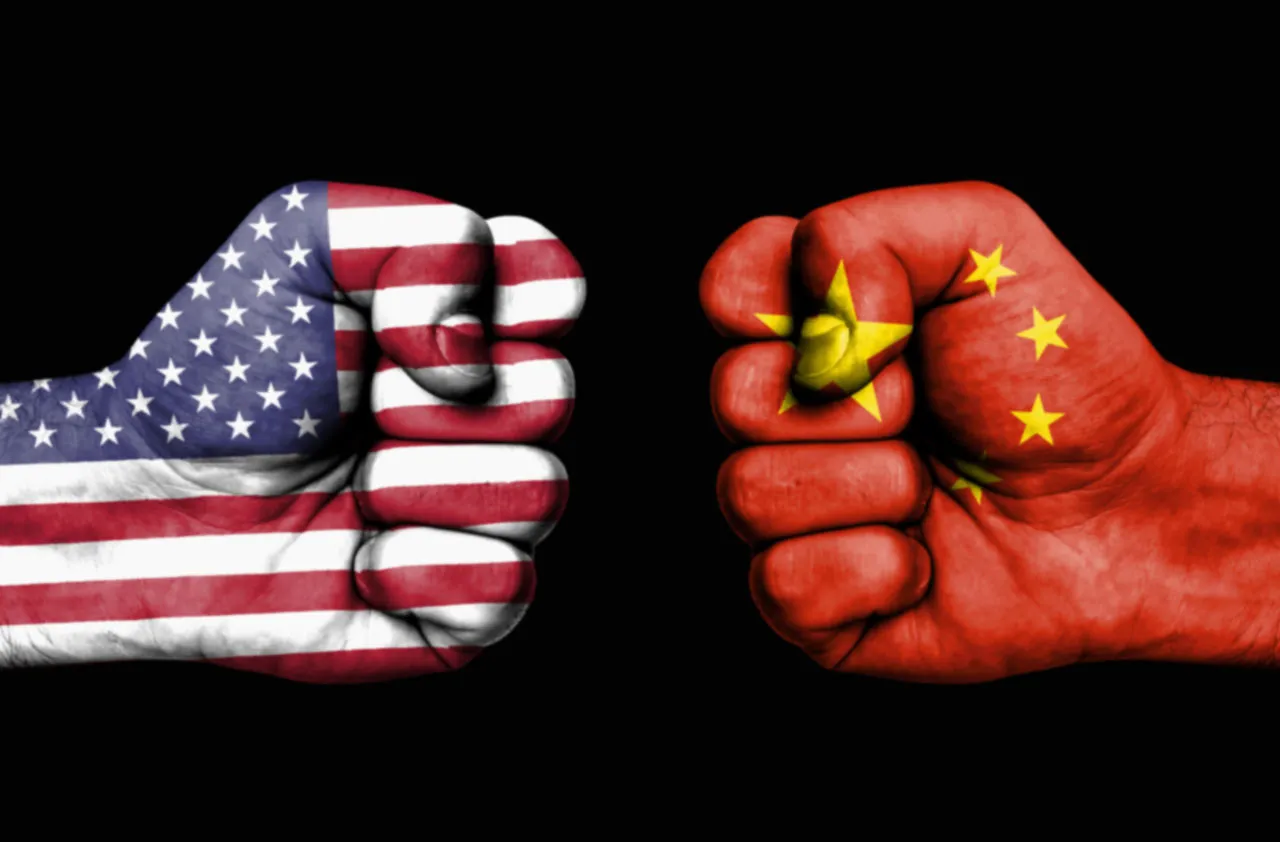
You’ve probably heard about this in the news, and you may be wondering: What is a trade war, and why should I care?
The Chinese president stepped back from the brink of a possible trade war with the U.S. on April 10 by pledging to open up his country’s markets to foreign investment. But even as the rhetoric tones down, the threat of a trade war still lingers. And trade wars can have big — and sometimes unexpected — consequences for investors and consumers.
You saw one of them already: the Dow dropped 572 points on April 6. Investors worry about protectionist trade policies because they can raise prices on everything from soup cans to cars. Not only that, trade wars can cost jobs, damage industries, and even slow down the economy as a whole.
From just $107.88 $24.99 for Kiplinger Personal Finance
Become a smarter, better informed investor. Subscribe from just $107.88 $24.99, plus get up to 4 Special Issues

Sign up for Kiplinger’s Free Newsletters
Profit and prosper with the best of expert advice on investing, taxes, retirement, personal finance and more - straight to your e-mail.
Profit and prosper with the best of expert advice - straight to your e-mail.
In this article I’ll introduce you to some of the basics of trade, trade wars — and the arguments for and against protectionism.
Trade war economics
A trade war is what happens when countries try to punish each other using trade policy. Tariffs and quotas (a tax) on imports and subsidies on exports are the most common ways that governments influence trade — and they’re also the most common weapons in a trade war.
For example, to protect American steelmakers, the U.S. might impose a tariff on foreign steel. In retaliation, another country might put a tariff on American bourbon. In both cases, the tariff is essentially added to the cost of the final product.
What happens next?
Let’s pretend you own an American bourbon distillery. You sell bourbon for $10 a bottle in a foreign market. If that market imposes a $2 tariff per bottle, it means you either have to eat the cost and get only $8 from sales in that country, or pass some or all of the cost to your customers. If you pass the whole cost through, you’d charge $12 a bottle — which could reduce demand for your bourbon, meaning fewer sales.
In other words, a foreign tariff on your product can have a significant impact on your ability to make sales and stay profitable in that country.
On the other hand, let’s say you’re an American steel producer. In this situation, you could find yourself better off: Maybe your foreign competitor is forced to raise their U.S. prices to accommodate the tariff, which means that the market price for steel goes higher ‐ and you take more money home. Perhaps they decide to leave your market altogether, or maybe they just eat the cost of the tariff and become less profitable.
But notice I said you “could” find yourself better off: One of the reasons trade policy is so tricky is that it can be hard to predict what will happen after the tariff is imposed. For example, higher prices could reduce demand for steel as customers start looking for cheaper substitutes.
Another complication is that most tariffs aren’t uniformly applied to all trading partners. In the case of steel, the proposal would affect China but not other imports, so it’s possible that the industry isn’t “supported” enough to really make an impact on local steelmakers.
Finally, tariffs can have unexpected or unintended consequences. A trading partner facing tariffs might decide it’s preferable to fight back rather than negotiate, or you could accidentally affect another domestic industry that you weren’t expecting to. That means supporting one industry could hurt another, or even hurt economic growth as a whole.
All of these details and nuances matter in how effective a policy is and what the potential fallout could be, which is part of the reason why markets are so worried about what will happen next.
The benefits and costs of trade
At its core, the idea of free trade is about specializing in the activities that are the most profitable to you. This concept has arguably revolutionized (and globalized) the world economy.
For example, if the U.S. is incredibly good at building airplanes relative to everyone else, meaning it’s highly profitable for us to do it, then we’ll build more airplanes and someone else will build less. For example, today, Boeing is the largest single exporter in the U.S., in terms of dollar value. If Malaysia is better than the U.S. at producing T-shirts (or can do it for a lower cost), they’ll do more of that and we’ll do less.
There are benefits to this division of labor: When there are no restrictions to trade, you can have free rein make more profits on what you’re good at while enjoying the benefits of better prices on the things that someone else is good at.
Obviously, we do this all the time amongst ourselves as friends, colleagues and spouses. For example, you might have an arrangement with your spouse where one of you does the dishes and the other does the laundry. These kinds of natural trades arise because one person might be better at doing a particular job, or because one person finds it aggravating (or costly, in economics-speak) to do it.
With trade, you see something similar on an economy-sized scale.
But that doesn’t mean trade is good for every person all the time. We might benefit as a whole from a highly profitable aircraft sector and lower clothing prices. But your local T-shirt manufacturer might still have to shut down their factory and find a new job.
That’s one of the costs of free trade, which makes it understandable that people in industries facing a lot of foreign competition feel like they’re missing out.
Balancing the pros and cons
There are many ways to deal with this, and protectionist trade policies are one way. Again, those policies can come at a cost, and it’s part of the policymaking process to figure out what the possible costs could be and whether they’re worth it.
In 2002, President George W. Bush implemented a 30% steel tariff that was rescinded in 2003 because of possible economic effects and the threat of retaliation from key trading partners. As the president’s former Chief of Staff, Andrew H. Card Jr., put it, “Once the tit-for-tat starts, there are unintended consequences. You don’t know the extent of how everyone else will react.”
It’s not just countries: Industries also react, and that can affect both consumers and investors.
Steel prices have already been higher all year with the expectation that tariffs will be imposed. American corporations, including Campbell’s Soup, have weighed in with their concerns, and the Swedish manufacturer Electrolux announced that it was putting a $250 million investment in American manufacturing on hold pending more clarity on the decision.
In other words, it can be hard to predict how a policy will impact an economy.
What happens next?
Some have argued that the Trump administration policies are intended as a negotiating tactic to improve our bargaining position on future trade agreements. I think that might be the case, and that the potential for a real trade war is slim. After all, the U.S. is the world’s dominant economic force, and we have a lot of clout on a number of levels. As a pure negotiating tactic, it could make sense to use this fact to improve the position of key industries in the global market.
I think the idea of tariffs as a form of negotiating has merit, based on what the president has said about trade with China. The U.S. does have a large trade deficit with China (over $375 billion as of last year), and in many cases there’s a mismatch in tariff policies that could be seen to penalize American workers. For example, the auto tariff in the U.S. is 2.5% on imported vehicles versus China’s 25% — an arrangement that was negotiated decades ago, before China had a real auto industry (read more about it here). This is something that President Trump might want to renegotiate — using the threat of tariffs on Chinese imports as leverage.
That’s part of the reason I don’t expect that we’ll go down the path of a real trade war. The economics of trade have been pretty well established at this point: Even when another country acts “unfairly,” it’s usually in our interest to foster free trade as a way to help long-term economic growth.
Of course, there is also an argument that this approach could backfire. Europe, Asia and Latin America have all been actively strengthening their own trading ties in the last year, which could give the U.S. less clout in a dispute. Also, sometimes trade negotiations aren’t just about economics. It’s possible that foreign leaders will find the economic reasons for staying at the negotiating table to be less compelling than the political reasons to retaliate.
So, while the recent threat of trade war might just be a bluff, it’s not surprising that the markets have taken notice. We’ll just have to see what happens next.
Written by Bradford Pine with Anna B. Wroblewska.
