How Do Stock Market Circuit Breakers Work?
Trading halts are designed to give investors a chance to breathe when things get ugly. Here's how they function.

You are now subscribed
Your newsletter sign-up was successful
Want to add more newsletters?

Delivered daily
Kiplinger Today
Profit and prosper with the best of Kiplinger's advice on investing, taxes, retirement, personal finance and much more delivered daily. Smart money moves start here.

Sent five days a week
Kiplinger A Step Ahead
Get practical help to make better financial decisions in your everyday life, from spending to savings on top deals.

Delivered daily
Kiplinger Closing Bell
Get today's biggest financial and investing headlines delivered to your inbox every day the U.S. stock market is open.

Sent twice a week
Kiplinger Adviser Intel
Financial pros across the country share best practices and fresh tactics to preserve and grow your wealth.

Delivered weekly
Kiplinger Tax Tips
Trim your federal and state tax bills with practical tax-planning and tax-cutting strategies.

Sent twice a week
Kiplinger Retirement Tips
Your twice-a-week guide to planning and enjoying a financially secure and richly rewarding retirement

Sent bimonthly.
Kiplinger Adviser Angle
Insights for advisers, wealth managers and other financial professionals.

Sent twice a week
Kiplinger Investing Weekly
Your twice-a-week roundup of promising stocks, funds, companies and industries you should consider, ones you should avoid, and why.

Sent weekly for six weeks
Kiplinger Invest for Retirement
Your step-by-step six-part series on how to invest for retirement, from devising a successful strategy to exactly which investments to choose.
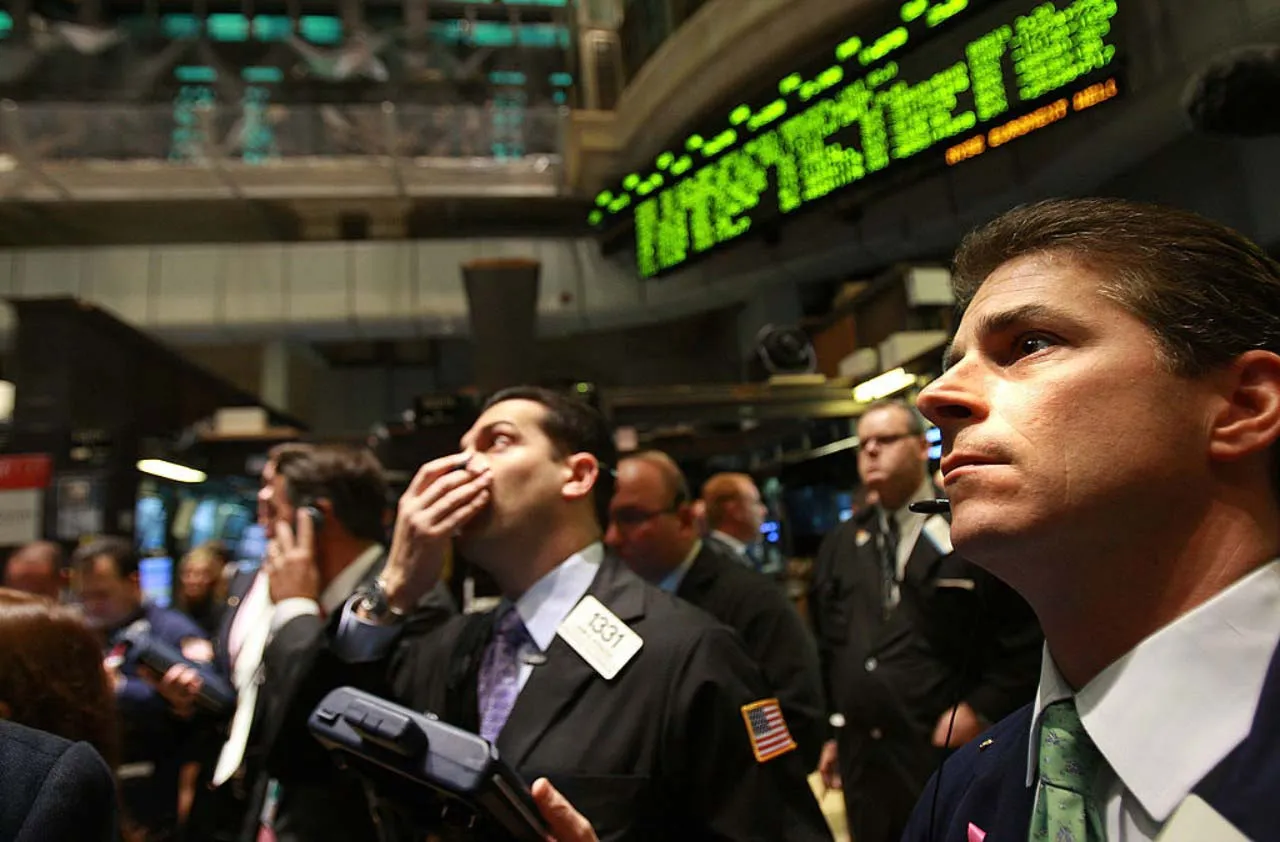
U.S. stocks had gone more than 20 years without a market-wide trading halt. We've now tripped the so-called circuit breakers two times in four days.
On Monday, March 9, the S&P 500 fell 7% within minutes of the open, triggering a market-wide trading halt for the first time since 1997. Thursday morning's plunge of more than 7% also tripped a circuit breaker.
Circuit breakers were first introduced after the Black Monday crash of October 1987. The Dow dropped almost 23% in a single session, which stands as a record to this day.
From just $107.88 $24.99 for Kiplinger Personal Finance
Become a smarter, better informed investor. Subscribe from just $107.88 $24.99, plus get up to 4 Special Issues

Sign up for Kiplinger’s Free Newsletters
Profit and prosper with the best of expert advice on investing, taxes, retirement, personal finance and more - straight to your e-mail.
Profit and prosper with the best of expert advice - straight to your e-mail.
Circuit breakers are intended to curb panic selling. Like calling a timeout in sports, a temporary pause in trading allows market participants to catch their breath, though it doesn't necessarily keep stocks from declining once trading resumes.
How Circuit Breakers Work
There are three levels of circuit breakers tied to how steeply the market declines:
- A Level 1 market-wide circuit breaker is tripped if the S&P 500 falls 7% from its previous close.
- A Level 2 circuit breaker comes into effect when the market plunges 13%.
- A Level 3 circuit breaker kicks in if the market tanks 20%.
A Level 1 or Level 2 breach halts trading for a minimum of 15 minutes. A Level 3 rout halts trading for the remainder of the trading day.
Level 1 and Level 2 circuit breakers can be triggered between 9:30 a.m. and 3:25 p.m. Eastern. A Level 3 breach can be triggered at any time.
Individual stocks also have circuit breakers, with the trigger levels determined by the price of the stock.
The circuit breakers have worked as intended this week, in that they've given traders a chance to at least catch up as markets tumble on the growing COVID-19 pandemic. Given that the outcome of this crisis is impossible to price in at this point, don't be shocked if we trip circuit breakers repeatedly in the sessions ahead.

-
 5 Vince Lombardi Quotes Retirees Should Live By
The iconic football coach's philosophy can help retirees win at the game of life.
-
 The $200,000 Olympic 'Pension' is a Retirement Game-Changer for Team USA
The donation by financier Ross Stevens is meant to be a "retirement program" for Team USA Olympic and Paralympic athletes.
-
 10 Cheapest Places to Live in Colorado
Property Tax Looking for a cozy cabin near the slopes? These Colorado counties combine reasonable house prices with the state's lowest property tax bills.


-
 Dow Adds 1,206 Points to Top 50,000: Stock Market Today
The S&P 500 and Nasdaq also had strong finishes to a volatile week, with beaten-down tech stocks outperforming.
-
 Stocks Sink With Alphabet, Bitcoin: Stock Market Today
A dismal round of jobs data did little to lift sentiment on Thursday.
-
 Dow Leads in Mixed Session on Amgen Earnings: Stock Market Today
The rest of Wall Street struggled as Advanced Micro Devices earnings caused a chip-stock sell-off.
-
 Nasdaq Slides 1.4% on Big Tech Questions: Stock Market Today
Palantir Technologies proves at least one publicly traded company can spend a lot of money on AI and make a lot of money on AI.
-
 Fed Vibes Lift Stocks, Dow Up 515 Points: Stock Market Today
Incoming economic data, including the January jobs report, has been delayed again by another federal government shutdown.
-
 Stocks Close Down as Gold, Silver Spiral: Stock Market Today
A "long-overdue correction" temporarily halted a massive rally in gold and silver, while the Dow took a hit from negative reactions to blue-chip earnings.
-
 If You'd Put $1,000 Into AMD Stock 20 Years Ago, Here's What You'd Have Today
Advanced Micro Devices stock is soaring thanks to AI, but as a buy-and-hold bet, it's been a market laggard.
-
 Nasdaq Drops 172 Points on MSFT AI Spend: Stock Market Today
Microsoft, Meta Platforms and a mid-cap energy stock have a lot to say about the state of the AI revolution today.


