Should You Be Tempted to Invest in Bitcoin?
The recent eye-popping gains in the cryptocurrency are hard to ignore, but the proposition may not be as sexy as it sounds.

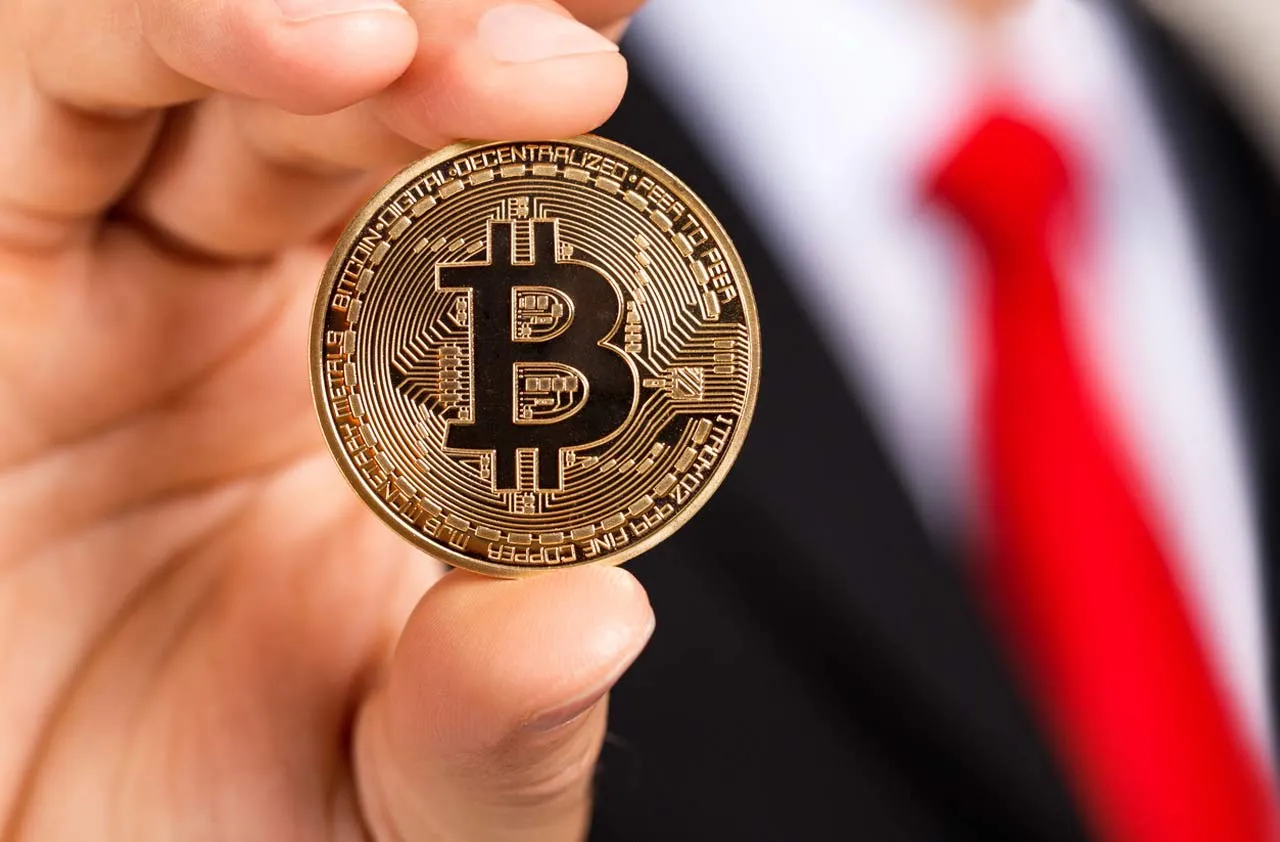
I first wrote about bitcoin in early 2017. Given everything that’s happened with cryptocurrency in the last few months, we are due for an update.
For some perspective, let’s take a look at the original opening paragraph of my column from March of 2017:
"If you’ve been watching bitcoin prices lately, you already know they’ve made a record-setting run. As of this writing, a single bitcoin is valued at almost $1,300, more than an ounce of gold. To put things in perspective, bitcoin values were in the $300 — $400 range for much of 2015."
From just $107.88 $24.99 for Kiplinger Personal Finance
Become a smarter, better informed investor. Subscribe from just $107.88 $24.99, plus get up to 4 Special Issues

Sign up for Kiplinger’s Free Newsletters
Profit and prosper with the best of expert advice on investing, taxes, retirement, personal finance and more - straight to your e-mail.
Profit and prosper with the best of expert advice - straight to your e-mail.
As of this writing, the price of bitcoin is over $11,500 – that’s almost 10 times higher than at the beginning of the year. Those who invested in bitcoin years (or even in March of 2017) ago are likely rejoicing. But, should you join them? Continue reading to learn more about bitcoin, how it works, and why this investment might be worth skipping, despite its high returns.
What is Bitcoin?
Generally speaking, bitcoin is a cryptocurrency used by online firms and big businesses worldwide. One of the biggest advantages of bitcoin is that the currency can cross borders easily — facilitating international trade.
For the purposes of investing, bitcoin is similar to any other currency (or commodity) investment. This means, when it comes to your investment return, bitcoin faces the same uphill battle as investing in:
- gold
- agricultural products
- fine art
- oil
In other words, at any given time, bitcoin is worth whatever the market says it's worth. While this isn’t a problem in itself, investing in bitcoin does pose some specific challenges. As sexy as investing in bitcoin sounds — and despite the recent run-up in price — there are at least two fundamental problems with investing in bitcoin right now:
PROBLEM #1: YOU LOSE MONEY AFTER INFLATION (NEGATIVE REAL RETURNS)
When you invest in bitcoin (or gold, or oil, or other commodities, or any other currency, or fine art), you are betting the farm on price appreciation alone. Or rather, you’re betting that the price of bitcoin will go up compared with the U.S. dollar. What this means is, bitcoin is different from more conventional investments like stocks, bonds and real estate. That’s because conventional investments offer the chance to generate cash.
As an example, stocks are a slice of business ownership. Businesses exist to earn a profit. As an owner of that business, you are entitled to a slice of that profit.
That profit can either be re-invested into the business (to increase the value of the business) or paid to investors as dividends. Either way, a stock generates cash — ultimately enriching those who own shares.
The same is true for bonds. Bonds spit out cash (usually twice a year). With a bond, you (usually) get back your original investment, plus interest.
The same applies to real estate. Rental property can appreciate (or depreciate) in price. But, either way, rental property exists with the goal of generating cash for the investors — cash above and beyond the costs to maintain the property.
Unfortunately, that’s not the case for bitcoin, gold, “Forex,” commodities or fine art. These sorts of investments do not generate cash. Instead, investors can only hope they rise in value with the price of inflation.

Not only must your investment appreciate at the rate of inflation, but it must also go above and beyond inflation to make up for the transaction costs. Trust me when I say this is rarely the case. Most commodities increase at the rate of inflation. Further, currency doesn’t increase in value at all — because that’s exactly what inflation is — a decrease in the value of currency!
On average, economies grow. A growing economy can raise the demand for goods and services. This can cause prices for said goods and services to increase. Moreover, entities issuing currency usually "print" more currency. This devalues that currency, requiring more of the same currency to be required for the same good or service.
These two factors – a growing economy and the printing of more money – can cause inflation. Therefore, an investment in currency, by its nature, should not be able to grow with inflation. So, not only does your investment in currency lose money because of inflation, but your investment also loses from the bid/ask spread – the price of buying into a different currency.

Bitcoin proponents make the case that bitcoin will indeed grow above inflation. Proponents of bitcoin claim that it is a “deflationary currency.” And so far, that looks to be the case. Of course, with only a short timeline since bitcoin has been around, it may be hard to make that case definitively. This is unlike stocks, which have been around for centuries.
In short, bitcoin and similar investments are at a big disadvantage when it comes to generating an investment return. Bitcoin doesn’t generate cash like stocks, bonds and rental real estate do — and they have the added challenge of never even being able to keep up with inflation!
PROBLEM #2: MEAN REVERSION
Mean reversion is a fancy way of saying: What goes up, must come down — and vice versa.
All investments are subject to mean reversion, and bitcoin is no exception. Mean reversion itself isn’t a bad thing, but it’s still worth noting when it comes to investing in bitcoin, specifically.
As mentioned and shown in the graph above, commodities provide an investment return at just about the rate of inflation — before fees. Moreover, commodities depend upon price appreciation alone to provide an investment return. This is because commodities do not generate cash.
So, if you are going to get an investment return from bitcoin, you don’t want to be buying at a market top. However, recent run-ups in price suggest that it’s possible we are at the top of the bitcoin market — or, at least on the way.
Pro Tip: Invest Only as Much Money as You Can Stand to Lose
Try thinking of investing in bitcoin as you would buying a lottery ticket. It only costs a dollar, but you could win big. However, as historically shown with commodities, the odds are good that you’re going to lose money compared with a low-cost, diversified investment.
Most of the time, you’ll be a lot better off if you choose a long-term investment strategy that isn’t quite so volatile. You should also diversify as much as you can; this way, you won’t lose your shirt if one particular investment falls apart.
If you choose to throw your money into bitcoin in spite of this advice, just know you’re doing so at your peril. The best thing you can do is limit your investment to an amount you can afford to lose, then brace yourself for a long and bumpy ride.
A Final Warning on Cryptocurrency: Look Out for Security Holes
Yes, bitcoin is a volatile investment that may very likely be a bubble. For that reason, you could lose most (all?) of your investment. But, in addition to bitcoin being a risky investment for all the reasons that investments can be risky (i.e., volatility), bitcoin and other cryptocurrencies suffer from additional security challenges that traditional investments (such as plain vanilla stocks and bonds) do not.
Instead of the usual investment risk of your principal decreasing in value, with cryptocurrencies, you may lose your crypto assets entirely. In addition to price volatility, investors in crypto assets have lost money because of:
- outright theft,
- imperfect software (i.e., “bugs”), or even
- misplacing login information
To see the original version of this article, click HERE.

-
 Timeless Trips for Solo Travelers
How to find a getaway that suits your style.
-
 A Top Vanguard ETF Pick Outperforms on International Strength
A weakening dollar and lower interest rates lifted international stocks, which was good news for one of our favorite exchange-traded funds.
-
 Is There Such a Thing As a Safe Stock? 17 Safe-Enough Ideas
No stock is completely safe, but we can make educated guesses about which ones are likely to provide smooth sailing.


-
 Missed Your RMD? 4 Ways to Avoid Doing That Again (and Skip the IRS Penalties), From a Financial Planner
If you miss your RMDs, you could face a hefty fine. Here are four ways to stay on top of your payments — and on the right side of the IRS.
-
 What Really Happens in the First 30 Days After Someone Dies (and Where Families Get Stuck)
The administrative requirements following a death move quickly. This is how to ensure your loved ones won't be plunged into chaos during a time of distress.
-
 AI-Powered Investing in 2026: How Algorithms Will Shape Your Portfolio
AI is becoming a standard investing tool, as it helps cut through the noise, personalize portfolios and manage risk. That said, human oversight remains essential. Here's how it all works.
-
 A Newly Retired Couple With a Portfolio Full of Winners Faced a $50,000 Tax Bill: This Is the Strategy That Helped Save Them
Large unrealized capital gains can create a serious tax headache for retirees with a successful portfolio. A tax-aware long-short strategy can help.
-
 5 Retirement Myths to Leave Behind (and How to Start Planning for the Reality)
Separating facts from fiction is an important first step toward building a retirement plan that's grounded in reality and not based on incorrect assumptions.
-
 I'm a Financial Adviser: Silence Is Golden, But It Hurts Your Heirs More Than You Think
Talking to heirs about transferring wealth can be overwhelming, but avoiding it now can lead to conflict later. Here's how to start sharing your plans.
-
 Will Your Children's Inheritance Set Them Free or Tie Them Up?
An inheritance can mean extraordinary freedom for your loved ones, but could also cause more harm than good. How can you ensure your family gets it right?
-
 I'm a Financial Adviser: This Is the Real Key to Enjoying Retirement With Confidence
A resilient retirement plan is a flexible framework that addresses income, health care, taxes and investments. And that means you should review it regularly.


