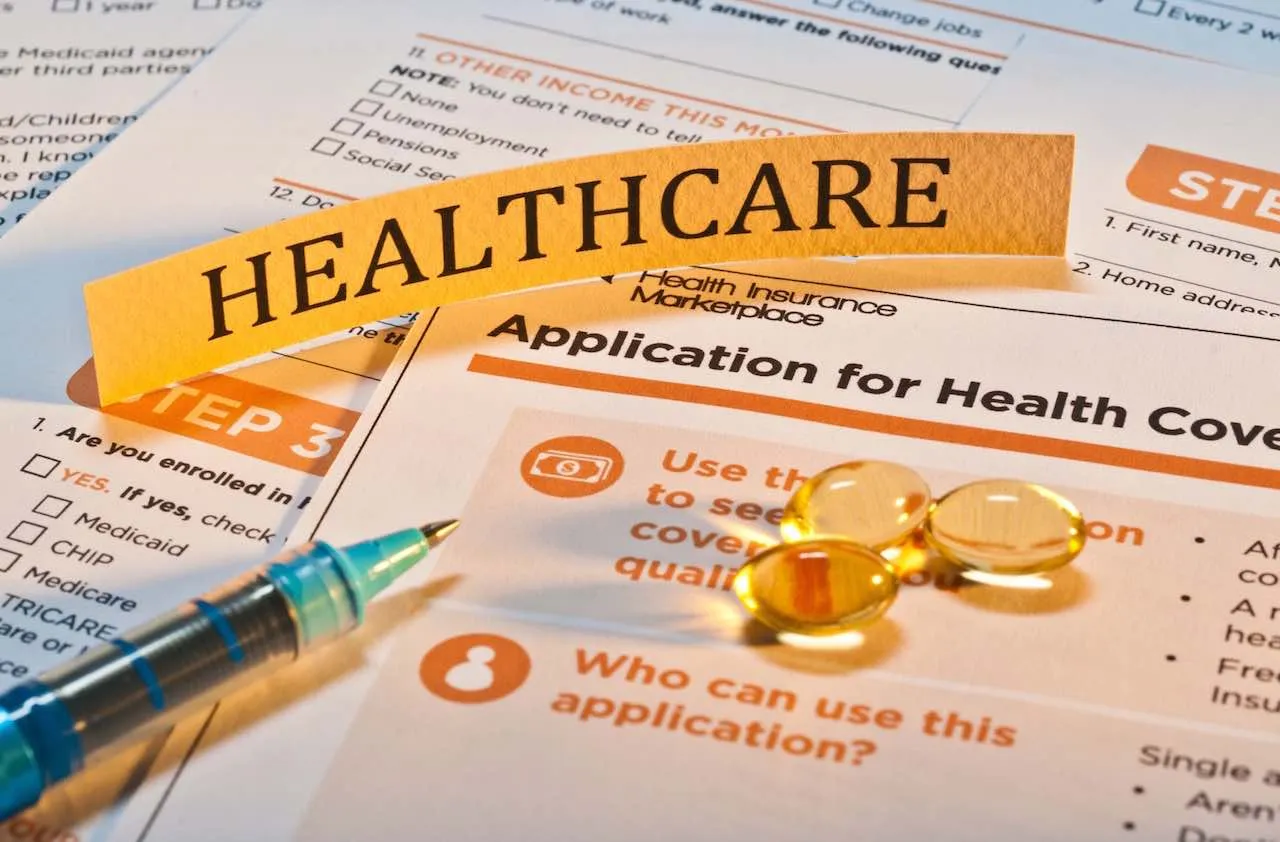
Obamacare Penalties to Double for Uninsured in 2016
For those willing to live without health insurance, next year may be the tipping point at which your money is better spent on a policy than a penalty.
Profit and prosper with the best of Kiplinger's advice on investing, taxes, retirement, personal finance and much more. Delivered daily. Enter your email in the box and click Sign Me Up.
You are now subscribed
Your newsletter sign-up was successful
Want to add more newsletters?
Delivered daily
Kiplinger Today
Profit and prosper with the best of Kiplinger's advice on investing, taxes, retirement, personal finance and much more delivered daily. Smart money moves start here.
Sent five days a week
Kiplinger A Step Ahead
Get practical help to make better financial decisions in your everyday life, from spending to savings on top deals.
Delivered daily
Kiplinger Closing Bell
Get today's biggest financial and investing headlines delivered to your inbox every day the U.S. stock market is open.
Sent twice a week
Kiplinger Adviser Intel
Financial pros across the country share best practices and fresh tactics to preserve and grow your wealth.
Delivered weekly
Kiplinger Tax Tips
Trim your federal and state tax bills with practical tax-planning and tax-cutting strategies.
Sent twice a week
Kiplinger Retirement Tips
Your twice-a-week guide to planning and enjoying a financially secure and richly rewarding retirement
Sent bimonthly.
Kiplinger Adviser Angle
Insights for advisers, wealth managers and other financial professionals.
Sent twice a week
Kiplinger Investing Weekly
Your twice-a-week roundup of promising stocks, funds, companies and industries you should consider, ones you should avoid, and why.
Sent weekly for six weeks
Kiplinger Invest for Retirement
Your step-by-step six-part series on how to invest for retirement, from devising a successful strategy to exactly which investments to choose.
What is the penalty for not having health insurance? Will it be the same for 2016?
The penalty for not having health insurance in 2015 is $325 per adult and $162.50 per child under 18 (with a total family maximum of $975, regardless of family size), or 2% of your annual household income, whichever is higher. Only the amount of income above the tax-filing threshold (about $10,150 for an individual) counts toward the percentage calculation of the penalty.
In 2016, the penalty jumps to $695 per adult and $347.50 per child under 18 (with a family maximum of $2,085), or 2.5% of your annual household income above the tax-filing threshold, whichever is larger. (You pay the fee on the federal income tax return you file for the year you don’t have coverage.) See this fact sheet for more information about the calculations.
From just $107.88 $24.99 for Kiplinger Personal Finance
Become a smarter, better informed investor. Subscribe from just $107.88 $24.99, plus get up to 4 Special Issues

Sign up for Kiplinger’s Free Newsletters
Profit and prosper with the best of expert advice on investing, taxes, retirement, personal finance and more - straight to your e-mail.
Profit and prosper with the best of expert advice - straight to your e-mail.
“We are approaching that tipping point for people who have sat out because they said they’d pay the penalty,” says Hector De La Torre, executive director of the Transamerica Center for Health Studies. “We saw this in Massachusetts, when the tax penalty went up. There was a tipping point at which people said they’d rather pay for health insurance and get something in return for their money.” Massachusetts was the first state to require people to purchase health insurance or else pay a penalty, and the size of the penalty gradually increased over the first few years.
You generally must wait until open enrollment in the fall to buy health insurance on your own (whether through a state exchange or directly from an agent or insurer), although there are some exceptions. You can buy coverage before then if you move or experience other “life changes,” such as getting married or divorced, having or adopting a baby, or losing other health insurance. You generally have 60 days from the date of the event to buy a new policy.
Open enrollment for individual health insurance runs from November 1 to January 31 for 2016 coverage. See the special enrollment-period page at www.healthcare.gov for more information about the rules and a screening tool to help you see if you qualify to buy coverage outside of open enrollment.
Profit and prosper with the best of Kiplinger's advice on investing, taxes, retirement, personal finance and much more. Delivered daily. Enter your email in the box and click Sign Me Up.

As the "Ask Kim" columnist for Kiplinger's Personal Finance, Lankford receives hundreds of personal finance questions from readers every month. She is the author of Rescue Your Financial Life (McGraw-Hill, 2003), The Insurance Maze: How You Can Save Money on Insurance -- and Still Get the Coverage You Need (Kaplan, 2006), Kiplinger's Ask Kim for Money Smart Solutions (Kaplan, 2007) and The Kiplinger/BBB Personal Finance Guide for Military Families. She is frequently featured as a financial expert on television and radio, including NBC's Today Show, CNN, CNBC and National Public Radio.
-
Dow Adds 1,206 Points to Top 50,000: Stock Market TodayThe S&P 500 and Nasdaq also had strong finishes to a volatile week, with beaten-down tech stocks outperforming.
-
Ask the Tax Editor: Federal Income Tax DeductionsAsk the Editor In this week's Ask the Editor Q&A, Joy Taylor answers questions on federal income tax deductions
-
States With No-Fault Car Insurance Laws (and How No-Fault Car Insurance Works)A breakdown of the confusing rules around no-fault car insurance in every state where it exists.
-
Credit Report Error? They All Mattercredit & debt Don't dismiss a minor error. It could be the sign of something more serious.
-
Insurance for a Learning Driverinsurance Adding a teen driver to your plan will raise premiums, but there are things you can do to help reduce them.
-
529 Plans Aren’t Just for Kids529 Plans You don’t have to be college-age to use the money tax-free, but there are stipulations.
-
When to Transfer Ownership of a Custodial Accountsavings Before your child turns 18, you should check with your broker about the account's age of majority and termination.
-
Borrowers Get More Time to Repay 401(k) Loansretirement If you leave your job while you have an outstanding 401(k) loan, Uncle Sam now gives you extra time to repay it -- thanks to the new tax law.
-
When It Pays to Buy Travel InsuranceTravel Investing in travel insurance can help recover some costs when your vacation gets ruined by a natural disaster, medical emergency or other catastrophe.
-
What Travel Insurance Covers When Planes Are GroundedTravel Your travel insurance might help with some costs if your trip was delayed because of the recent grounding of Boeing 737 Max planes.
-
Ways to Spend Your Flexible Spending Account Money by March 15 Deadlinespending Many workers will be hitting the drugstore in the next few days to use up leftover flexible spending account money from 2018 so they don’t lose it.